Sisal vs Carpet Scratching Posts: Material Comparison Guide
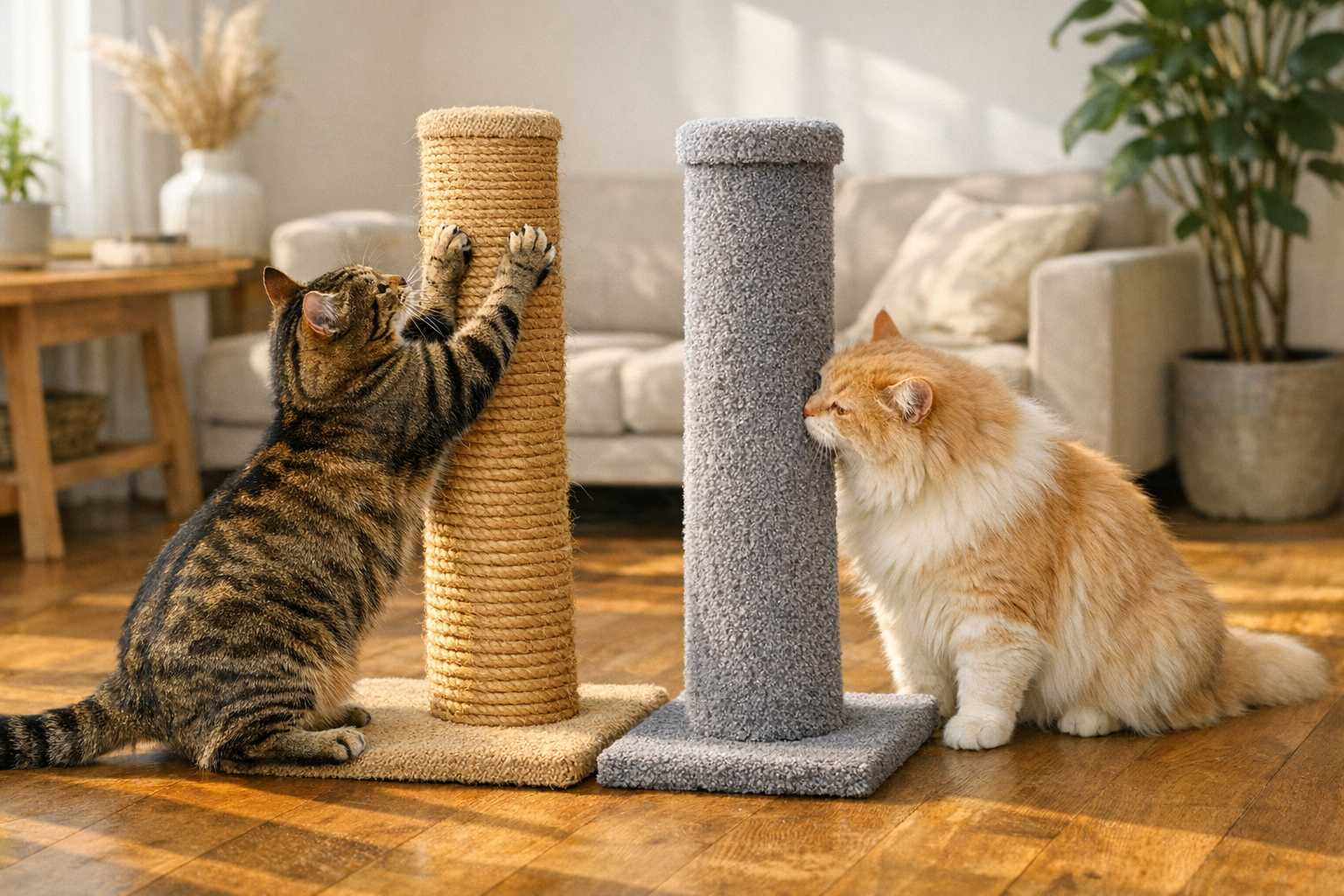
Sisal vs. Carpet Scratching Posts: A Practical Material Comparison Guide
SEO Slug: sisal-vs-carpet-scratching-posts
Focus Keyphrase: sisal vs carpet scratching posts
Meta Description: Trying to choose between sisal and carpet scratching posts for your cat? This friendly guide compares both materials so you can find the best fit for your cat and your home.
Choosing a scratching post sounds simple—until you’re standing in the pet aisle staring at row after row of options.
If you’re deciding between sisal vs. carpet scratching posts, you’re not alone. These are two of the most common materials, and each has pros and cons. The best choice depends on your cat’s scratching style, age, preferences, and even your home setup.
Here’s a clear, realistic look at how sisal and carpet compare.
What Is Sisal, and Why Do Cats Like It?
Sisal is a strong natural fiber made from the agave plant. It’s one of the most widely used scratching-post materials, and for good reason.
Its rough, textured surface gives cats the resistance they usually want when they scratch. That texture is often compared to tree bark, which makes sense—many cats naturally enjoy scratching wood-like surfaces.
When cats scratch sisal, it helps them:
- shed the dead outer layer of their claws
- stretch their muscles
- mark territory through scent glands in their paws
- satisfy a natural scratching instinct
Sisal is also known for being durable. It typically holds up better than softer materials, especially for cats that scratch hard and often.
One quick note: sisal comes in different forms, usually woven sisal fabric or sisal rope. Both can work well, though tightly wrapped or securely attached sisal tends to last longer and feel more stable under a cat’s claws.
What Are Carpet Scratching Posts Made Of?
Carpet scratching posts are covered in carpet-like material, which may be made from synthetic fibers such as polyester or nylon. Some use looped carpet, while others use cut pile or softer plush fabric.
These posts appeal to some cats because the texture feels familiar—especially if they already scratch rugs, mats, or carpeted stairs at home.
Carpet can feel softer under the paws than sisal, and some cats, especially cautious or older cats, may prefer that gentler surface.
They’re also often less expensive upfront, which can make them appealing if you’re shopping on a budget.
Sisal vs. Carpet Scratching Posts: The Main Differences
1. Durability
In most cases, sisal is more durable.
Good-quality sisal stands up well to regular scratching and usually wears down gradually. Carpet, by comparison, can mat, fray, or loosen more quickly—especially if your cat is enthusiastic or scratches daily.
That said, quality matters with both materials. A well-made carpeted post may outlast a cheaply made sisal one. Still, if all else is equal, sisal usually has the edge.
Best for durability: Sisal
2. Texture and Cat Preference
This is where the choice becomes personal.
Many cats prefer sisal because it offers more grip and resistance. It gives them that deep, satisfying scratching feel they seem to love.
But not all cats agree. Some genuinely prefer carpet, especially if they’re already drawn to soft floor coverings or upholstered furniture.
A good rule: pay attention to what your cat already scratches.
- If they target rugs or carpet, a carpeted post may be easier to introduce.
- If they scratch wood, baskets, or rough surfaces, sisal is often the better bet.
Best for texture preference: Depends on your cat
3. Cleanliness and Maintenance
Sisal is usually easier to keep clean.
Carpet tends to trap more hair, dust, and dander, and it can hold onto odors over time. Sisal doesn’t collect debris in quite the same way, and it’s generally easier to vacuum or brush off.
Neither material is completely mess-free—both will shed somewhat as they wear—but carpet often looks worn or dirty sooner.
If cleanliness, odor control, or allergens are a concern, sisal is usually the more practical option.
Best for cleanliness: Sisal
4. Claw Care
Both sisal and carpet can help support healthy scratching behavior, but sisal usually does a better job of helping remove the outer sheath of the claw.
Its rougher texture provides more friction, which many cats seem to find effective and satisfying.
Carpet can still work, but it may not provide the same level of resistance or claw-conditioning benefit.
Best for claw maintenance: Sisal
5. Ease of Training
If your cat already scratches carpeted areas, a carpet post may feel more familiar and be easier to accept right away.
On the other hand, if you’re starting with a kitten or introducing scratching posts early, sisal is often a smart long-term choice. Many cats learn to use it quickly, especially if the post is sturdy and placed in the right location.
A few simple ways to encourage use:
- place the post near your cat’s favorite resting or scratching area
- reward them when they use it
- try catnip or silvervine if your cat responds to it
- make sure the post doesn’t wobble
Best for training: Depends on your cat’s existing habits
Which Material Is Better for Kittens?
Both can work, but sisal is often the better long-term choice.
Kittens are usually capable of using sisal without any issue, and starting with it early may help prevent them from developing a strong preference for carpeted textures. That can be helpful if you want to discourage scratching on rugs or carpet later on.
That said, very young or timid kittens may take to softer surfaces more quickly. If so, you can still use carpet temporarily—but be aware that some cats become attached to that texture.
Best overall for kittens: Usually sisal
Which Material Is Better for Senior Cats?
For older cats, comfort matters.
Cats with arthritis or reduced mobility may prefer a softer scratching surface, and carpet can sometimes feel easier on aging paws and joints. A lower or angled scratching surface may also be more comfortable than a tall vertical post.
Still, some senior cats continue to prefer sisal throughout their lives. The material matters, but so does the post’s height, angle, and stability.
If your senior cat seems hesitant to scratch, talk to your veterinarian—especially if you notice stiffness, pain, or a sudden change in behavior.
Best for senior cats: Often carpet, but depends on mobility and preference
Environmental Considerations
If sustainability is important to you, sisal usually comes out ahead.
Sisal is a natural plant fiber and is generally considered more eco-friendly than synthetic carpet materials. Carpeted posts are often made with petroleum-based fibers that are not biodegradable.
Of course, the full environmental impact also depends on how the product is made, how long it lasts, and whether parts can be replaced instead of throwing away the whole post.
Still, in a straightforward comparison, sisal is typically the greener option.
Best for sustainability: Sisal
Cost Comparison
Carpet scratching posts are often cheaper at the time of purchase. If you need a basic post at the lowest possible price, carpet may be easier on the budget.
But lower upfront cost doesn’t always mean better value. Because carpet often wears out faster, you may end up replacing it sooner.
Sisal posts usually cost a bit more initially, but they often last longer, which can make them more cost-effective over time.
Best upfront price: Carpet
Best long-term value: Usually sisal
Which Looks Better in Your Home?
This is subjective, but many people prefer the look of sisal.
Sisal has a more natural, simple appearance and tends to fit easily into modern or neutral interiors. Carpeted posts can sometimes look bulkier or more dated, depending on the color and style.
That said, appearance varies a lot by brand and design. Some carpeted cat furniture looks great, and some sisal posts look cheap. Build quality and design matter just as much as material.
Best for appearance: Usually sisal
Common Mistakes to Avoid
When choosing a scratching post, the material is only part of the story. These mistakes matter just as much:
Buying a post that wobbles
If the post feels unstable, many cats won’t trust it enough to use it.
Choosing based only on price
A cheap post that your cat ignores is no bargain.
Ignoring your cat’s natural preferences
Your cat is already giving you clues through what they scratch at home.
Placing the post in a hidden corner
Cats often like to scratch in social, visible areas—especially near where they sleep or enter a room.
Giving up too soon
Some cats use a new post immediately. Others need a little time.
Can You Offer Both Sisal and Carpet?
Absolutely—and for many households, that’s the best solution.
Some cats like variety. Others strongly prefer one texture over another. In multi-cat homes, offering both sisal and carpet can reduce competition and help each cat find what they like.
If you have the space and budget, trying both materials can be a very practical way to learn your cat’s preference instead of guessing.
Our Honest Recommendation
If we had to recommend just one material for most cats, we’d choose sisal.
It’s typically:
- more durable
- easier to keep clean
- better for claw conditioning
- more environmentally friendly
- preferred by many cats
But there’s one important caveat: your cat’s preference matters more than any general rule.
A carpet post that your cat actually uses is far better than a sisal post they ignore.
Final Thoughts
When it comes to sisal vs. carpet scratching posts, there isn’t one perfect answer for every cat.
Sisal is usually the stronger all-around option, especially for durability, cleanliness, and long-term value. Carpet can still be a good choice for cats who already love that texture, as well as some kittens and senior cats.
The best scratching post is the one your cat will use consistently—and one that helps protect the rest of your home in the process.
A little trial and error is normal. Once you find the right fit, both you and your cat will be happier for it.
Does your cat clearly prefer sisal or carpet? Share your experience in the comments—we’d love to hear what worked in your home.