10 Best Cat Yoga Poses Inspired by Feline Stretching Behavior
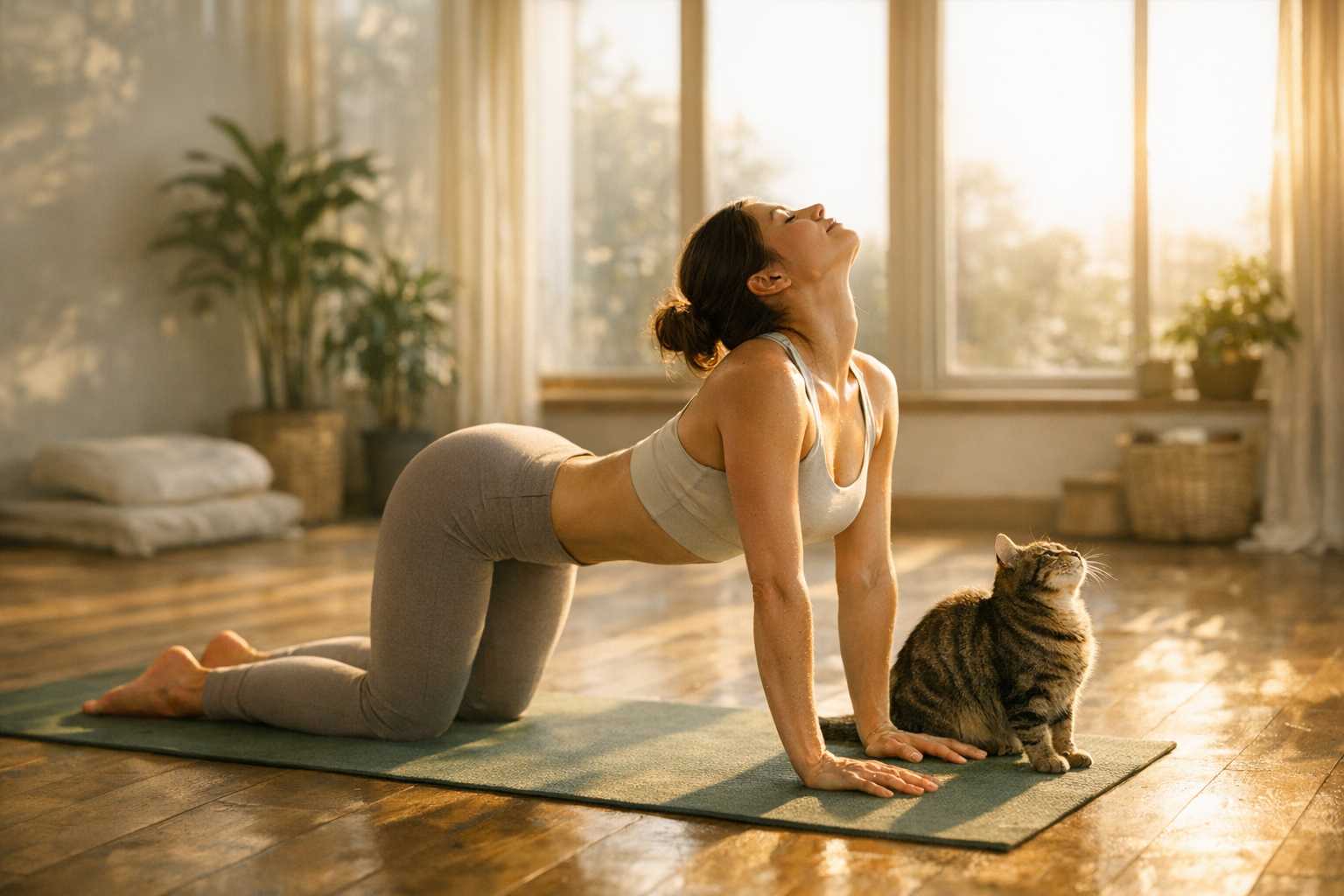
10 Best Cat Yoga Poses Inspired by Feline Stretching Behavior
SEO Slug: cat-yoga-poses-inspired-by-feline-stretching
Focus Keyphrase: cat yoga poses
Meta Description: Discover 10 cat yoga poses inspired by natural feline stretching. Improve flexibility, ease tension, build strength, and bring more calm into your daily routine.
Have you ever watched a cat wake up from a nap?
Before it does anything else, it stretches. It arches its back, reaches through its paws, and lengthens its whole body with effortless control. There’s something graceful, intentional, and surprisingly familiar about those movements.
In many ways, cats are natural masters of mobility. Their stretching habits can teach us a lot about flexibility, balance, and the importance of moving with awareness.
That’s what makes cat yoga poses so appealing.
Inspired by the way cats stretch, twist, rest, and reset, these poses can help improve mobility, release tension, reduce stress, and strengthen the body. Whether you’re new to yoga or already have an established practice, these feline-inspired movements are a simple and enjoyable way to reconnect with your body.
Let’s begin.
1. Cat-Cow Pose (Marjaryasana-Bitilasana)
This is the most well-known of all cat yoga poses, and for good reason. It’s one of the best ways to gently warm up the spine and bring awareness to the breath.
Start on your hands and knees with your wrists under your shoulders and your knees under your hips.
- Inhale: Drop your belly, broaden your chest, and lift your tailbone for Cow Pose.
- Exhale: Round your spine, draw your navel in, and tuck your chin and tailbone for Cat Pose.
Move slowly for 5 to 10 breaths.
This pose improves spinal mobility, helps ease back tension, and is especially helpful in the morning or after long periods of sitting. If you’ve ever seen your cat do a big dramatic stretch after waking up, this movement will feel very familiar.
2. Extended Puppy Pose (Uttana Shishosana)
This pose is sometimes confused with Anahatasana, or Melting Heart Pose, and in many modern classes the names are used interchangeably. It closely resembles the way a cat stretches its front legs forward while keeping the hips lifted.
Begin on all fours. Walk your hands forward and lower your chest toward the mat while keeping your hips stacked over your knees.
Rest your forehead on the floor, or if it feels comfortable and appropriate for your body, bring your chin down instead.
Hold for 30 seconds to 1 minute, breathing steadily.
This pose creates a deep stretch through the shoulders, chest, and upper back. It can be especially beneficial for anyone who spends long hours at a desk or feels tight across the upper body.
3. Balancing Table Pose (Dandayamana Bharmanasana)
Cats are known for their balance, and this pose reflects that same steady, controlled energy.
Start on all fours. Extend your right arm forward and your left leg back at the same time. Keep your hips level and your core engaged.
Hold for 3 to 5 breaths, then switch sides.
This pose strengthens the core, back, and glutes while also improving coordination and focus. It may look simple, but it requires stability, control, and full-body awareness.
If you wobble, don’t worry. That’s part of the practice.
4. Child’s Pose (Balasana)
If you’ve ever seen a cat curl into a soft, restful position, you’ll recognize the calming quality of this pose.
From kneeling, sit your hips back toward your heels and stretch your arms forward. Rest your forehead on the mat and let your whole body soften.
Breathe slowly and deeply.
Child’s Pose is a resting posture that gently stretches the hips, thighs, and lower back while calming the nervous system. It’s a wonderful pose to return to whenever you need a pause, both in yoga and in daily life.
Cats are remarkably good at resting without guilt. We could all learn something from that.
5. Downward-Facing Dog (Adho Mukha Svanasana)
The traditional name may reference a dog, but anyone who has lived with a cat knows that cats do this stretch all the time.
From all fours, tuck your toes and lift your hips up and back. Straighten your legs as much as feels comfortable, and press your hands firmly into the mat.
Let your head relax between your arms and gently draw your heels toward the floor.
Hold for 5 to 8 breaths.
This pose lengthens the spine, stretches the hamstrings and calves, and strengthens the shoulders and arms. It’s one of the most effective full-body stretches in yoga, and it definitely has a strong feline quality.
6. Low Lunge (Anjaneyasana)
Cats often stretch one leg long behind them, creating a deep opening through the front of the hip. Low Lunge mirrors that action beautifully.
From standing, step your right foot forward and lower your left knee to the mat. Sink your hips gently forward until you feel a stretch in the front of the left hip.
You can keep your hands on your front thigh or lift your arms overhead if that feels comfortable.
Hold for 30 seconds, then repeat on the other side.
This pose helps open the hip flexors, improves posture, and can relieve tightness caused by sitting, running, or cycling.
7. Seated Spinal Twist (Ardha Matsyendrasana)
Cats can twist and turn with remarkable ease, and this pose brings a little of that mobility into your own practice.
Sit with your legs extended. Bend your right knee and place your right foot outside your left leg. Hug your right knee with your left arm or bring your left elbow to the outside of the right thigh. Place your right hand behind you for support.
- Inhale: Lengthen through the spine.
- Exhale: Twist gently to the right.
Hold for 5 breaths, then switch sides.
This pose can help improve spinal mobility and release tension through the back and waist. It may also support digestion, although claims about “detoxifying” twists are often overstated.
8. Supine Spinal Twist (Supta Matsyendrasana)
This is one of the most relaxing poses on the list, and it captures that loose, comfortable feeling of a cat stretching out on a warm patch of sunlight.
Lie on your back and hug your right knee into your chest. Then guide it across your body to the left. Extend your right arm out to the side and turn your gaze to the right if that feels comfortable for your neck.
Stay for about 1 minute, then switch sides.
This pose gently releases the lower back, outer hips, and waist while encouraging slow, steady breathing. It’s especially soothing at the end of the day.
9. Plank Pose (Phalakasana)
Before a cat pounces, it lowers into a focused, powerful position. Plank captures that same sense of readiness and strength.
From all fours, step your feet back one at a time until your body forms a straight line from head to heels.
Press the floor away, engage your core, and keep your hips level. Avoid letting your lower back collapse.
Hold for 20 to 60 seconds.
Plank builds strength in the core, shoulders, arms, chest, and legs. It may not feel as effortless as a cat on the prowl, but with practice it becomes a powerful foundation for overall stability.
10. Happy Baby Pose (Ananda Balasana)
While the traditional name is Happy Baby, the shape has a playful, relaxed energy that feels very cat-like, especially if you’ve ever seen a cat roll onto its back and stretch its paws upward.
Lie on your back and draw both knees toward your chest. Reach for the outsides of your feet or ankles.
Gently pull your knees toward your armpits while keeping your lower back long on the mat.
You can stay still or rock gently from side to side.
This pose stretches the hips, inner thighs, and lower back, and it often feels both grounding and joyful. It’s a lovely way to close a yoga session.
Final Thoughts
Cats move with instinct, presence, and ease. They stretch when their bodies ask for it, rest when they need rest, and rarely seem to force anything.
That’s a valuable reminder.
These cat yoga poses are more than playful imitations of feline behavior. They offer a practical way to improve mobility, build strength, ease tension, and bring more mindfulness into your day.
You don’t need to be especially flexible to begin. You don’t need complicated equipment. All you need is a little space, a few minutes, and a willingness to move gently and attentively.
Start with one or two poses and see how your body responds. Over time, you may find yourself moving with a little more freedom, breathing a little more deeply, and feeling a little more at ease.
And if your cat happens to watch from nearby, consider it moral support.
Have you tried any of these cat yoga poses? Share your favorite in the comments below.