Hydrogen Peroxide for Cat Acne: Is It Safe? Complete Usage Guide
Hydrogen Peroxide for Cat Acne: Is It Safe? A Complete, Vet-Guided Guide
SEO Slug: hydrogen-peroxide-cat-acne-safe-usage-guide
Focus Keyphrase: hydrogen peroxide for cat acne
Meta Description: Is hydrogen peroxide safe for cat acne? Learn why vets generally advise against it, plus safer ways to treat feline chin acne at home and when to call your veterinarian.
If you’ve noticed black specks, crusting, or small red bumps on your cat’s chin, you’re probably wondering what’s going on and how to help. A lot of pet owners immediately think of hydrogen peroxide because it’s a common household antiseptic.
That reaction makes sense. But when it comes to cat acne, hydrogen peroxide is usually not the right choice.
In most cases, veterinarians recommend avoiding hydrogen peroxide on cats because it can irritate delicate skin, delay healing, and cause problems if your cat licks it off. Safer options are available, and knowing what to use can make a big difference in how quickly your cat improves.
Here’s what cat acne is, why hydrogen peroxide is not usually recommended, and what to do instead.
What Is Cat Acne?
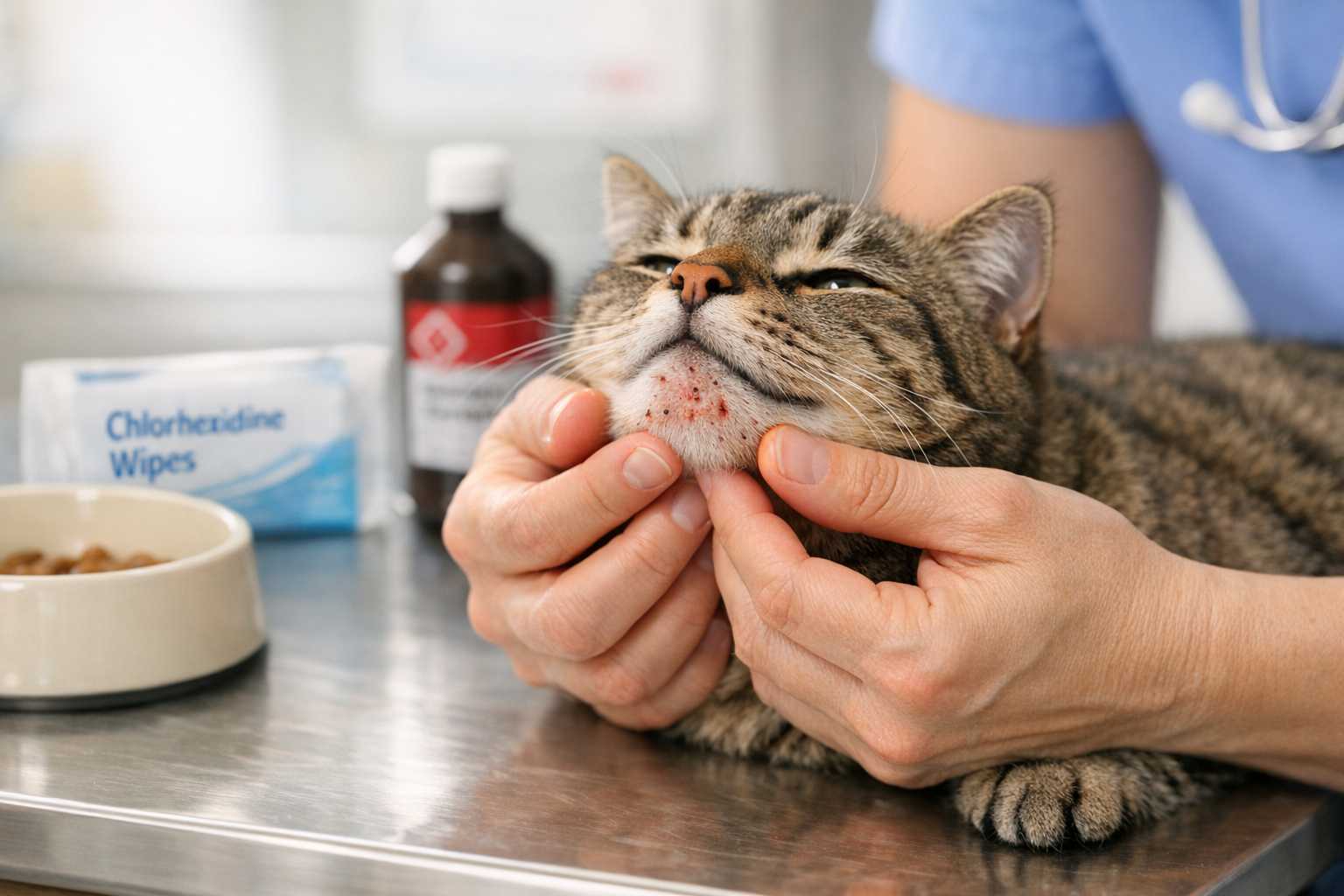
Cat acne is a common skin condition that usually affects the chin and sometimes the lower lip. It often starts as tiny black specks that look like dirt but don’t wipe away easily. These are similar to blackheads. In some cats, the area can become red, swollen, crusty, or tender.
Mild cases are often more annoying than dangerous, but more severe cases can become inflamed or infected and may be painful.
Possible contributing factors include:
- Bacteria buildup on food or water bowls
- Plastic bowls, which can trap bacteria in scratches
- Excess oil production in the hair follicles
- Stress
- Allergies or skin sensitivity
- Grooming issues
- Secondary bacterial or yeast overgrowth
Sometimes the exact cause is unclear. Some cats get a single mild flare-up, while others have recurring chin acne.
What Is Hydrogen Peroxide?
Hydrogen peroxide is a common antiseptic found in many home first-aid kits. The standard over-the-counter form is usually 3% hydrogen peroxide.
People often use it to clean minor cuts because it bubbles on contact. That bubbling action can make it seem like it’s disinfecting the wound effectively. However, modern veterinary and human medical guidance generally recognizes that hydrogen peroxide can also damage healthy tissue.
That is especially important when dealing with a cat’s sensitive skin.
Is Hydrogen Peroxide Safe for Cat Acne?
Short answer: generally no.
Hydrogen peroxide is not usually recommended for treating cat acne, especially without direct veterinary guidance.
Although it may kill some bacteria, it can also irritate the skin, worsen inflammation, and interfere with healing. On top of that, cats groom themselves frequently, so anything applied to the chin may be licked and swallowed.
If you suspect cat acne, it’s safer to use gentle, vet-approved care rather than reaching for hydrogen peroxide.
Why Hydrogen Peroxide Can Be Problematic for Cats
1. It can irritate and damage healthy skin
Hydrogen peroxide is not selective. It doesn’t just affect bacteria; it can also damage healthy skin cells. That can slow healing and make irritated skin even more inflamed.
2. Cats have sensitive skin
A product that seems mild on human skin may be too harsh for a cat. Even standard 3% hydrogen peroxide can sting or irritate the area, especially if the skin is already inflamed, broken, or infected.
3. Cats are likely to lick it off
This is one of the biggest concerns. Cats groom constantly, and the chin is an easy area for them to lick after treatment. Ingesting hydrogen peroxide can cause:
- Drooling or foaming
- Vomiting
- Mouth irritation
- Stomach upset
Because of that risk, topical use on cats is generally discouraged unless a veterinarian specifically instructs otherwise.
4. It may make inflammation worse
Cat acne already involves irritated hair follicles and inflamed skin. Applying a harsh antiseptic can intensify redness, discomfort, and swelling rather than helping the area settle down.
What Veterinarians Generally Recommend
Most veterinarians do not recommend hydrogen peroxide as a routine treatment for cat acne.
Instead, they usually suggest:
- Gentle cleansing
- Warm compresses
- Veterinary antiseptic products such as chlorhexidine, when appropriate
- Identifying and removing triggers, such as plastic bowls
- Prescription treatment if the acne is infected or severe
If you are ever unsure about what to apply to your cat’s skin, it’s best to call your veterinarian before using a household product.
Safer Alternatives for Cat Acne
The good news is that mild cat acne often responds well to simple, gentle care.
Warm compresses
A warm compress is one of the safest first steps for mild chin acne.
How to do it:
- Soak a clean, soft cloth in warm water.
- Wring out the excess water.
- Hold it gently against your cat’s chin for 1 to 2 minutes.
- Repeat once or twice daily if your cat tolerates it.
This can help loosen debris, soften crusts, and reduce irritation.
Chlorhexidine wipes or solution
Chlorhexidine is a veterinary antiseptic commonly used for certain skin conditions, including cat acne. It is generally considered a safer option than hydrogen peroxide when used correctly.
Important: use only a pet-safe product and follow your veterinarian’s instructions or the product label. Avoid getting it into the eyes, nose, or mouth.
Changing food and water bowls
This step is simple but often very helpful.
- Replace plastic bowls with stainless steel or ceramic
- Wash bowls daily with hot, soapy water
- Rinse thoroughly before reuse
Plastic can develop tiny scratches that trap bacteria and irritate the skin over time.
Veterinary-prescribed treatment
If the acne is moderate to severe, your veterinarian may recommend:
- Topical antibiotics
- Oral antibiotics
- Medicated cleansers
- Anti-inflammatory treatment
- Antifungal medication, if yeast is involved
Never use human acne medications on your cat unless your vet specifically says it is safe.
Home Care: A Safer Step-by-Step Approach
If your cat has a mild case and the skin is not badly inflamed, you can often start with basic supportive care.
Step 1: Check the severity
Home care may be reasonable if you only see a few blackheads or mild debris on the chin. If there is swelling, pain, bleeding, pus, or extensive crusting, contact your vet first.
Step 2: Wash your hands
Clean hands help prevent introducing more bacteria to the area.
Step 3: Apply a warm compress
Use a soft cloth with warm water and gently hold it against the chin for a minute or two.
Step 4: Clean only with a vet-approved product
If your veterinarian has recommended a chlorhexidine wipe or other feline-safe cleanser, use it gently. Do not scrub, squeeze, or pick at the lesions.
Step 5: Keep the area dry
After cleaning, gently pat the area dry. Excess moisture can further irritate the skin.
Step 6: Monitor closely
Watch for improvement over several days. If the area looks worse, becomes painful, or does not improve, schedule a veterinary visit.
When to See a Veterinarian
Skip home treatment and contact your vet promptly if you notice any of the following:
- Marked swelling of the chin or face
- Pus, discharge, or a bad odor
- Open sores or bleeding
- Pain when the area is touched
- Significant redness or heat
- Hair loss that is getting worse
- Acne spreading beyond the chin area
- Repeated flare-ups
- No improvement after several days of gentle care
These signs may indicate infection or another skin condition that looks like acne but needs different treatment.
How to Help Prevent Cat Acne
Cat acne can come back, so prevention matters.
Use better bowls
Choose stainless steel or ceramic instead of plastic.
Wash bowls every day
Daily cleaning reduces bacteria and residue.
Keep the chin area clean
If your cat is messy when eating, gently wipe the chin with a damp cloth and dry it afterward.
Stay on top of grooming
Some cats, especially older or overweight cats, may need a little help keeping hard-to-reach areas clean.
Avoid harsh products
Do not use human skincare products, essential oils, alcohol, benzoyl peroxide, or hydrogen peroxide unless your veterinarian specifically directs you to.
Watch for patterns
If flare-ups happen after certain foods, stressors, or environmental changes, mention that to your vet.
Common Myths About Cat Acne
Myth: Hydrogen peroxide is safe if it’s diluted
Reality: Even standard 3% hydrogen peroxide can irritate a cat’s skin and is risky if licked.
Myth: Cat acne is just dirt
Reality: Those black specks are often plugged hair follicles, not simple surface dirt.
Myth: Human acne products are fine for cats
Reality: Many human skin treatments are too harsh or unsafe for cats.
Myth: Only poorly groomed cats get acne
Reality: Cat acne can affect very clean, well-cared-for cats too.
Myth: It always goes away on its own
Reality: Mild cases may improve, but inflamed or infected acne often needs treatment.
Final Thoughts
If you’re wondering whether hydrogen peroxide for cat acne is safe, the practical answer is usually no. While it may seem like a quick fix, it can irritate the skin, delay healing, and create additional risks if your cat licks it off.
For most mild cases, gentler care is the better approach: warm compresses, clean bowls, and veterinarian-approved products such as chlorhexidine when appropriate. And if the acne looks painful, infected, or persistent, your veterinarian should be involved.
When it comes to your cat’s skin, gentle and safe almost always beats harsh and fast.
Disclaimer: This article is for informational purposes only and is not a substitute for professional veterinary advice, diagnosis, or treatment. Always contact your veterinarian if you are unsure how to care for your cat’s skin condition.