How to Keep Your Cat Calm During Yoga: Tips for a Focused Doga Session
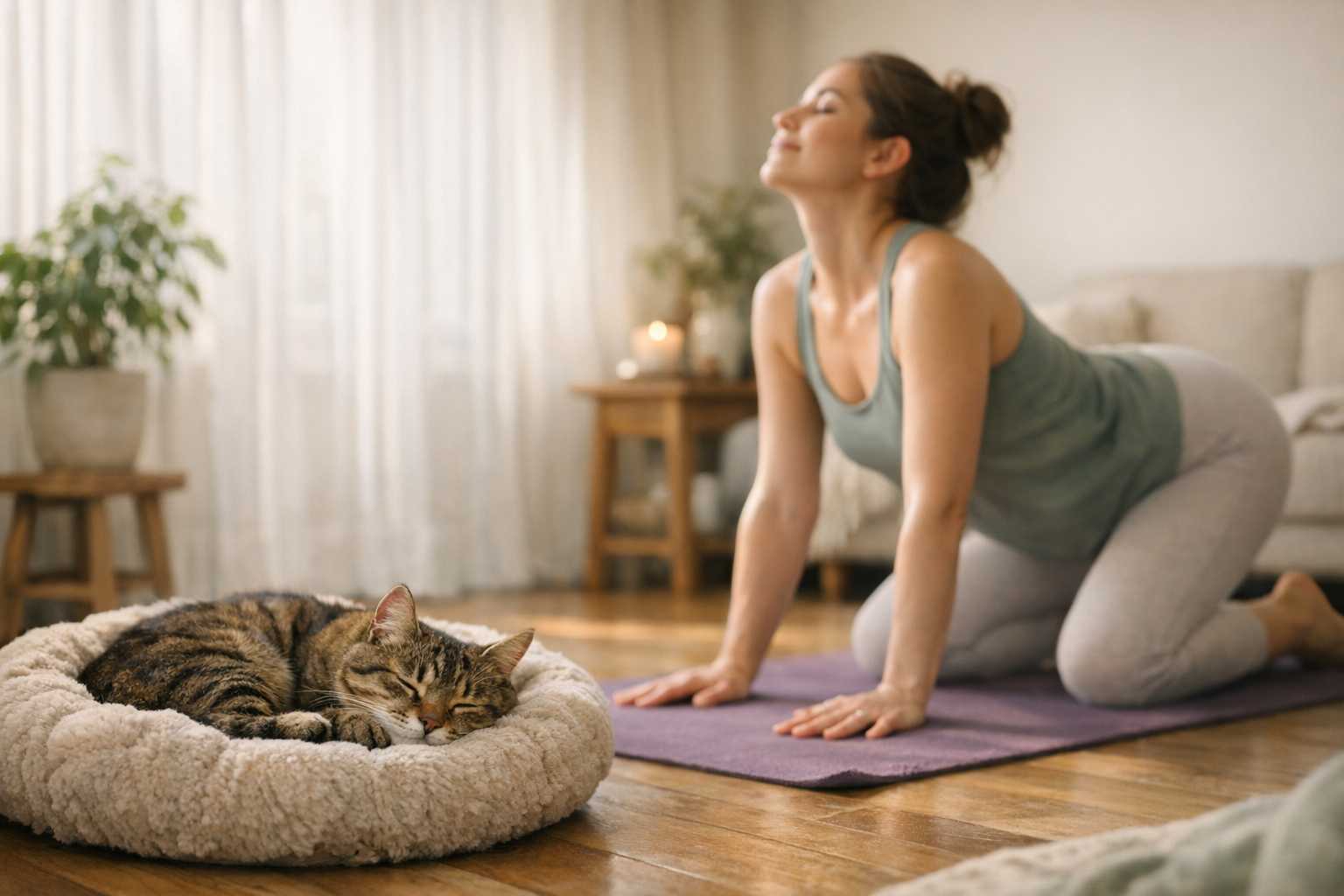
How to Keep Your Cat Calm During Yoga: Tips for a More Peaceful Doga Session
SEO Slug: how-to-keep-your-cat-calm-during-yoga
Focus Keyphrase: keep your cat calm during yoga
Meta Description: Want to keep your cat calm during yoga? Discover practical, cat-friendly tips for a more peaceful doga session with your feline companion.
So, you’ve rolled out your yoga mat, filled your water bottle, and settled into a deep breath—only for your cat to stroll across your face.
If that sounds familiar, you’re not alone.
Anyone who shares a home with a cat knows how irresistibly attractive a yoga mat can be. Cats love to sit on it, stretch on it, knead it, and claim it as their own the moment you try to use it. They may even decide that Savasana is the perfect time to stare directly into your soul.
The good news is that yoga with a cat nearby doesn’t have to feel chaotic. With a little planning, you can create a calmer, more focused practice for both of you. Some people call this doga—a yoga session shared with a pet. While the term originally became popular with dogs, cat lovers have embraced it too.
Here’s how to keep your cat calm during yoga and make your practice more enjoyable.
What Is Doga, and Why Do People Love It?
Doga simply means practicing yoga with your pet nearby or gently included in the experience.
For many people, it adds comfort, connection, and a sense of playfulness to their routine. Spending time with animals can support relaxation and lower stress, which pairs naturally with yoga. That said, a peaceful session depends on the right environment. The goal is calm companionship—not mid-pose chaos.
Why Are Cats So Drawn to Yoga Mats?
Before trying to change the behavior, it helps to understand it.
Cats are often attracted to yoga mats because of:
- Warmth: Your body heat lingers on the mat, and cats naturally seek warm places.
- Your scent: The mat smells familiar and comforting.
- Texture: Many cats enjoy the soft yet grippy feel under their paws.
- Your attention: During yoga, you’re close to the floor and focused in one area, which makes cats curious and eager to join you.
When you understand why your cat is interested, it becomes easier to guide that behavior instead of fighting it.
1. Help Your Cat Burn Off Energy First
A tired cat is usually a calmer cat.
Before your yoga session, spend 10 to 15 minutes playing with your cat using a wand toy, ball, or another favorite toy. A short burst of active play can help release pent-up energy and make your cat more likely to rest afterward.
If your cat tends to get the “zoomies,” this may be one of the most effective strategies. It’s simple, healthy, and beneficial for both behavior and enrichment.
2. Time Your Practice After a Meal
Many cats become more relaxed after eating.
If possible, plan your yoga session shortly after your cat’s mealtime. Once they’ve eaten, cats often settle into grooming or resting, which can make them less likely to interrupt your practice.
A predictable routine can also help. If your cat learns that food comes first and yoga comes next, they may begin to settle more easily during your session.
3. Create a Comfortable Spot Nearby
Instead of trying to keep your cat away entirely, give them an appealing place of their own close to your mat.
This could be:
- A soft blanket
- A cat bed
- A favorite cushion
- A warm, pet-safe heated pad
Place it near enough that your cat still feels included, but not so close that they’re lying directly where you need to move. Adding an item with your scent, such as a worn T-shirt, can make the spot even more inviting.
Often, if a cat has a cozy alternative, they’ll choose that over interrupting your poses.
4. Use Cat-Safe Calming Aids
Some calming tools can help create a more relaxed environment, but safety matters.
A cat pheromone diffuser, such as Feliway, may help some cats feel more secure and settled. These diffusers mimic natural feline pheromones and are commonly used to reduce stress-related behaviors.
Be cautious with scents and essential oils. Many essential oils—including lavender in some forms and concentrations—can be harmful to cats, especially when diffused or used in enclosed spaces. For that reason, it’s best to avoid essential oils unless your veterinarian specifically says a product is safe for your pet.
Safer options include:
- A cat pheromone diffuser
- Good ventilation
- A calm, quiet room without strong fragrances
When in doubt, choose pet-specific calming products over aromatherapy.
5. Play Soft, Relaxing Music
A quiet background soundtrack can help set the tone for a calm session.
Some cats respond well to gentle music or soothing ambient sounds. You can try:
- Soft classical music
- Nature sounds
- Low-volume instrumental playlists
- Music created specifically for cats
Keep the volume low. The idea is to create a peaceful atmosphere, not to overstimulate your pet.
6. Avoid Rewarding Interruptions
This tip can make a big difference over time.
If your cat interrupts your practice and you immediately respond with petting, talking, or laughter, they may learn that interrupting gets attention. Instead, try to stay calm and neutral. If needed, gently move your cat aside without making a big event out of it.
This approach teaches your cat that climbing on you during yoga isn’t especially rewarding. Consistency is important, and results may take time, but many cats do learn the routine.
7. Accept That Some Sessions Won’t Be Perfect
Let’s be honest: some days your cat will simply have other plans.
They may walk under you during downward dog, swat at your hair, or decide your back is the ideal place to perch. When that happens, it can help to stay flexible—mentally and emotionally.
Yoga is, in part, about presence and patience. Sometimes the most realistic approach is to pause, smile, and continue when you can. A little humor goes a long way.
8. Gently Include Your Cat in the Experience
Rather than seeing your cat as a distraction, you may be able to make them part of the atmosphere.
A few simple ways to do that include:
- Practicing cat-cow pose beside them
- Allowing a calm cuddle during Savasana
- Keeping your movements slow and gentle when they choose to rest nearby
There’s no need to force interaction. The best doga sessions are usually the ones where your cat feels safe, relaxed, and free to participate in their own way.
9. Stick to a Routine
Cats thrive on predictability.
If you practice yoga at roughly the same time each day, your cat may start to recognize the pattern. Over time, “mat time” can become just another familiar part of the household routine.
That consistency can help reduce curiosity-driven interruptions and make your sessions feel calmer overall.
10. Be Patient With Your Cat—and Yourself
This is the most important advice of all.
A peaceful yoga routine with a cat doesn’t happen overnight. There may be disrupted poses, spilled water bottles, and plenty of unexpected furry interruptions. That’s normal.
Your cat isn’t trying to sabotage your practice. More often, they simply want to be close to you or explore something that seems interesting and inviting.
With patience, consistency, and a little trial and error, things usually improve.
Final Thoughts
If you want to keep your cat calm during yoga, the best approach is a combination of preparation, routine, and realistic expectations.
Try playing with your cat before you begin, scheduling your session after meals, setting up a cozy spot nearby, and using cat-safe calming tools if needed. Most importantly, stay patient and keep the experience positive.
Yoga with a cat may never be perfectly interruption-free—but it can still be peaceful, enjoyable, and surprisingly special.
So roll out your mat, take a deep breath, and let your feline companion be part of the moment.
Did this article help you? Share it with a fellow cat-loving yogi, and feel free to pass it along to anyone trying to make peace between their yoga practice and their curious cat.