Cat Crouching Low to the Ground: Fear, Play or Predator Mode?
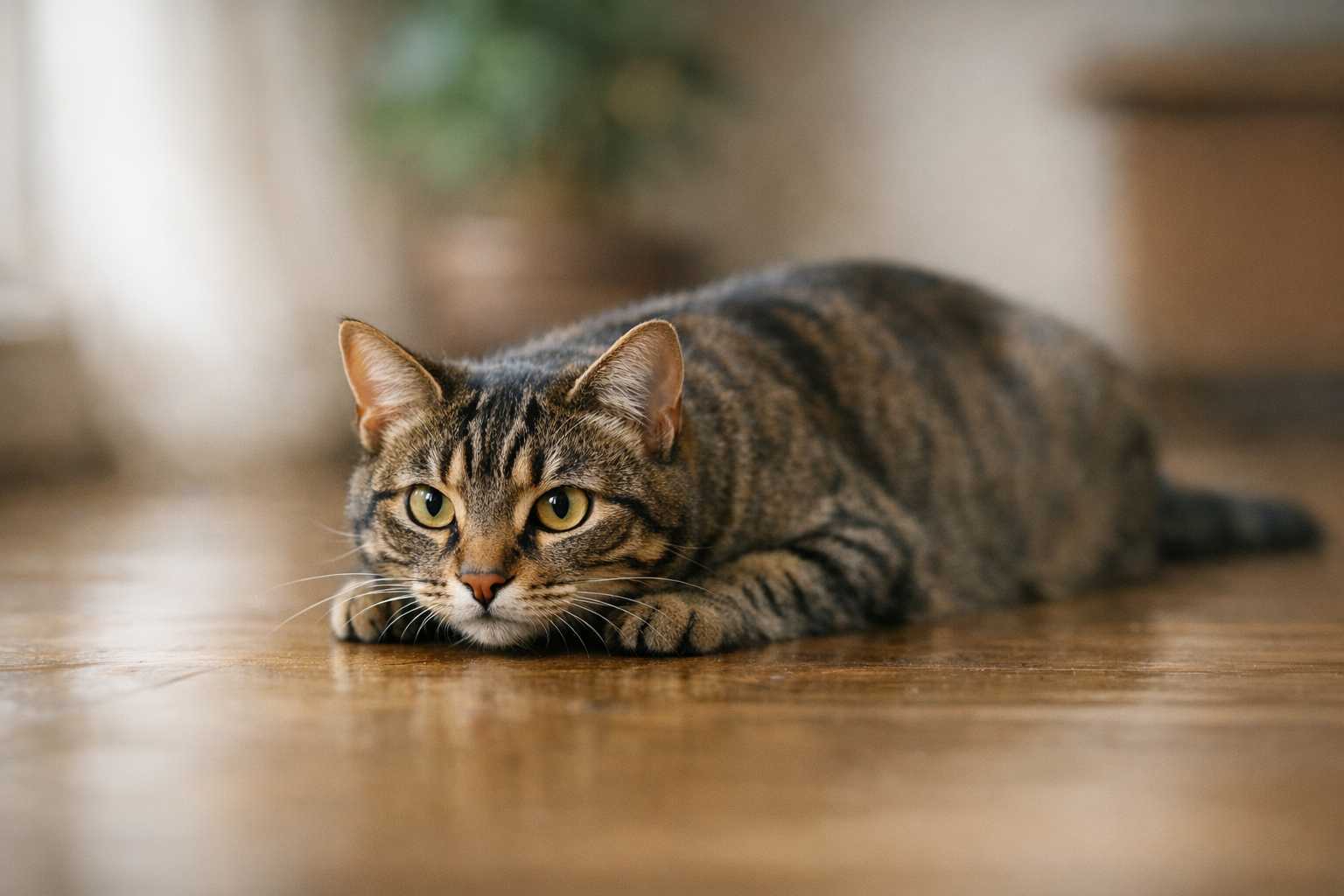
Cat Crouching Low to the Ground: Fear, Play, or Hunting Instinct?
SEO Slug: cat-crouching-low-to-the-ground
Focus Keyphrase: cat crouching low to the ground
Meta Description: Is your cat crouching low to the ground? Learn what it can mean—from fear and playfulness to hunting instinct or pain—and how to respond appropriately.
Have you ever seen your cat suddenly flatten close to the floor and wondered what it meant?
Their belly nearly touches the ground, their eyes seem fixed on something, and their body goes tense. It can look strange, dramatic, or even a little concerning—especially if you are not sure what triggered it.
The good news is that this posture is often easy to understand once you look at the situation and your cat’s overall body language.
A cat crouching low to the ground may be feeling scared, playful, intensely focused on something they want to chase, or, in some cases, physically unwell. The key is to read the full picture rather than the crouch alone.
Let’s take a closer look at what this behavior usually means.
What Does It Mean When a Cat Crouches Low to the Ground?
When a cat crouches low to the ground, they are communicating through body language.
Cats do not rely on words, of course, so posture, facial expression, tail position, ear position, and movement all work together to show how they are feeling. A low crouch is one of the clearer signals they use, but it does not always mean the same thing.
In some situations, it is a sign of fear. In others, it is part of play or stalking behavior. Less commonly, it may suggest pain, illness, or social stress.
That is why context matters so much.
The Three Most Common Reasons Cats Crouch Low
In most cases, a cat crouching low to the ground is doing so for one of these reasons:
- Fear or anxiety
- Playfulness and excitement
- Hunting or stalking instinct
These can look similar at first glance, but there are important differences.
Fear Crouching: When a Cat Feels Unsafe
Fear is one of the most common reasons a cat lowers their body.
When cats feel threatened, they may try to make themselves smaller and less noticeable. Crouching low can be part of a defensive survival response. Some cats freeze in place, while others prepare to run if they get the chance.
Signs Your Cat Is Crouching Out of Fear
Look for body language such as:
- Ears flattened or turned sideways
- Wide eyes with enlarged pupils
- Tail tucked close to the body
- A stiff, tense posture
- Very little movement
- Avoidance of direct interaction
- Sometimes puffed fur or a defensive expression
A fearful crouch often looks tight and rigid rather than relaxed. The cat may seem frozen, withdrawn, or ready to bolt.
Common Triggers
A fearful crouch may happen because of:
- Loud noises, such as thunder, fireworks, or vacuum cleaners
- New people or animals
- A stressful vet visit or carrier trip
- Sudden environmental changes
- Being startled or handled unexpectedly
How to Respond
If your cat appears afraid, the best approach is usually to give them space.
Do not force contact, pick them up, or crowd them. Instead:
- Speak softly
- Move slowly
- Reduce noise if possible
- Let them retreat to a safe place
- Allow them to approach you on their own terms
If your cat seems fearful often, or if their anxiety interferes with daily life, speak with your veterinarian. Ongoing fear and stress in cats can sometimes be improved with changes at home, behavior support, or medical treatment.
The Play Crouch: Getting Ready to Pounce
Not every low crouch is a problem. Sometimes it is simply your cat getting ready to play.
If your cat drops low, wiggles slightly, and then launches at a toy, another pet, or unfortunately your ankles, that is usually playful pouncing behavior.
Signs Your Cat Is Crouching to Play
Play crouching often includes:
- Focused but bright eyes
- A low body with relaxed energy
- Tail movement, especially twitching at the tip
- A slight rear-end wiggle before the jump
- Quick, springy movement
- Sometimes chirping or excited vocal sounds
The main difference between play and fear is overall energy. A playful cat may be intensely focused, but they do not usually look shut down or defensive.
Why Cats Use This Position During Play
Crouching helps a cat shift weight into the back legs and prepare for a quick burst of movement. It is a natural setup for pouncing, leaping, and chasing.
Even indoor cats who have never hunted outside still practice these movements because they are built into normal feline behavior.
Should You Encourage It?
Yes—when it is directed at appropriate things.
Healthy outlets include:
- Wand toys
- Toy mice
- Soft balls
- Puzzle toys
- Short interactive play sessions
If your cat targets your hands, feet, or legs, try to redirect that energy to toys instead. It is best not to teach a cat that human body parts are acceptable “prey.”
Hunting or Stalking Mode: The Predator Crouch
Cats are natural predators, and stalking is deeply instinctive—even in well-fed house cats.
If your cat spots a bird through the window, a bug on the floor, or a toy that mimics prey, they may drop into a low hunting crouch. This posture is usually more deliberate and focused than a playful crouch.
Signs Your Cat Is in Hunting Mode
A stalking crouch often looks like this:
- Body held very low and steady
- Head stretched slightly forward
- Eyes fixed on the target
- Ears forward and alert
- Tail low and fairly still
- Slow, controlled movement
- Little or no sound
This kind of crouch can seem almost intense or trance-like. The cat is highly focused and often ignoring everything else around them.
The Typical Hunting Sequence
Cats often follow a familiar pattern:
- Notice the target
- Stalk quietly
- Crouch and pause
- Adjust position
- Pounce
This is completely normal feline behavior.
Is It Healthy?
Yes. In fact, giving cats safe ways to express hunting behavior is good for their mental and physical well-being.
Indoor cats especially benefit from activities that allow them to stalk, chase, and pounce in a controlled way.
How to Tell the Difference Quickly
If you are unsure why your cat is crouching, compare the rest of their body language.
| Body Language | Fear | Play | Hunting Mode | |---|---|---|---| | Ears | Flattened or sideways | Forward or neutral | Forward and alert | | Eyes | Wide, watchful, uneasy | Bright and excited | Fixed on a target | | Tail | Tucked or close to body | Low with twitching | Low and still | | Muscles | Tight and rigid | Loose and springy | Tense but controlled | | Movement | Frozen or hesitant | Bouncy and quick | Slow and deliberate | | Sounds | Silent, hissing, or growling | Chirping or playful sounds | Usually silent |
Once you start watching the ears, tail, and overall tension, the meaning usually becomes much clearer.
Other Possible Reasons a Cat Crouches Low
Fear, play, and stalking are the most common explanations, but they are not the only ones.
Pain or Illness
Sometimes a cat crouches because they are uncomfortable.
A painful or ill cat may sit or crouch low in a way that looks guarded, withdrawn, or tense. This can happen with stomach pain, injury, fever, arthritis, urinary problems, or other medical issues.
Watch for signs such as:
- Reduced appetite
- Hiding
- Lethargy
- Reluctance to jump or move
- A hunched back
- Flinching when touched
- Changes in litter box habits
If the crouch seems unusual for your cat, or if it comes with any other signs of illness, contact your veterinarian.
Trying to Stay Warm
Cats may also crouch or tuck themselves tightly when they are cold.
This kind of posture is usually less tense and more compact. You may notice your cat seeking warm places such as:
- Sunny windows
- Blankets
- Heated beds
- Radiators or vents
- Your lap
Social Submission Around Other Cats
In multi-cat homes, a lower-ranking or less confident cat may crouch in the presence of another cat to appear non-threatening.
This can be normal, but if one cat seems consistently intimidated, blocked from resources, or stressed, it may be worth adjusting the home setup to reduce tension.
When Should You Worry?
Most crouching is normal, but it is worth paying closer attention if:
- Your cat stays crouched for long periods and seems unable or unwilling to relax
- The posture is new and happens often
- Your cat cries, growls, or seems distressed while crouching
- They appear painful, weak, or disoriented
- They stop eating or drinking
- They hide more than usual
- They have trouble walking, jumping, or using the litter box
If something about the behavior feels different from your cat’s usual habits, trust that instinct and check with your vet.
How to Help a Cat That Crouches Low
What you should do depends on the cause.
If Your Cat Is Afraid
- Provide hiding spots and quiet areas
- Keep routines predictable
- Avoid forcing interaction
- Use calm voices and gentle movement
- Consider feline calming aids if your vet recommends them
If Your Cat Is Being Playful
- Offer daily interactive play
- Rotate toys to keep them interesting
- Use toys that encourage chasing and pouncing
- Redirect play away from hands and feet
If Your Cat Is Acting Like a Hunter
- Use wand toys or moving toys that mimic prey
- Try food puzzles or treat-dispensing toys
- Create a window perch for bird-watching
- Give them regular opportunities to stalk and pounce safely
A cat who gets enough play, enrichment, and security is generally happier and less likely to develop stress-related behaviors.
Final Thoughts
A cat crouching low to the ground is usually trying to tell you something.
They may be frightened, excited, playful, or locked into their natural stalking instinct. In some cases, they may also be cold, socially cautious, or not feeling well.
The most important thing is to look at the whole cat, not just the crouch. Their ears, tail, eyes, movement, and the surrounding situation all help explain what is going on.
The better you understand your cat’s body language, the easier it becomes to respond in a way that helps them feel safe, healthy, and understood.