Cat Hip Wiggle Before Pouncing: Understanding the Pre-Hunt Behavior
Why Cats Wiggle Their Hips Before Pouncing
SEO Slug: cat-hip-wiggle-before-pouncing
Focus Keyphrase: cat hip wiggle before pouncing
Meta Description: Curious why your cat wiggles their hips before pouncing? Learn what this instinctive pre-hunt behavior means, why cats do it, and when it’s perfectly normal.
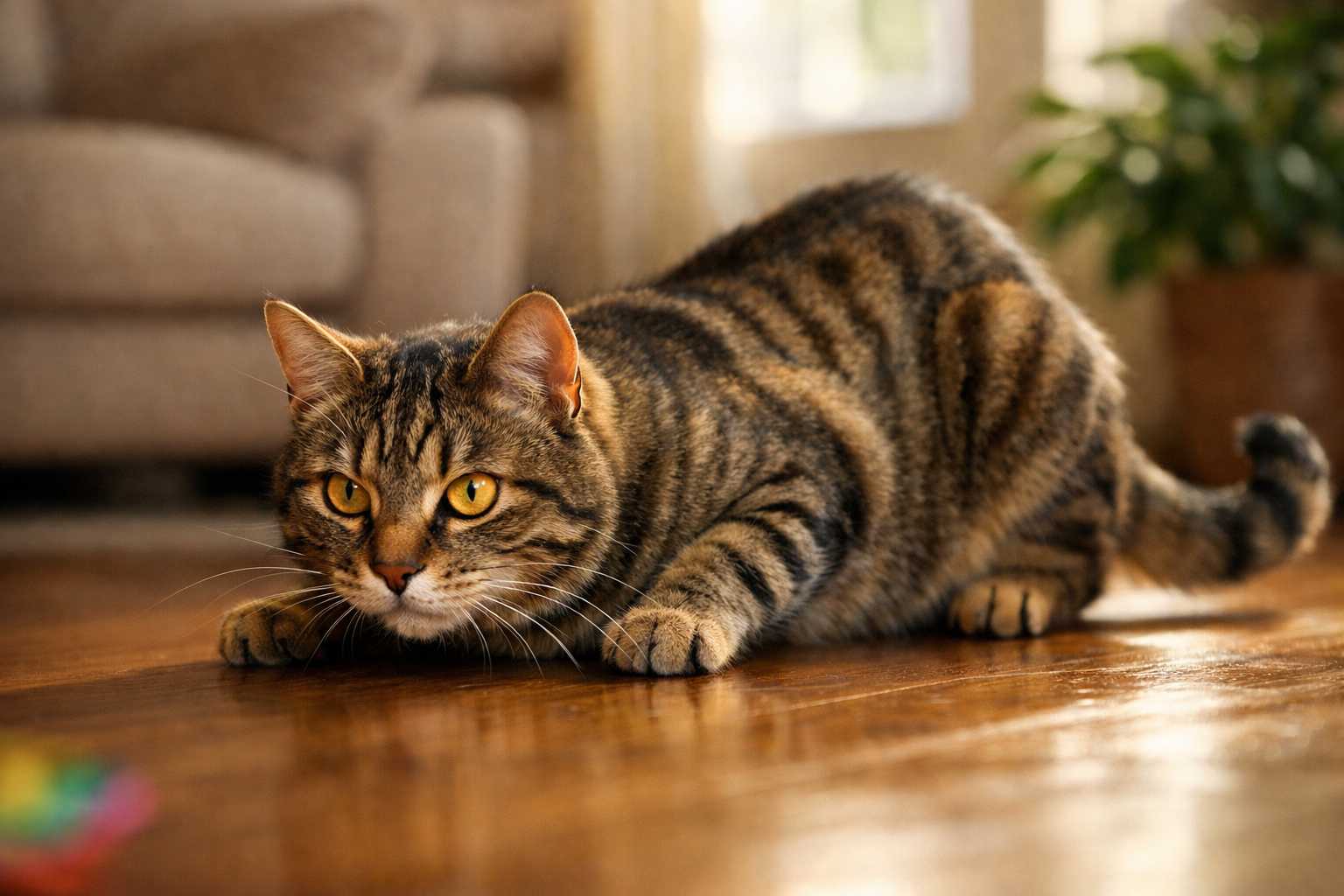
If you’ve ever watched your cat crouch low, fix their gaze on a toy, and start swaying their hindquarters just before they leap, you’ve seen one of the most recognizable parts of feline body language: the pre-pounce hip wiggle.
It’s cute, a little funny, and completely natural. But it’s not just for show. That little wiggle is part of how cats prepare their bodies to spring.
Let’s take a closer look at what it means and why cats do it.
What Is the Cat Hip Wiggle?
The cat hip wiggle is the side-to-side movement many cats make just before a pounce. Usually, the cat crouches, focuses intensely on a target, shifts weight through the back legs, and then launches forward.
This behavior is often called the pre-pounce wiggle, and it’s closely tied to a cat’s hunting instincts. Even indoor cats that have never hunted outside still show it during play because the movement pattern is deeply instinctive.
Why Do Cats Wiggle Their Hips Before Pouncing?
There isn’t one single proven reason, but animal behavior experts generally agree that the wiggle helps cats prepare for an accurate, powerful jump. Several factors likely play a role.
1. It Helps Them Position Their Back Feet
Before a jump, cats need stable footing. The wiggle may help them adjust their hind paws and distribute their weight so they can push off more effectively.
You can think of it like an athlete setting up before a sprint or jump: small movements that create balance, traction, and control.
2. It Primes the Muscles for an Explosive Leap
A pounce depends on strength from the hips, thighs, and lower back. The rocking motion may help activate those muscles and prepare the body for fast movement.
It’s a brief physical reset before action.
3. It May Help With Balance and Timing
As cats shift their weight, they may be fine-tuning their body position and timing. Because pouncing requires speed and precision, even tiny adjustments can matter.
Some people suggest the wiggle also helps with depth judgment. While that idea is plausible, it has not been definitively proven. A cat’s excellent vision, whisker input, and body coordination all work together during the hunt sequence.
4. It Builds Stored Energy for the Jump
When a cat crouches and wiggles, the body is essentially loading up for the leap. The hind legs compress, the muscles tense, and then all that stored force is released in one quick burst.
That’s what makes the pounce look so smooth and powerful.
Is the Hip Wiggle Only Related to Hunting?
No. Cats also do it during play, especially when stalking toys, other pets, or moving objects around the house.
For cats, play often mirrors hunting behavior. The full sequence may include:
- watching
- stalking
- crouching
- wiggling
- pouncing
- grabbing
- kicking
So if your cat wiggles before attacking a toy mouse or feather wand, they’re not being strange, they’re acting out a normal predatory pattern in a safe, playful way.
What If Your Cat Wiggles Before Pouncing at You?
If your cat stares at you from across the room, crouches, and starts the wiggle, it usually means one of two things:
They want to play.
Your cat may see movement in your feet, hands, or clothing and react as if it’s a target.
They’re practicing instinctive behavior.
Cats sometimes rehearse hunting actions even when there’s no real prey involved.
In most cases, this is not true aggression. Still, it’s best to redirect that energy toward an appropriate toy, especially if your cat tends to pounce on hands or ankles. Encouraging attacks on people, even in play, can lead to rough habits.
The Instinct Behind the Behavior
Domestic cats may live comfortable indoor lives, but biologically they are still highly specialized hunters. Their bodies are built for stalking, chasing, and short bursts of explosive movement.
That’s why behaviors like crouching, tail twitching, laser-focused staring, and hip wiggling are so common. These actions are part of an ancient motor pattern linked to hunting.
And it’s not unique to house cats. Similar pre-pounce body adjustments can be seen in wild felines as well, though the exact motion varies by species and situation.
How to Support Your Cat’s Natural Hunting Instincts
Because this behavior is normal and healthy, the goal isn’t to stop it. Instead, give your cat safe, satisfying outlets for it.
Offer Interactive Play
Wand toys, feather teasers, and soft prey-like toys are excellent choices because they let your cat stalk and pounce naturally.
Aim for regular play sessions, ideally once or twice a day, depending on your cat’s age, health, and energy level.
Avoid Using Hands as Toys
If your cat is allowed to chase fingers or feet, they may start treating people like prey targets. Use toys that create distance between your body and your cat’s hunting behavior.
Try Food Puzzles
Puzzle feeders and treat-dispensing toys tap into your cat’s desire to work for a reward. They provide mental stimulation and can help reduce boredom.
Create Places to Stalk and Hide
Cat trees, tunnels, boxes, and window perches give cats a chance to observe, crouch, and spring in ways that feel natural and enriching.
Make Bird-Watching Safe
A secure window perch can give your cat hours of entertainment. Many cats chatter, crouch, or wiggle while watching birds or squirrels outside. This is usually harmless frustration-release behavior, as long as they also get interactive play indoors.
When Should You Be Concerned?
The hip wiggle itself is usually completely normal. In most cats, it’s simply a sign of excitement, focus, and playful predatory behavior.
You may want to look more closely if:
- your cat’s play becomes unusually rough or aggressive
- they frequently ambush people without responding to redirection
- they seem restless, overstimulated, or frustrated much of the time
- the behavior appears suddenly alongside other changes in mood, appetite, sleep, or activity
- your cat seems physically uncomfortable when crouching, jumping, or landing
If anything about the behavior feels new, excessive, or paired with signs of pain or stress, it’s worth discussing with a veterinarian.
A Few Interesting Facts About Cat Pouncing
- Cats can leap several times their body length in a single bound.
- Kittens begin practicing stalking and pouncing very early in life.
- Hunting behavior is driven by instinct, not just hunger, which is why even well-fed cats still love to chase.
- Whiskers help cats sense nearby space and movement, especially at close range.
- Many indoor play behaviors are direct versions of the same movements used in real hunting.
Why This Little Wiggle Matters
The cat hip wiggle before pouncing is more than an adorable quirk. It’s a glimpse into how finely tuned cats really are. In just a second or two, your cat is balancing, preparing, aiming, and gathering force for movement.
That’s part of what makes cats so fascinating. Even in the middle of your living room, their instincts are still very much alive.
So the next time your cat crouches, locks onto a target, and starts that familiar little wiggle, you’ll know you’re watching a natural behavior that blends play, athleticism, and instinct in one tiny moment.
Final Thoughts
The cat hip wiggle before pouncing is a normal, instinctive behavior tied to preparation for a leap. It likely helps with footing, muscle readiness, balance, and timing, whether your cat is hunting, playing, or simply practicing natural predatory behavior.
In most cases, it’s nothing to worry about. In fact, it’s a healthy sign that your cat is engaged and expressing natural instincts. The best thing you can do is give them safe ways to stalk, chase, and pounce through regular enrichment and play.
Your cat isn’t being dramatic. They’re just doing what cats were designed to do.
If this article helped you understand your cat a little better, share it with another cat lover who has wondered about that adorable pre-pounce wiggle.