Understanding Cat Sitting Positions: A Complete Mood and Health Guide
Understanding Cat Sitting Positions: A Complete Guide to Mood and Health
SEO Slug: understanding-cat-sitting-positions-mood-health-guide
Focus Keyphrase: cat sitting positions
Meta Description: Discover what your cat’s sitting positions may reveal about their mood, comfort, and health. Learn how to read feline body language with this simple, practical guide.
Have you ever caught your cat sitting in a strange position and wondered, What are you doing?
You’re definitely not the only one.
Cats can seem mysterious, but their body language is often more expressive than we realize. The way a cat sits, rests, or settles into a spot can offer helpful clues about how they’re feeling—both emotionally and physically.
Once you start noticing these small signals, it becomes much easier to understand your cat’s mood, respect their boundaries, and spot changes that may need attention.
Let’s take a closer look at what common cat sitting positions can mean.
Why Cat Sitting Positions Matter
Cats can’t tell us in words when they feel relaxed, anxious, playful, or uncomfortable. Instead, they communicate through posture, movement, facial expressions, and tail position.
Paying attention to your cat’s sitting positions can help you:
- Better understand your cat’s mood
- Notice possible signs of pain or illness earlier
- Strengthen your bond through better communication
- Recognize when your cat wants attention—or prefers space
It’s not an exact science, and no single posture tells the whole story. But when you combine body position with context, behavior, and routine, you can learn a lot.
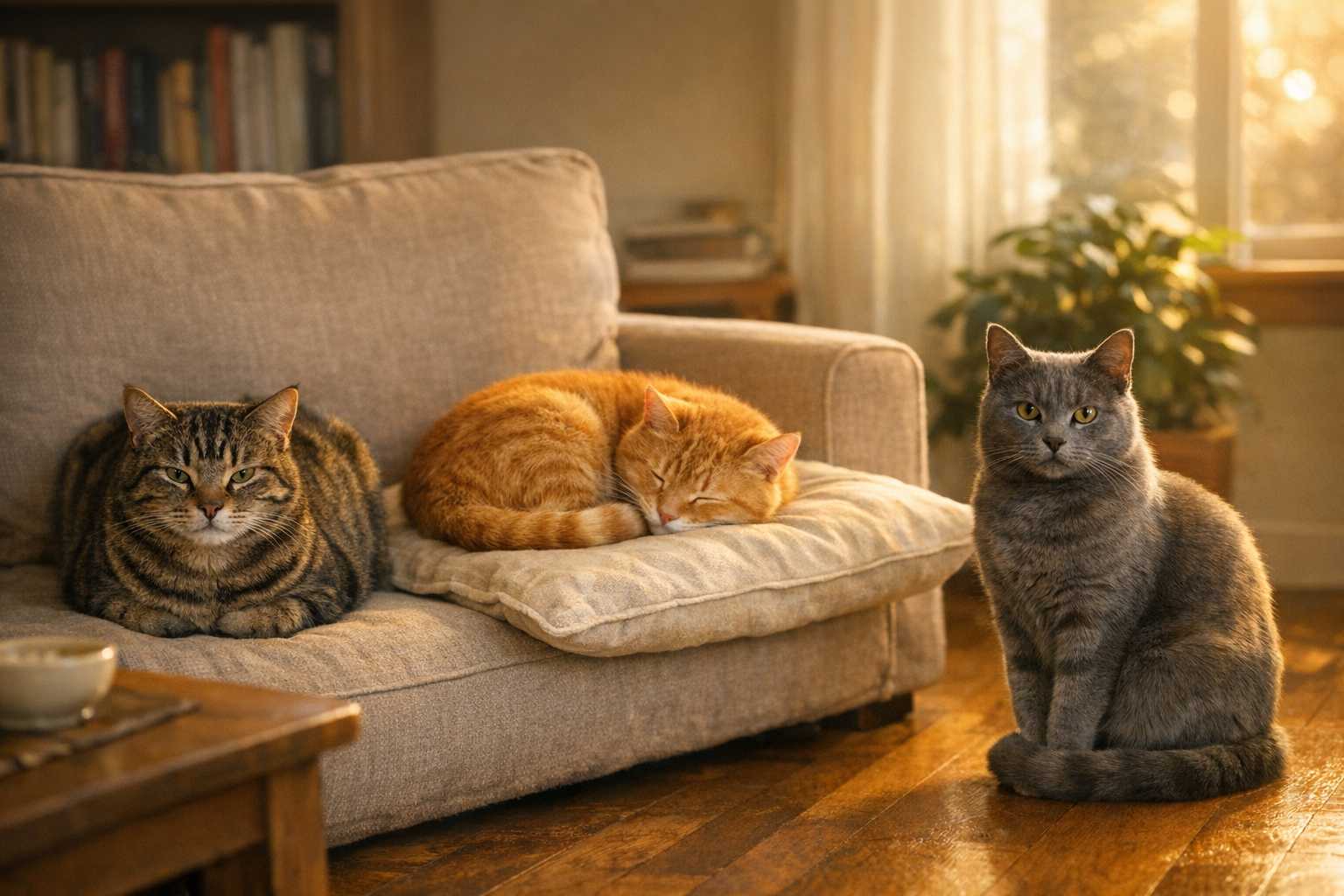
The Loaf Position
This is one of the most recognizable cat poses.
In the loaf position, your cat tucks all four paws under their body, creating that classic “little loaf of bread” shape.
What it usually means:
A cat loaf often signals comfort, calmness, and a sense of security. Your cat is relaxed, but not fully checked out. They may be resting while staying lightly alert to what’s going on around them.
Health note:
A normal loaf is usually nothing to worry about. However, if your cat suddenly starts loafing much more than usual, seems less active, or appears tense rather than relaxed, it may be worth paying closer attention. Some cats adopt this posture when protecting a tender belly or trying to avoid movement due to discomfort. If you notice other changes—such as hiding, reduced appetite, or unusual behavior—contact your vet.
The Curled-Up Ball
In this position, your cat curls tightly into a ball, often with their nose tucked near their tail.
What it usually means:
This is a common resting and sleeping posture. It helps cats conserve body heat and protect their vital organs. It also reflects a natural instinct carried over from their wild ancestors.
A cat sleeping this way often feels safe and settled.
Health note:
This position is typically normal, especially in cooler weather. But if your cat suddenly starts curling up much more tightly or more often than usual—and seems low-energy or “off”—they may be cold, uncomfortable, or unwell. Watch for other symptoms and speak with your vet if anything seems unusual.
The Sprawled-Out Position
Some cats stretch out dramatically, either on their side, on their back, or with their legs extended in every direction.
What it usually means:
This often suggests a high level of comfort and trust. A cat that exposes their belly or stretches out fully usually feels safe in their environment.
It can also simply mean they’ve found the perfect spot for a nap.
Health note:
On warm days, cats may sprawl on tile or other cool surfaces to regulate body temperature. That’s usually normal. Just make sure your cat has access to fresh water, shade, and a cool resting place during hot weather. If your cat seems distressed, pants, or appears overheated, seek veterinary advice promptly.
The Upright Sitting Position
Sometimes cats sit tall with their front legs straight, chest lifted, and head up—almost like a small statue.
What it usually means:
This posture often signals alertness, confidence, and curiosity. Your cat is calm, attentive, and observing what’s happening around them.
Many cats use this position when they’re watching birds, listening to sounds, or keeping an eye on household activity.
Health note:
This position by itself is usually completely normal. However, if your cat is sitting upright but appears tense, is breathing with effort, or is holding their neck and elbows in an unusual way, that can be concerning. Cats with breathing trouble may adopt certain postures to make respiration easier. If you notice open-mouth breathing, rapid breathing, or labored breathing, contact a vet right away.
The Partial Loaf or “Mini Loaf”
This posture looks similar to a full loaf, but the cat may sit a little more upright, with only the front paws tucked under.
What it usually means:
Usually, it’s another sign of calm and comfort. Your cat may be resting lightly while staying engaged with their surroundings.
It’s a relaxed, quiet pose often seen during peaceful moments.
Health note:
There’s usually no concern here. Still, if your cat consistently avoids putting weight on one paw or keeps one limb tucked in an unusual way, they may be protecting a sore paw or leg. Watch for limping, overgrooming, or sensitivity.
The Side-Sleeping Position
In this position, your cat lies fully on their side with their body stretched out or loosely relaxed.
What it usually means:
Side sleeping usually reflects deep relaxation and a strong sense of safety. Cats tend to choose this position when they feel secure in their environment.
If your cat regularly sleeps like this near you, that’s often a lovely sign of trust.
Health note:
Small twitches during sleep are often normal and may simply mean your cat is dreaming. But repeated rigid movements, strong shaking, or anything that looks like seizure activity should be evaluated by a veterinarian.
Sitting With Their Back to You
At first glance, this may seem dismissive—but in many cases, it’s actually a compliment.
What it usually means:
When a cat sits with their back turned to you, they may be showing that they feel safe enough not to monitor you constantly. In feline terms, that can reflect trust and comfort rather than rejection.
Of course, context matters. They may also just be focused on something else in the room—or outside the window.
The Hunched Position
This is one of the more important postures to recognize.
A hunched cat often sits with their back rounded, head lowered, and body looking tight or withdrawn.
What it usually means:
Unlike relaxed loafing or upright sitting, a hunched posture can be a sign that your cat is scared, stressed, in pain, or feeling ill.
Health note:
This position deserves attention, especially if it appears suddenly or comes with other symptoms such as:
- Hiding
- Low energy
- Loss of appetite
- Vomiting
- Difficulty using the litter box
- Unusual vocalizing
Cats often hide pain well, so a hunched posture can be an early warning sign. Possible causes range from digestive upset to urinary issues or other internal discomfort. If your cat stays hunched or seems unwell, arrange a vet visit.
Sitting on Your Laptop, Book, or Whatever You’re Using
Many cat owners know this one very well.
You sit down to work, and within minutes your cat is sitting directly on your keyboard, notebook, or anything else that currently has your attention.
What it usually means:
Part of the appeal is warmth, texture, and location—but often it’s also about closeness. Your cat may want your attention, your company, or simply a front-row seat to whatever you’re doing.
In other words: yes, they may be interrupting you on purpose.
Health note:
Usually none—unless your cat is suddenly becoming unusually clingy and it’s out of character. Major changes in behavior can sometimes reflect stress or illness, so it’s always worth noticing patterns.
The Perched-Up-High Position
Some cats love to sit on top of shelves, cat trees, refrigerators, or other high places.
What it usually means:
Cats are natural climbers, and high ground makes them feel secure. From above, they can observe their environment, avoid disturbances, and keep track of everything happening below.
Sometimes a high perch means your cat wants quiet, distance, or a better view—not necessarily that anything is wrong.
Health note:
If your cat usually loves climbing but suddenly stops jumping onto favorite high spots, it may be worth investigating. Arthritis, joint pain, injury, or other mobility issues can make jumping uncomfortable, especially in older cats. A vet can help assess whether pain or stiffness is involved.
Tail Position Adds More Context
Sitting positions tell you a lot, but they’re only part of the picture. Your cat’s tail can help you interpret the posture more accurately.
Here are a few common tail signals:
- Tail wrapped around the body: calm, settled, or reserved
- Tail puffed up: fear, agitation, or high arousal
- Tail slowly swishing: focus, stimulation, or mild irritation
- Tail held high: confidence, friendliness, or excitement
- Tail tucked close or under the body: anxiety, fear, or discomfort
Always look at the whole cat—not just one body part.
Don’t Forget the Eyes and Ears
Your cat’s face can offer just as much information as their posture.
Eyes: - Slow blinking: trust and affection - Wide pupils: excitement, fear, or high arousal - Half-closed eyes: comfort and relaxation - Fixed stare: intense focus, alertness, or possible tension
Ears: - Facing forward: interested and relaxed - Turning side to side: listening carefully - Flattened or pinned back: fear, irritation, or distress
When you combine posture, tail, eyes, and ears, your cat’s message becomes much clearer.
When a Sitting Position May Signal a Problem
Most cat sitting positions are completely normal. Still, some postures deserve extra attention—especially if they are new, persistent, or paired with other unusual signs.
Watch for red flags such as:
- A hunched posture with obvious tension or pain
- Open-mouth or labored breathing
- Head pressing against walls or furniture
- Repeatedly sitting in the litter box without producing urine
- Sitting very still and seeming unresponsive
- Sudden changes in preferred resting or sitting positions
- Avoiding jumping, climbing, or usual sleeping spots
One especially important note: if your cat is straining in the litter box, making repeated unsuccessful trips, or vocalizing while trying to urinate, seek emergency veterinary care. Urinary blockage can become life-threatening very quickly, especially in male cats.
If something feels unusual for your cat, trust that instinct and check with your vet.
How to Use This Knowledge Every Day
Understanding cat sitting positions is most helpful when you use it as part of everyday observation.
Here are a few simple habits that can help:
Watch for patterns.
Learn what’s normal for your cat. Some cats loaf often. Others sprawl dramatically. What matters most is noticing changes.
Consider the full context.
Look at posture along with appetite, energy level, litter box habits, vocalization, and social behavior.
Respect boundaries.
If your cat looks withdrawn, tense, or overstimulated, give them space.
Respond gently to trust.
If your cat rests beside you, shows their belly, or slow-blinks at you, enjoy the moment—but let them set the pace for contact.
Keep an eye on sudden changes.
Cats are creatures of habit. Shifts in posture, movement, or resting behavior can sometimes be the first sign that something is wrong.
Final Thoughts
Your cat is communicating with you all the time.
Every loaf, curl, stretch, perch, and dramatic laptop takeover tells you something about how they feel. While no single sitting position can diagnose a medical issue or define a mood with certainty, these body language clues can help you understand your cat more clearly and care for them more confidently.
The more you pay attention, the easier it becomes to tell when your cat feels safe, content, curious, stressed, or uncomfortable.
And that deeper understanding? It’s one of the most rewarding parts of sharing your life with a cat.
So the next time your cat settles into a loaf, turns their back on you, or stretches across the floor like they own the place—you’ll have a better idea of what they might be saying.
And chances are, they’ve been talking to you all along.
If you found this guide helpful, feel free to share it with another cat lover. And if your cat has a favorite sitting position—or a truly unusual one—it’s always fun to compare notes.