Why Do Cats Expose Their Stomachs? Trust and Vulnerability Signals
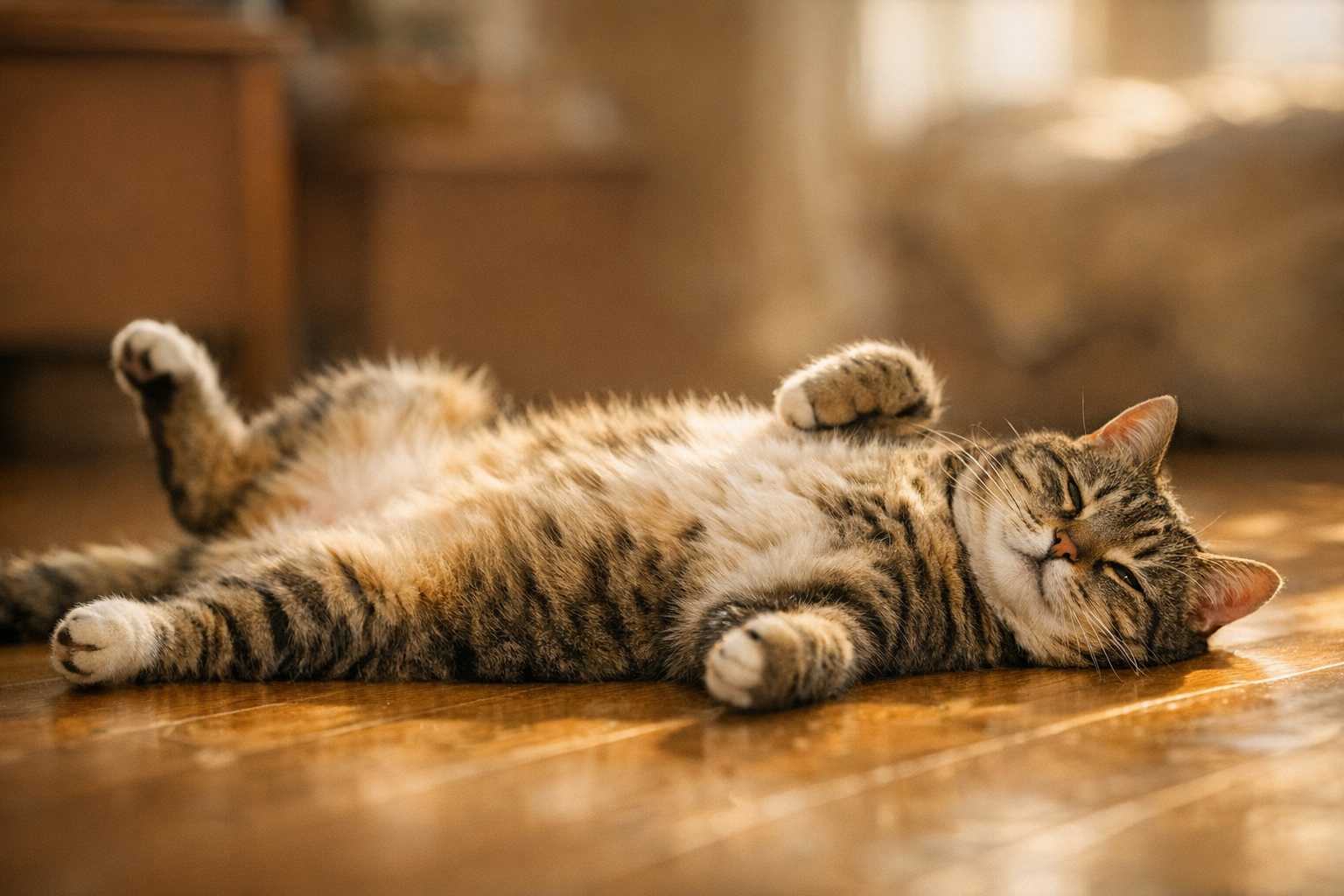
Why Do Cats Expose Their Stomachs? What It Really Means
SEO Slug: why-do-cats-expose-their-stomachs
Focus Keyphrase: why do cats expose their stomachs
Meta Description: Wondering why your cat shows you their belly? Learn why cats expose their stomachs and what this behavior can reveal about trust, comfort, playfulness, and vulnerability.
If you’ve ever watched your cat flop onto the floor and reveal their soft belly, you know how irresistible it looks. Naturally, many people assume it means, “Please rub my tummy.”
Then they try.
And suddenly, they’re dealing with claws, bunny kicks, or an offended stare.
If that sounds familiar, you’re in good company. Belly exposure is one of the most misunderstood feline behaviors. While it can be a positive sign, it is not always an invitation to touch. More often, it reflects trust, relaxation, playfulness, or a moment of vulnerability.
Let’s take a closer look at what your cat may actually be trying to say.
It’s Not Always an Invitation for a Belly Rub
First, let’s clear up the biggest misconception.
When a cat shows their belly, it does not automatically mean they want their stomach rubbed. People often interpret this behavior the way they might with a dog, but cats communicate differently.
For many cats, exposing the belly is less about asking for physical contact and more about expressing how safe and comfortable they feel. It is a form of communication, and understanding that distinction can make a real difference in how you respond.
A Cat’s Belly Is a Very Vulnerable Area
From a biological and behavioral standpoint, the stomach is one of the most sensitive parts of a cat’s body. It protects vital organs, so cats are naturally cautious about allowing anything near it.
That’s why belly exposure matters.
When a cat rolls over and reveals their stomach, they may be signaling something like:
“I feel safe enough to let my guard down around you.”
For an animal wired to protect itself, that is meaningful. Even if they do not want to be touched there, the behavior itself often reflects a high level of comfort.
Why Do Cats Expose Their Stomachs?
There is no single explanation. Depending on the situation, your cat may be showing their belly for several different reasons.
1. They Trust You
This is one of the most common and important reasons.
A cat that exposes their stomach near you often feels secure in your presence. They are relaxed, unafraid, and comfortable enough to reveal a sensitive part of their body.
This can be especially significant if your cat used to be shy, fearful, or easily startled. In those cases, belly exposure may be a strong sign that your bond is growing.
2. They’re Deeply Relaxed
Sometimes the explanation is simple: your cat is comfortable.
They may be stretched out in a warm patch of sunlight, curled up on the couch, or relaxing after a meal. In that state, rolling partly or fully onto the back can just be a natural posture.
In other words, your cat may simply be feeling content and at ease.
3. They’re Stretching
Cats stretch often, and many stretches involve rolling the body and exposing the underside.
If your cat shows their belly while extending their legs, arching their back, or shifting positions, it may just be part of a normal stretch. That doesn’t make the behavior meaningless, though. It still suggests they feel safe enough to be physically open and unguarded around you.
4. They Want to Play
In some cases, belly exposure is part of playful behavior.
If your cat rolls over with bright eyes, active paws, a twitching tail, or quick movements, they may be inviting interaction. But this kind of invitation can be misleading. A playful cat may grab your hand, kick with the back legs, or turn the moment into mock hunting.
So yes, they may want engagement, but not necessarily a gentle belly rub.
5. They’re Signaling Non-Threatening Intent
In households with multiple cats, rolling over can sometimes function as a social signal. A cat may expose their belly to show they are not challenging another cat, or to reduce tension in an interaction.
That said, feline social dynamics are complex. A belly-up posture does not always mean “submission” in the strict sense. More accurately, it can signal appeasement, comfort, or an effort to avoid conflict.
Cats may sometimes use similar signals with humans, especially when they feel secure and are trying to communicate friendliness or trust.
Why Does My Cat Show Their Belly and Then Attack?
This is probably the question most cat owners ask.
The answer is simple: showing the belly and wanting it touched are not the same thing.
Your cat may have rolled over because they felt safe, relaxed, or playful. But when a hand suddenly moves toward their most vulnerable area, their instincts may tell them to defend themselves.
That reaction does not mean your cat was trying to trick you. It just means the signal was misread.
Some cats truly enjoy belly rubs. Others tolerate them only briefly. Many dislike them altogether. The key is learning your individual cat’s preferences rather than assuming all belly displays mean the same thing.
How to Tell Whether Your Cat Might Actually Want a Belly Rub
A few cats genuinely enjoy having their stomach touched, but it’s best to proceed carefully.
Signs your cat may be open to it include:
- relaxed body posture
- soft eyes or slow blinking
- purring before and during contact
- a calm, still tail
- leaning into your hand
- a history of accepting belly touch without reacting defensively
Even then, start slowly. Instead of reaching directly for the center of the belly, begin with areas most cats prefer, such as the chest, cheeks, or under the chin. Pay close attention to how your cat responds.
If they tense up, flick the tail sharply, grab your hand, or kick, stop right away. Respecting those boundaries helps build trust.
Does Belly Exposure Mean Your Cat Loves You?
Often, yes, it can be a sign of affection and trust.
Cats usually express attachment in subtle ways. They may sit near you, follow you from room to room, slow blink at you, rub their head against you, or sleep nearby. Showing the belly can be part of that pattern, especially when it happens regularly in calm settings.
It is not the only sign of love, and it should not be interpreted in isolation. But in many cases, a cat exposing their stomach is a meaningful sign that they feel emotionally and physically safe with you.
What Should You Do When Your Cat Shows Their Belly?
The best response is usually a calm and respectful one.
Pause Before Touching
Don’t immediately assume your cat wants petting. Take a moment to observe their body language first.
Respond Gently
Speak softly, blink slowly, or simply stay nearby. Cats often appreciate quiet, nonintrusive responses.
Pet Safer Areas
If your cat seems receptive, try a gentle chin rub, cheek stroke, or chest scratch rather than going straight for the stomach.
Watch for Changes
Cats communicate constantly through posture, tail movement, ears, and facial expression. The more closely you pay attention, the easier it becomes to understand what they are comfortable with.
Kittens vs. Adult Cats
Kittens often show their bellies more freely than adult cats. They tend to be less guarded, more playful, and more accustomed to rolling around during play with littermates.
Adult cats are usually more selective. If a mature cat regularly exposes their stomach near you, it may carry more weight because adult cats are often more intentional about when and where they make themselves vulnerable.
This can be especially meaningful in rescue cats or cats with difficult past experiences. If a once-fearful cat begins lying on their back around you, that can be a powerful sign of growing trust.
Can You Teach a Cat to Enjoy Belly Rubs?
Sometimes, but not always.
A cat may become more comfortable with belly touch over time if the experience is gradual, positive, and entirely on their terms. The process should never involve restraint, force, or repeated touching after the cat has shown discomfort.
Positive reinforcement, patience, and careful observation can help some cats become more tolerant. But many cats simply do not enjoy belly rubs, and that is completely normal.
Part of caring for a cat is accepting their preferences, even when they differ from what we might want.
Final Thoughts
When your cat exposes their stomach, it usually means more than it seems.
It may be a sign of trust, relaxation, playfulness, or simple physical comfort. What it does not always mean is “touch me here.”
The most important thing is to pay attention to the full context: your cat’s posture, expression, movement, and past reactions. When you do, you’ll be much better equipped to understand what that belly-up moment really means.
Sometimes the best response is not a belly rub at all. Sometimes it’s simply recognizing that your cat feels safe with you.
And for a cat, that says a lot.
If this helped, share it with a fellow cat lover—especially one who has fallen for the classic belly trap.