Cat Twitching Whiskers: Decoding Your Cat's Sensory Communication
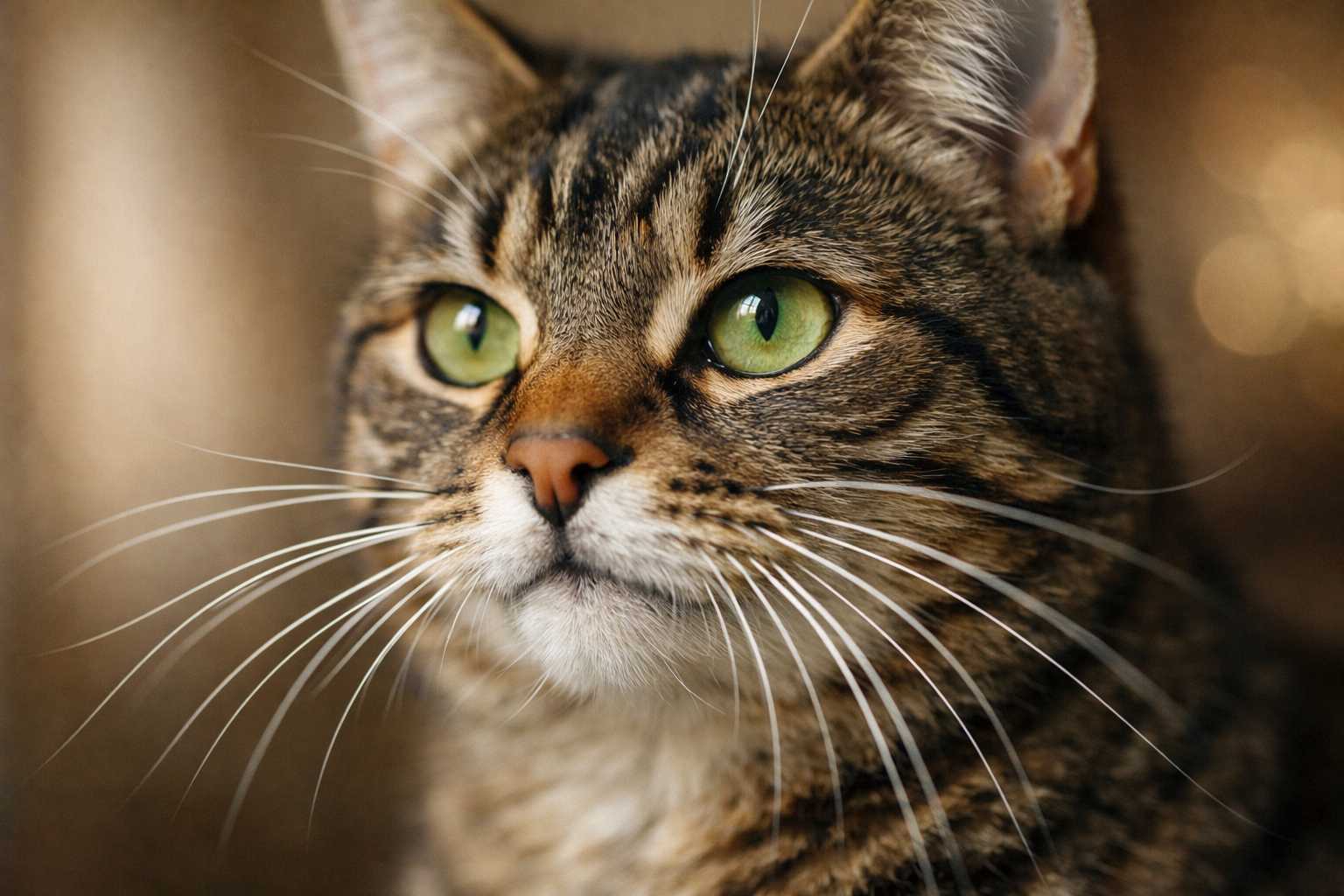
Cat Twitching Whiskers: What Your Cat’s Whisker Movements Really Mean
SEO Slug: cat-twitching-whiskers-sensory-communication
Focus Keyphrase: cat twitching whiskers
Meta Description: Wondering why your cat’s whiskers twitch? Learn what different whisker movements can reveal about your cat’s mood, focus, comfort, and overall health.
Have you ever watched your cat closely and noticed their whiskers twitching, spreading forward, or flattening back against their face?
It may seem like a tiny detail, but those movements can tell you a lot. A cat’s whiskers are not just decorative facial hairs. They are highly specialized sensory tools that help cats explore their surroundings, judge space, express emotion, and react to what is happening around them.
If you have been wondering why your cat keeps twitching their whiskers, the answer is simple: in many cases, they are gathering information, reacting to a feeling, or responding to their environment.
Let’s take a closer look at what cat twitching whiskers can mean and how to read these subtle signals more accurately.
What Are Cat Whiskers Made Of?
Cat whiskers, also called vibrissae, are specialized hairs that are thicker, stiffer, and more deeply rooted than ordinary fur. They are anchored in follicles that are rich in nerves and surrounded by sensitive tissue, which makes them excellent motion and touch detectors.
Whiskers themselves are made of keratin, just like regular hair, but what makes them special is how deeply they are embedded and how closely connected they are to the sensory system.
These whiskers help cats detect nearby objects, sense changes in air movement, and navigate tight spaces. In other words, they function less like ordinary hair and more like precision sensory instruments.
Why Do Cats Twitch Their Whiskers?
Cat twitching whiskers can happen for several reasons, and the meaning depends heavily on the context. To understand what your cat is trying to communicate, it helps to look at the rest of their body language too, including their ears, eyes, tail, and posture.
Here are some of the most common reasons cats twitch their whiskers.
1. Your Cat Is Highly Focused
If your cat is staring out the window at a bird, insect, or squirrel and their whiskers are twitching, they are likely in a state of intense concentration.
When cats focus on something interesting, their whiskers often move forward and become more active. This helps them collect sensory information and prepare for possible action, whether that means stalking, pouncing, or simply observing.
This kind of whisker twitching is normal and usually reflects alertness and engagement.
2. Your Cat Is Curious
Cats are naturally curious, and their whiskers often show it before the rest of their body does.
When your cat investigates a new object, unfamiliar smell, or unusual sound, their whiskers may angle slightly forward and twitch gently. This is part of how they examine the world around them.
A forward whisker position generally signals interest, curiosity, or cautious engagement.
3. Your Cat Is Relaxed and Content
Not every whisker twitch is a sign of high alert.
Sometimes cats show small, soft whisker movements when they are resting comfortably or enjoying a calm moment. In a relaxed cat, the whiskers usually sit naturally out to the sides rather than being pushed forward or pinned back.
If your cat is lying beside you, purring, half-asleep, and showing only gentle whisker movement, they are most likely content and at ease.
4. Your Cat Is in Play Mode
During play, whiskers often become much more active.
Cats use their whiskers to help judge distance and movement, which is especially useful when chasing toys, batting at strings, or preparing to pounce. You may notice the whiskers spread forward or fan outward as your cat tracks a moving target.
In this case, cat twitching whiskers usually reflects excitement, stimulation, and playful hunting behavior.
5. Your Cat Feels Stressed, Anxious, or Defensive
Whiskers can also reveal discomfort.
When a cat feels stressed, threatened, or overstimulated, their whiskers may pull back tightly against the face. If this is combined with tense posture, flattened ears, dilated pupils, or a flicking tail, your cat is probably not enjoying the situation.
This is an important signal to respect. If you notice your cat holding their whiskers back, it is often best to give them space and let them settle on their own.
6. Your Cat Is Hunting or Stalking
Whiskers play a major role in hunting behavior.
When a cat is stalking prey or even pretending to hunt during play, the whiskers typically move forward. This helps the cat gather close-range information about the object in front of them. Whiskers can be especially useful when prey is very close to the face, where vision becomes less effective.
This forward whisker position helps the cat assess movement, position, and contact at close range.
7. Your Cat May Be Unwell
Sometimes unusual whisker movement can point to a medical issue, especially if it appears suddenly or is paired with other symptoms.
Possible warning signs include:
- Repeated twitching with head shaking
- Frequent pawing at the face
- One-sided facial twitching
- Changes in eating or grooming behavior
- Signs of pain, sensitivity, or swelling near the face
These signs do not always indicate a serious problem, but they do deserve attention. Dental pain, skin irritation, ear issues, injury, or neurological problems can sometimes affect facial movement. If your cat’s whisker twitching seems abnormal or persistent, contact your veterinarian.
Understanding Common Whisker Positions
Whisker movement is easier to interpret when you understand the basic positions.
Whiskers forward: interested, alert, excited, playful, or hunting
Whiskers relaxed to the side: calm, comfortable, and content
Whiskers pulled back: fearful, defensive, anxious, or overstimulated
Whiskers spread wide: highly engaged or focused
Whiskers held unevenly or unusually still: possible discomfort or medical concern, especially if new
It is important to avoid overinterpreting a single whisker position on its own. Context matters. A cat’s whiskers should always be read alongside the rest of their body language.
How Whiskers Help Cats Navigate
Whiskers are essential navigation tools.
They help cats judge whether they can fit through narrow spaces, detect nearby surfaces, and sense subtle changes in airflow. Although it is commonly said that a cat’s whiskers are exactly as wide as their body, that is not always strictly true. However, whiskers do help cats assess space and proximity very effectively.
Cats also use whiskers in low light or darkness, where touch and air movement become especially important. This is one reason cats can move through dim environments with such confidence.
Is Whisker Fatigue Real?
Many cat owners have heard of whisker fatigue, a term used to describe stress or discomfort caused by repeated whisker contact, often from deep or narrow food bowls.
While the term is widely used, it is not a formal veterinary diagnosis. Still, some cats do appear to dislike constant whisker pressure or repeated contact with bowl edges.
Signs that your cat may be bothered by their bowl include:
- Eating only from the center of the dish
- Pawing food out onto the floor
- Hesitating at mealtimes
- Leaving food behind despite seeming hungry
If this happens, try using a wide, shallow dish or a flat plate. Many cats seem more comfortable eating that way.
How to Respond to Your Cat’s Whisker Signals
Once you start noticing whisker movements, you can respond in ways that better match your cat’s mood.
If the whiskers are forward and curious: let your cat investigate and engage gently.
If the whiskers are relaxed: this is often a good time for calm interaction, petting, or quiet companionship.
If the whiskers are pulled back: give your cat space and avoid forcing contact.
If the whiskers are active during play: your cat is engaged, stimulated, and enjoying the interaction.
If the twitching seems unusual: observe closely and talk to your vet if the behavior continues or comes with other symptoms.
Never Cut Your Cat’s Whiskers
A cat’s whiskers should never be cut or trimmed.
Because whiskers are important sensory tools, removing them can interfere with your cat’s ability to judge space and interact confidently with their surroundings. Cats with damaged or trimmed whiskers may become disoriented, hesitant, or stressed.
Whiskers do shed naturally over time and grow back on their own, so there is no need to trim them.
Why Paying Attention to Whiskers Matters
Cats communicate in subtle ways, and whiskers are part of that silent language.
By noticing whether your cat’s whiskers are forward, relaxed, twitching, or pulled back, you can better understand how they feel in the moment. This can help you avoid stress, support play, recognize curiosity, and catch possible signs of discomfort earlier.
The more accurately you read your cat’s body language, the stronger your bond becomes.
Final Thoughts on Cat Twitching Whiskers
Cat twitching whiskers are usually a normal part of how cats sense, react, and communicate. Depending on the situation, whisker movement may signal focus, curiosity, playfulness, relaxation, stress, or even a possible health concern.
The key is to look at the full picture. Pay attention to your cat’s posture, ears, eyes, tail, and surroundings along with their whiskers.
Those small movements may be subtle, but they can reveal a lot about what your cat is experiencing.
So the next time you notice your cat’s whiskers twitching, take a moment to observe. Your cat may be telling you more than you think.
If this article helped you understand your cat better, consider sharing it with other cat lovers who want to learn more about feline body language.