Feeding Bonded Cat Pairs: Managing Mealtime Without Competition
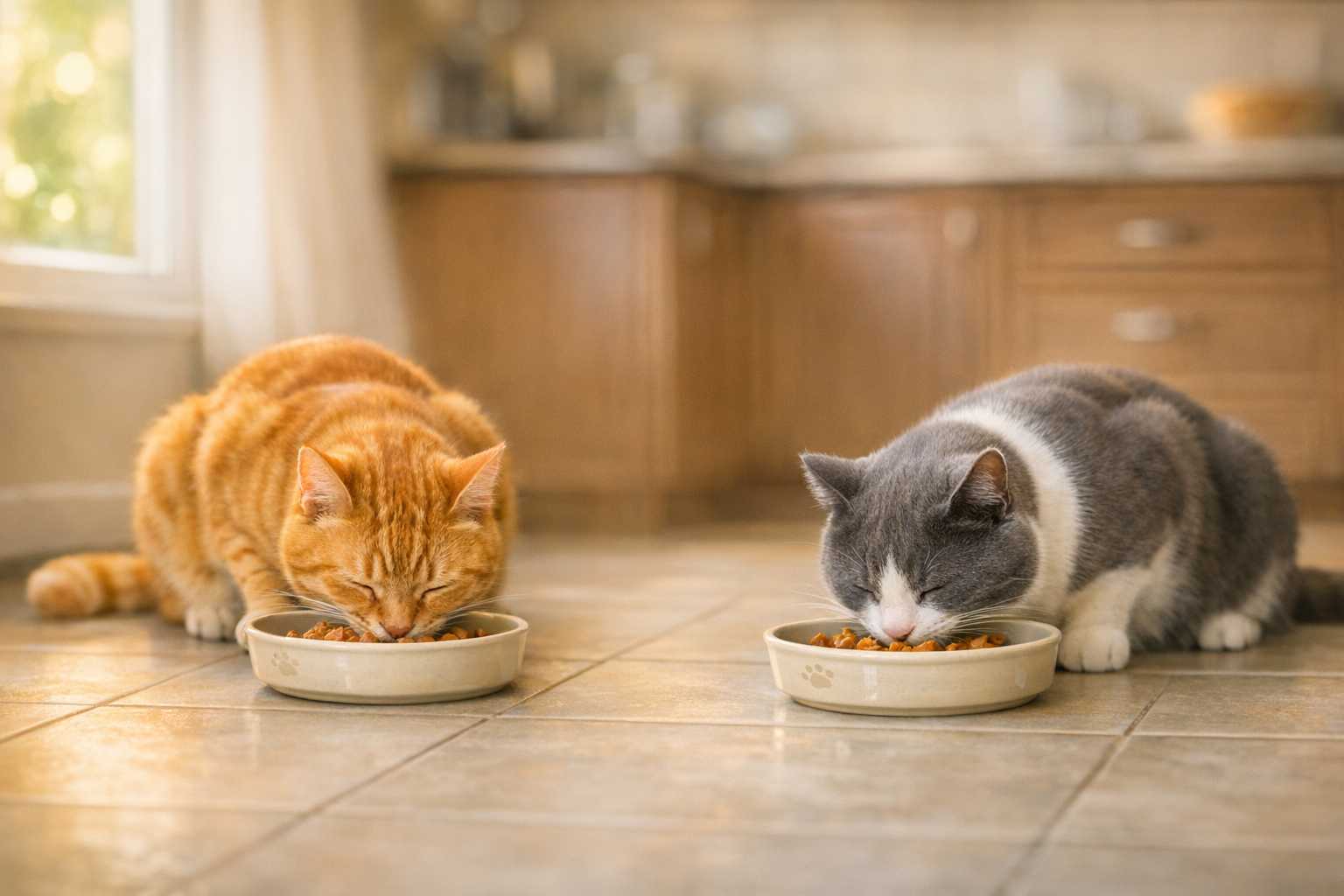
Feeding Bonded Cat Pairs: How to Keep Mealtimes Peaceful and Fair
If you share your home with a bonded pair of cats, you already know how special that relationship can be. They nap curled up together, groom each other, and move through the house like a tiny team. But when food appears, even the closest feline friends can become tense or competitive.
That does not mean anything is wrong with their bond. It simply means that mealtime can bring out natural instincts. With a few thoughtful adjustments, you can help both cats feel safe, relaxed, and well fed—without turning meals into a daily source of stress.
Why bonded cats may still compete over food
It can feel confusing at first. Two cats who seem inseparable one minute may act surprisingly guarded around food the next. In most cases, this is normal feline behavior.
Cats may live socially, especially in bonded pairs, but many still retain strong instincts around resources like food. Eating can trigger a sense of urgency or protectiveness, even when the other cat is a trusted companion. In other words, food-related tension is not a sign that your cats do not love each other. It is often just instinct.
Signs of mealtime stress to watch for
Before you can improve feeding time, it helps to recognize the signs that one or both cats may be feeling stressed. Common signs include:
- one cat eating unusually fast
- guarding the bowl or hovering near the other cat
- hissing, swatting, or blocking access to food
- one cat leaving before finishing a meal
- one cat regularly stealing the other’s food
- changes in weight, especially weight loss in the quieter cat
Even mild signs are worth paying attention to. A cat that eats too quickly may vomit or develop digestive upset, while a cat that feels intimidated may quietly start eating less than they need.
Give each cat their own food bowl
One of the simplest and most effective changes is to provide a separate bowl for each cat. Even bonded cats should not be expected to share one dish.
Shared bowls make it difficult to tell how much each cat is eating, and they can create subtle competition even if there is no obvious conflict. Separate bowls help ensure each cat has their own portion, their own space, and a better chance to eat comfortably.
Feed them in different locations
Where you place the bowls matters. If the bowls are too close together, one cat may feel crowded or watched while eating. That alone can create tension.
Try feeding your cats several feet apart, at opposite ends of the room, or even in separate rooms if needed. Some cats relax significantly when they do not have to see the other cat during meals. If one cat tends to steal food or hover, separate spaces can make a big difference.
Keep a consistent feeding routine
Cats usually do best with predictable routines. Feeding them at the same times each day can reduce anxiety and help them feel more secure.
A steady schedule also makes it easier for you to notice any changes in appetite. If one cat suddenly starts eating less, skipping meals, or showing unusual behavior around food, you are more likely to catch the problem early.
Slow down fast eaters with puzzle feeders
If one of your cats gulps food quickly, a puzzle feeder or slow feeder may help. These tools encourage cats to eat more slowly and make mealtime more engaging.
Slower eating can reduce bloating, regurgitation, and that frantic feeling some cats seem to have around meals. For anxious eaters in particular, a puzzle feeder can turn feeding into a calmer, more natural activity.
Consider a microchip feeder if needed
If food stealing is a regular issue, a microchip-activated feeder can be very helpful. These feeders open only for the cat they are programmed to recognize.
They can be especially useful when:
- one cat needs a prescription diet
- one cat needs portion control or fewer calories
- one cat consistently eats the other cat’s food
They do require an initial setup and adjustment period, but for many multi-cat households, they solve problems that are otherwise difficult to manage.
Watch for a “food bully”
In some bonded pairs, one cat is simply more confident around food. That cat may finish first, drift toward the other bowl, or stand nearby in a way that makes the other cat uncomfortable.
This does not always look dramatic. Sometimes the quieter cat simply backs away without a fuss. If that happens often, the more assertive cat may need to be fed separately so the other cat can eat in peace. The goal is not to punish the dominant cat, but to make sure both cats feel safe enough to finish their meals.
Adjust portions to each cat’s needs
Bonded cats may share a close relationship, but they do not always have the same nutritional needs. Age, size, activity level, and medical conditions all affect how much and what type of food a cat should eat.
A young, active adult may need a very different diet from a senior cat. One cat may maintain weight easily, while the other gains weight quickly. Your veterinarian can help you determine the right food and portion size for each cat.
Keep the feeding area clean and calm
A peaceful feeding environment matters more than many people realize. Most cats prefer to eat in a quiet, clean area away from heavy foot traffic, loud noises, and litter boxes.
Wash bowls regularly, keep the area tidy, and avoid interrupting your cats while they eat. A calm setup helps reduce stress and encourages better eating habits.
Monitor weight and eating habits over time
Even if your feeding routine seems to be working, continue paying attention to each cat’s weight and appetite. Subtle shifts can point to stress, food competition, or underlying health problems.
If possible, weigh your cats regularly and keep an eye on how much each one is eating. If one cat is losing weight, gaining weight unexpectedly, or changing their eating habits, it is a good idea to speak with your veterinarian.
Be patient while they adjust
Changes in feeding routines do not always work overnight. Some cats adapt quickly, while others need time to get used to new bowls, new locations, or new schedules.
Try to stay consistent and make adjustments gradually when possible. Small changes often lead to the best long-term results. The aim is to create a mealtime routine that feels safe, predictable, and comfortable for both cats.
Final thoughts
Feeding bonded cat pairs can be a little more complicated than it looks, but it is absolutely manageable. Even cats who adore each other may need personal space and structure at mealtime.
Separate bowls, appropriate portions, calm feeding areas, and a reliable routine can go a long way toward preventing stress and competition. With a bit of observation and patience, you can make mealtimes easier, healthier, and more peaceful for both of your cats.