Why Do Cats Press Their Heads Against Walls? Headpressing Warning Signs
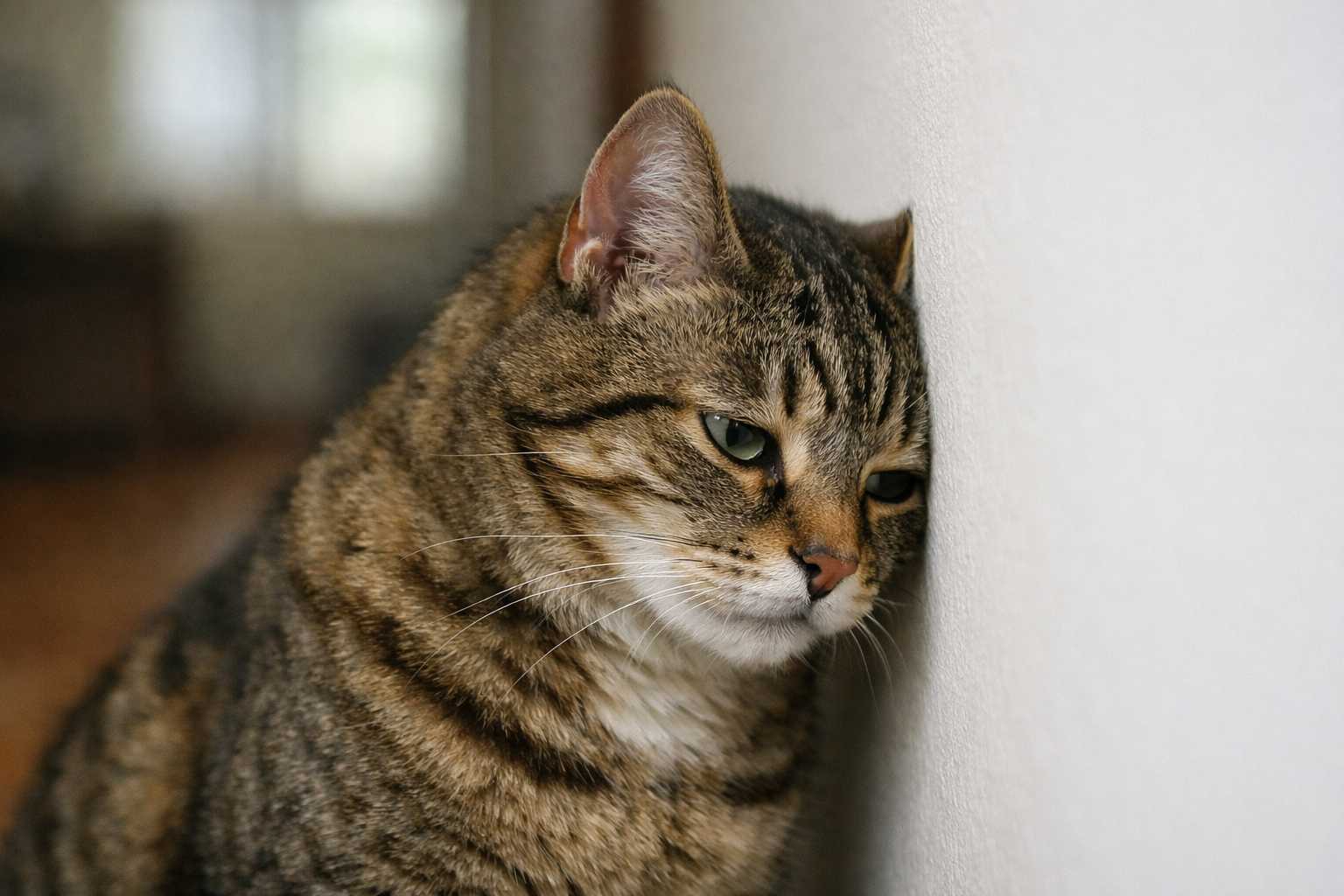
Why Is My Cat Pressing Their Head Against the Wall? Warning Signs You Shouldn’t Ignore
Have you ever seen your cat standing still with their head firmly pressed against a wall, corner, or piece of furniture?
At first, it might look strange — or even a little amusing. But while some head movements are harmless, true head pressing can be a sign of a serious medical problem, especially a neurological one.
Here’s how to tell the difference between normal cat behavior and a symptom that needs urgent veterinary care.
What Is Head Pressing in Cats?
Head pressing is when a cat deliberately pushes their head against a wall, floor, corner, or other surface and stays there for an unusual amount of time.
This is not the same as:
- rubbing their face on furniture
- nuzzling you or objects
- scent marking
- briefly leaning their head while resting
True head pressing usually looks firm, repetitive, or prolonged. If your cat seems fixed in place or unable to stop, that is especially concerning.
Is Head Pressing Always Serious?
Not always — but it should never be ignored.
Cats can do odd things for perfectly harmless reasons. Some may briefly rest their head against a cool surface, lean into a corner while relaxing, or press their face against objects while scent marking.
However, persistent head pressing is different. Veterinarians consider it a potentially serious warning sign because it can indicate a problem affecting the brain, nervous system, or other vital organs.
If you are unsure whether what you’re seeing is normal, it is safest to contact your vet.
When It May Be Harmless
In some cases, a cat pressing their head against something may not be a medical emergency.
Possible harmless explanations include:
- resting their head briefly while relaxed or sleepy
- enjoying the sensation of pressure
- scent marking with the face or forehead
- momentary quirky behavior with no other symptoms
If your cat does it only briefly, then goes back to acting completely normal — eating, walking, seeing, and responding as usual — it may not be serious.
Still, keep an eye on it. If it happens again or starts lasting longer, pay close attention.
When Head Pressing Is a Red Flag
Head pressing becomes much more concerning when it is frequent, prolonged, or happens along with other unusual symptoms.
If your cat is pressing their head against surfaces and also seems unwell, disoriented, or neurologically abnormal, they need veterinary attention as soon as possible.
Below are the most important warning signs.
1. The Head Pressing Is Persistent
A brief head lean is very different from a cat standing motionless with their head pressed against a wall for an extended period.
Persistent or repeated head pressing is one of the clearest signs that something may be wrong. If your cat seems compelled to do it or keeps returning to the behavior, call your vet promptly.
2. They’re Walking in Circles
Repeated circling, especially in one direction, can point to a neurological problem.
If circling happens together with head pressing, it should be treated as urgent. This combination may suggest disease affecting the brain, inner ear, or nervous system.
3. Their Eyes Look Abnormal
Changes in the eyes can be another important clue.
Watch for:
- pupils that are different sizes
- rapid, involuntary eye movements
- eyes that don’t seem to focus normally
- sudden vision changes or bumping into objects
These signs can indicate neurological disease and should be evaluated quickly.
4. They Seem Confused or Disoriented
A cat that seems lost, unusually withdrawn, or unaware of their surroundings may be experiencing a serious medical issue.
Signs of disorientation include:
- staring blankly
- getting stuck in corners
- bumping into furniture
- seeming not to recognize familiar people or places
- acting unusually distant or unresponsive
When confusion appears along with head pressing, urgent veterinary care is needed.
5. They’ve Had a Seizure
If your cat has had a seizure and is also pressing their head against surfaces, seek emergency veterinary help right away.
This combination may be associated with severe illness such as toxin exposure, brain disease, infection, trauma, or other life-threatening conditions.
6. They’ve Stopped Eating or Drinking
A sudden loss of appetite or refusal to drink is always concerning in cats.
When this happens together with head pressing, it may signal a serious underlying problem. Cats can become dehydrated quickly, and many illnesses that affect the brain or liver also affect appetite and behavior.
What Can Cause Head Pressing in Cats?
Head pressing is a symptom, not a diagnosis. The underlying cause can vary, but many possibilities are serious.
Some common causes include:
- brain tumors
- head trauma
- toxin or poison exposure
- liver disease, including hepatic encephalopathy
- infections affecting the brain or nervous system
- metabolic disorders
- high blood pressure
- strokes or other neurological events
- fluid buildup in the brain such as hydrocephalus
A veterinary exam is the only way to determine the cause.
What Your Vet May Do
If you take your cat to the vet for head pressing, the veterinarian will usually begin with a full physical and neurological exam.
They may ask questions such as:
- When did the behavior start?
- How often does it happen?
- Has your cat had access to toxins, plants, medications, or chemicals?
- Have you noticed circling, seizures, appetite changes, or behavior changes?
- Has your cat had any recent falls or injuries?
Depending on what they find, they may recommend:
- bloodwork
- urine testing
- blood pressure measurement
- imaging such as X-rays, CT, or MRI
- additional neurological or infectious disease testing
While this can feel overwhelming, prompt testing can be critical to finding the cause and starting treatment early.
What Should You Do Right Now?
If your cat is pressing their head against a wall right now, take the situation seriously.
Here’s what to do:
- Observe carefully. See whether the behavior is brief or prolonged.
- Check for other symptoms. Look for circling, confusion, abnormal eyes, seizures, weakness, or appetite loss.
- Call your veterinarian immediately if the behavior is persistent or happens with any other warning signs.
- Go to an emergency vet if your regular clinic is closed or your cat seems severely ill.
- Do not try to diagnose or treat this at home.
If something feels wrong, trust your instincts and get professional help.
Quick Guide: Normal or Urgent?
| Behavior | More Likely Harmless | Needs Vet Attention | |---|---:|---:| | Brief head lean, then normal behavior | ✅ | | | Prolonged or repeated head pressing | | ✅ | | Normal pupils and normal awareness | ✅ | | | Unequal pupils or unusual eye movements | | ✅ | | Acting normal afterward | ✅ | | | Confused, disoriented, or circling | | ✅ | | Eating and drinking normally | ✅ | | | Refusing food or water | | ✅ | | Seizure or collapse | | ✅ |
If you are ever uncertain, call your vet. It is always better to check too soon than too late.
Can Head Pressing Be Treated?
Sometimes, yes — but treatment depends entirely on the cause.
For example:
- infections may respond to medication
- toxin exposure may require emergency supportive care
- some metabolic problems can improve with treatment
- liver-related conditions may be manageable
- trauma or neurological disease may need specialized care
The sooner the underlying issue is diagnosed, the better the chances of successful treatment.
How to Help Protect Your Cat
While not every cause of head pressing can be prevented, you can lower your cat’s risk by:
- keeping toxic plants, cleaners, and medications out of reach
- limiting unsupervised outdoor access
- scheduling regular veterinary checkups
- monitoring for behavior changes as your cat ages
- keeping notes on any unusual symptoms or episodes
You know your cat better than anyone. Small changes in behavior are often the first sign that something is wrong.
Final Thoughts
Cats are wonderfully strange, and many of their habits are completely harmless. But true head pressing is not a behavior to brush off.
If your cat briefly leans their head and then carries on normally, it may be nothing serious. But persistent head pressing — especially when paired with circling, confusion, abnormal eye movements, seizures, or loss of appetite — can signal a medical emergency.
When in doubt, call your veterinarian. Acting quickly could make all the difference for your cat.