Chlorhexidine for Cat Acne: Vet-Recommended Treatment Protocol Guide
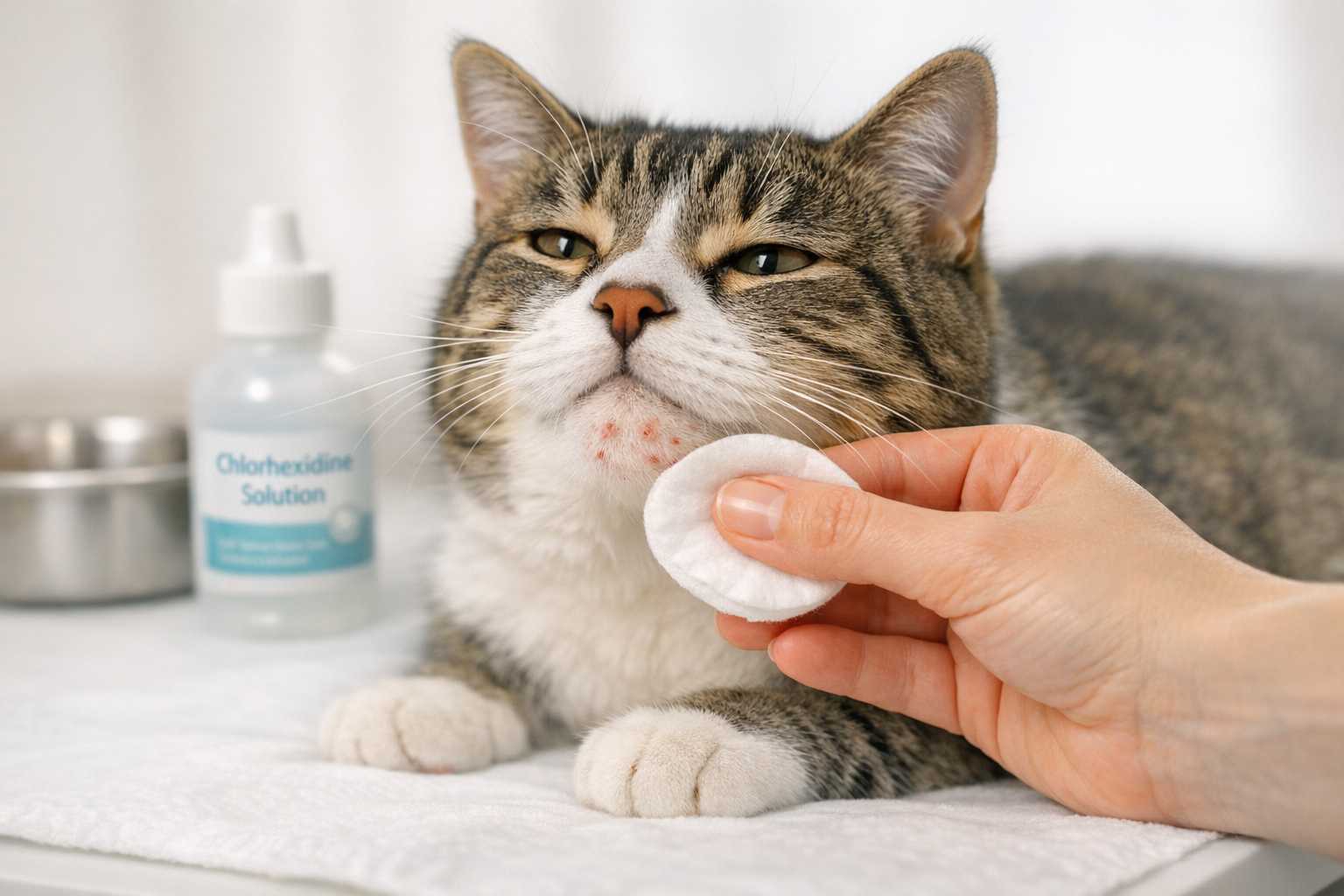
Chlorhexidine for Cat Acne: A Safe, Vet-Guided Treatment Guide
SEO Slug: chlorhexidine-for-cat-acne-treatment-guide
Focus Keyphrase: chlorhexidine for cat acne
Meta Description: Learn how to use chlorhexidine for cat acne safely and effectively, with a practical vet-guided treatment plan and tips for preventing flare-ups.
If you’ve noticed black specks, crusting, or small bumps on your cat’s chin, there’s a good chance you’re dealing with feline acne. While it can look alarming, cat acne is fairly common, and in many mild cases, it can be managed successfully at home with your veterinarian’s guidance.
One of the most commonly recommended treatments is chlorhexidine, an antiseptic used to reduce bacteria on the skin and help calm inflammation. When used correctly, it can be a helpful part of a simple, consistent skincare routine for your cat.
Here’s what you need to know.
What Is Cat Acne?
Cat acne is a skin condition that usually affects the chin and lower lip. It may appear as:
- blackheads
- small red bumps
- crusty patches
- mild swelling
- irritated or infected sores in more severe cases
It can affect cats of any age, breed, or sex. Even well-groomed indoor cats can develop it.
Possible contributing factors include:
- poor grooming or difficulty keeping the chin clean
- friction or contamination from food bowls
- use of plastic bowls, which can trap bacteria in tiny surface scratches
- stress
- excess oil production from sebaceous glands
- secondary bacterial or yeast overgrowth
In some cats, acne stays mild and occasional. In others, it can become inflamed, infected, and painful.
Why Veterinarians Recommend Chlorhexidine
Chlorhexidine is widely used in veterinary medicine because it is an effective antiseptic. It helps lower the number of bacteria on the skin, which is important because bacteria can make feline acne worse or lead to infection.
Veterinarians often recommend chlorhexidine because it:
- helps reduce surface bacteria
- is commonly used for minor skin infections and irritation
- is available in several pet-friendly forms, including wipes, pads, and solutions
- is generally well tolerated when used properly
- can be useful for both treatment and prevention in some cats
That said, chlorhexidine is not a cure-all. If your cat’s acne is severe, painful, or infected, your veterinarian may also recommend other treatments, such as prescription antibiotics or additional topical therapy.
What Strength of Chlorhexidine Is Appropriate?
This is one of the most important points: the product and concentration matter.
For feline acne, veterinarians commonly use dilute chlorhexidine products formulated for pets, often in the 0.5% to 2% range, depending on the product and the cat’s skin sensitivity.
A few important cautions:
- Do not use highly concentrated chlorhexidine products unless your veterinarian tells you exactly how to dilute and apply them.
- Avoid products that contain alcohol, fragrances, essential oils, or other harsh additives, as these can irritate a cat’s skin.
- Human antiseptic products are not always safe for cats, even if they contain chlorhexidine.
If you’re unsure which product to buy, ask your veterinarian to recommend a specific brand or formulation.
A Practical Vet-Guided Treatment Routine
For mild cases of cat acne, a gentle chlorhexidine routine is often recommended. The exact plan can vary based on your cat’s skin, the severity of the lesions, and whether infection is present.
Step 1: Gather Your Supplies
You’ll need:
- a pet-safe chlorhexidine wipe, pad, or solution
- clean cotton rounds, gauze, or soft cloth if using a liquid
- a towel
- treats or another distraction for your cat
Having everything ready beforehand makes the process less stressful for both of you.
Step 2: Soften Crusts Gently if Needed
If your cat has crusting, hold a warm, damp cloth against the chin for 20 to 30 seconds. This can help loosen debris and make the area easier to clean.
Do not pick at scabs or scrub forcefully. The skin under the chin is delicate and can become more inflamed if handled roughly.
Step 3: Apply the Chlorhexidine
Using your veterinarian’s recommended product:
- Moisten gauze or a cotton pad if you’re using a liquid solution.
- Gently wipe the affected area.
- Use light strokes rather than rubbing hard.
- Avoid getting the product into your cat’s eyes, nose, mouth, or ears.
- Let the area dry unless the product instructions say otherwise.
If you’re using a chlorhexidine wipe or pad, the same gentle approach applies.
Step 4: Prevent Immediate Licking
Many cats will try to groom right after treatment. Since chlorhexidine is meant for topical use, it’s best to reduce licking for a few minutes.
Try distracting your cat with:
- treats
- play
- petting
- mealtime, if appropriate
A small amount of incidental contact may happen, but you should still try to keep your cat from licking the area right away.
Step 5: Stay Consistent
Many veterinarians suggest cleansing once or twice daily at first, then reducing frequency as the chin improves. However, the ideal schedule depends on the cat and the product being used.
A common general approach is:
- once to twice daily during a flare-up
- less often for maintenance, if your veterinarian recommends it
Some cats improve within 1 to 2 weeks, while others need longer-term care.
Because feline acne can have multiple causes, it’s best to treat this as a guided routine rather than a rigid one-size-fits-all protocol.
Which Types of Chlorhexidine Products Are Best?
Several chlorhexidine product types may be used for feline acne:
- wipes or pads - convenient and easy for spot cleaning
- solutions or flushes - useful if you prefer applying with gauze
- mousses or gels - sometimes recommended for skin conditions
- shampoos - less practical for chin-only acne, but occasionally used in broader skin care plans
The best choice depends on your cat’s tolerance and your veterinarian’s recommendation. In many cases, pet-formulated wipes or pads are the simplest option for chin acne.
Always choose products labeled for veterinary or pet use, and check the ingredient list carefully.
Common Mistakes to Avoid
Even with the right product, a few common errors can make acne worse.
Scrubbing Too Hard
This is one of the biggest mistakes. Scrubbing can break the skin, increase irritation, and make infection more likely.
Using the Wrong Product
Not every chlorhexidine product is suitable for cats. Some contain ingredients that sting, dry out the skin, or are unsafe if licked.
Using Too Much
More product does not mean faster improvement. A light application is usually enough.
Being Inconsistent
Skipping treatment days can slow progress. Regular, gentle care works better than occasional aggressive cleaning.
Waiting Too Long to Get Veterinary Help
If the chin looks worse, not better, your cat may need more than routine cleansing.
When You Should See a Veterinarian
Mild feline acne can often improve with home care, but some cases need prompt veterinary treatment.
Contact your veterinarian if you notice:
- swelling
- pus or drainage
- bleeding
- significant redness
- pain when the chin is touched
- hair loss around the area
- a bad odor
- no improvement after about 1 to 2 weeks of proper care
- reduced appetite or reluctance to eat
These signs may indicate a deeper infection, significant inflammation, or another skin condition that resembles acne.
It’s also important to know that not every chin lesion is acne. Conditions such as ringworm, mites, allergies, eosinophilic granuloma complex, or other infections can look similar. If the diagnosis isn’t clear, your veterinarian may recommend tests before treatment continues.
How to Help Prevent Cat Acne from Returning
Managing a flare-up is only part of the solution. Prevention can make a big difference.
Switch Food and Water Bowls
If you’re using plastic bowls, consider changing to stainless steel or ceramic. Plastic can develop microscopic scratches that trap bacteria and debris.
Wash Bowls Daily
Clean food and water bowls every day with hot, soapy water, and rinse thoroughly.
Keep the Chin Clean
Some cats benefit from a gentle wipe after meals, especially if food tends to stick to the chin.
Reduce Stress
Stress may contribute to flare-ups in some cats. A predictable routine, enrichment, and a calm environment can help.
Keep Up with Veterinary Care
Routine wellness visits can help identify skin issues early and rule out underlying causes if acne keeps recurring.
Is Chlorhexidine Safe for Cats?
In general, chlorhexidine is considered safe for topical use in cats when used correctly and in an appropriate veterinary product.
However, “safe” does not mean risk-free. Important precautions include:
- keep it out of the eyes
- avoid getting it into the ears, unless a veterinarian specifically prescribed an ear-safe product
- do not let your cat swallow large amounts
- stop use if you notice worsening redness, irritation, or swelling
Some cats have sensitive skin and may react even to appropriate products. If that happens, discontinue use and speak with your veterinarian.
How Long Does It Take to Work?
Results vary depending on the severity of the acne and whether infection is present.
A typical timeline for mild cases may look like this:
- first few days: less surface oil and mild reduction in irritation
- 1 to 2 weeks: blackheads and crusting may begin to improve
- several weeks: clearer skin with consistent care
More severe cases can take longer and may require prescription medication in addition to chlorhexidine.
The key is consistency, patience, and checking in with your veterinarian if progress stalls.
What Cat Owners Often Find Most Helpful
Many cat owners find that the best results come from combining treatment with prevention. Commonly helpful changes include:
- switching from plastic to stainless steel or ceramic bowls
- cleaning bowls daily
- using a vet-approved chlorhexidine wipe or solution consistently
- avoiding harsh scrubbing
- getting veterinary advice early if the area becomes inflamed
In other words, it’s usually not one magic fix. It’s a combination of the right product, the right routine, and the right follow-up.
Final Thoughts
Cat acne is common, and in many cases, it’s manageable. Chlorhexidine can be a very useful part of treatment because it helps reduce bacteria and keep the affected skin clean. But the safest and most effective approach is to use a cat-safe, veterinarian-recommended product and to monitor your cat closely for signs of irritation or infection.
If your cat’s chin acne is mild, gentle cleaning and a few simple changes at home may be enough to make a big difference. If it’s severe, painful, persistent, or not clearly improving, it’s time to involve your veterinarian.
A clean chin, clean bowls, and a consistent routine can go a long way.
This article is for informational purposes only and is not a substitute for veterinary advice. Always consult your veterinarian before starting or changing any treatment for your cat.