Indoor vs Outdoor Cat Sleep Patterns: Environmental Impact
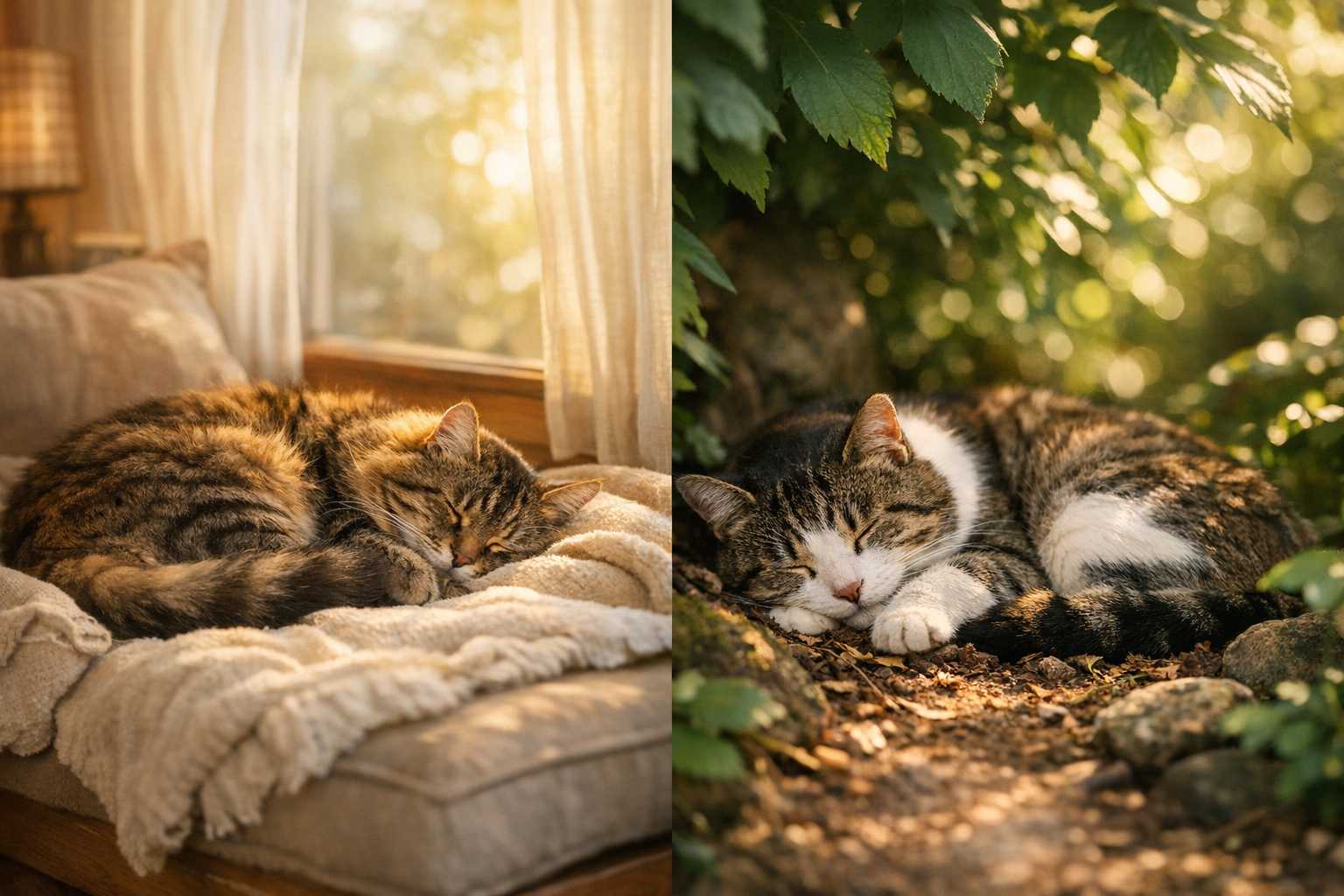
How Environment Influences Indoor and Outdoor Cats' Sleep Patterns
It's well known that cats love their sleep, averaging between 12 to 16 hours a day. However, did you ever wonder how the environment in which they live impacts their sleep? Let’s take a trip into the world of feline sleep patterns and see how indoor and outdoor settings influence these.
The Importance of Your Cat’s Environment for Sleep
A cat's environment plays a substantial role in their sleep quality. Factors such as temperature, exposure to light, and safety levels determine not only when they sleep but also how deeply they do. Comprehending these elements is crucial to creating an ideal sleeping environment for your cat.
The living conditions of indoor cats remain constant, whereas outdoor cats have to adapt to continual changes in their environment. Understanding these divergent sleep routines is valuable knowledge for any cat owner.
Sleep Patterns of Indoor Cats: Consistency and Comfort
Extended Sleep Duration
Indoor cats typically sleep longer than their outdoor counterparts, approximately 15-16 hours a day. Within the safety and comfort of their homes, they can indulge in deeper and more restful sleep phases.
Unlike those in the outdoors, indoor cats are safe from predators, allowing for longer periods in REM sleep. Improved sleep quality means content and healthier cats.
Regular Sleep Schedule
Indoor conditions promote regular sleep routines. Your cat likely snoozes around the same time every day, assisted by the constant lighting and temperature in the house that helps regulate their internal clock.
Often, indoor cats sync their active hours with their owner's schedule, further illustrating how their environment crafts their behavior.
Climate under Control
Managing the correct room temperature can seriously enhance sleep quality. Benefitting from year-round optimal conditions for snoozing, indoor cats consume less energy having to regulate body temperature during harsh weather.
Similarly, constant humidity level aids in preventing respiratory issues and promotes better sleep. Thus, indoor cats can concentrate more on rest rather than environmental stressors.
Sleep Patterns of Outdoor Cats: Survival Instincts
Shorter, Light Sleep Sessions
Outdoor cats sleep intermittently, primarily driven by their survival instincts. Their sleep is often interrupted by the need to stay alert for potential threats.
These cats typically sleep for 12-14 hours a day, with the remaining time dedicated to hunting, marking territory, and safeguarding themselves. Their survival needs outdo the instinct for comfort.
Weather-Dependent Routines
Outdoor cats alter their sleep routines based on weather fluctuations. Cold temperatures push them to search for warm hideaways, while hot weather leads them to seek cooler, shaded spots.
Rain and storms disturb usual sleep routines, and seasonal changes can dramatically change their sleep patterns. Adaptation is vital for survival.
High-Alert Sleeping
Rarely do outdoor cats achieve deep sleep. They remain semi-conscious to sense any lurking danger. This survival technique offers them protection at the expense of good sleep quality.
Regular interruptions affect their sleep cycles, reducing REM sleep that in turn impacts their physical and mental health. The enduring stress leaves a toll on their overall health.
Influencing Factors That Affect Cat Sleep
Exposure to Light
Natural sunlight helps in regulating circadian rhythms. Indoor cats often have disrupted light cycles due to artificial lighting, while outdoor cats closely align with natural day-night patterns.
For indoor cats, window placement is important. Thoughtful positioning aids in maintaining healthy sleep cycles. For better sleep quality, consider using blackout curtains.
Noise Levels
Urban outdoor environments can disrupt sleep due to the noise from traffic, construction, and other cats. Therefore, indoor cats often have a quieter sleeping environment.
However, absolute silence isn't naturally favored by cats. Some ambient noise seems to help them sleep better. It would be good to find the right noise balance for your cat.
Safety and Security
Feeling safe is quintessential for good quality sleep. Indoor cats enjoy the ultimate safety in their familiar surroundings. Conversely, outdoor cats must remain cautious even while resting.
Secure outdoor spaces like enclosed gardens could be seen as the middle ground. They provide access to the outside environment while still maintaining safety. Many cats flourish in these semi-outdoor conditions.
Health Implications of Different Sleep Patterns
Health Benefits for Indoor Cats
Regular sleep patterns aid in the function of the immune system and help maintain healthy body weight. Stress reduction from safe environments further boosts overall health.
Indoor cats tend to experience fewer injuries from fights or accidents. Better sleep quality expedites healing when any health issue occurs. Preventive health care becomes easier to manage.
Health Challenges for Outdoor Cats
Irregular sleep patterns stress the immune system. Outdoor cats face a higher risk of injuries that may impact quality sleep, and exposure to harsh weather can potentially lead to health complications.
However, outdoor activities offer exercise in a natural setting. The variations in the environment can stimulate their cognition. Some cats seem to flourish with outdoor access.
Crafting Optimal Sleep Environments
For Indoor Cats
Having multiple comfortable sleeping spots in your home for your cat is beneficial. Cats would usually lean toward warm locations that are high up and provide good visibility. Soft bedding further enhances comfort levels.
Ensure that room temperatures are consistently kept between 65-75°F and that there is good ventilation without drafts. Heated beds would be ideal for elderly cats or those in colder climates.
For Outdoor Cats
Providing sleeping areas that are sheltered from weather conditions is key for outdoor cats. A cat house that is insulated can regulate temperature while structures that are elevated can keep cats safe from predators on the ground.
Ensuring that there are several shelter options at different spots is appropriate as cats need alternatives for different situations. Using weather-resistant materials guarantees protection throughout the year.
Hybrid Approaches
Consider allowing supervised outdoor time in secure enclosures. Amenities like cat runs or screened porches can provide a secure enrichment of their environment. These middle-of-the-road solutions can be beneficial for many cats.
Gradually transitioning your cat to a new environment can help them adapt more easily. Pay attention to your cat's reactions to these environmental alterations and adjust your strategies based on their individual preferences.
Signs That Your Cat's Sleeping Environment Needs Attention
Monitor your cat for restless behavior during sleep or frequent changes in their sleep locations. Excessive daytime sleepiness could be indicative of poor nighttime rest. Any alterations in sleep patterns generally suggest environmental complications.
Stress-related behavior like over-grooming might suggest an issue with the surroundings. Any changes in appetite could also be linked to sleep disruptions. Keep an eye on these indicators for your cat's well-being.
Choosing What’s Best for Your Cat
Keep your cat's personality and health requirements in mind. Some cats are happier living indoors while others require outdoor access for their mental health.
Age substantially influences preferences, with older cats often preferring the security and comfort of an indoor environment. Younger cats might yearn for the stimulation and adventure of the outdoors.
Your living situation also plays a role in the choices available. City dwelling might restrict safe outdoor alternatives whereas a rural setting might offer more flexibility.
Conclusion
A good understanding of indoor versus outdoor cat sleep patterns will help you make informed decisions regarding your cat's environment. Both settings offer their own benefits and challenges when it comes to your cat's sleeping health.
The key is to customize your cat's surroundings to meet their individual needs. Whether it's an indoor, outdoor, or a hybrid environment, the focus should remain on safety, comfort, and catering to your cat's natural instincts.
Always remember that changes to the environment can be made to boost sleep quality. Even small alterations can make a big difference to your cat's sleep and overall happiness. The attention and care you give to their sleep needs are reflections of the love and effort that make you an outstanding cat parent.