Cat Acne vs Flea Dirt: How to Correctly Identify Your Cat's Skin Issue
Cat Acne vs. Flea Dirt: How to Tell What’s on Your Cat’s Skin
SEO Slug: cat-acne-vs-flea-dirt
Focus Keyphrase: cat acne vs flea dirt
Meta Description: Seeing black specks or bumps on your cat’s skin? Here’s how to tell the difference between cat acne and flea dirt, plus what to do next.
If you’ve noticed black or brown specks on your cat’s chin or coat, it’s easy to worry. Is it just dirt? Fleas? A skin problem?
You’re not overreacting, and you’re definitely not the only one asking these questions. Cat acne and flea dirt can look surprisingly similar at first glance, but once you know what to check, it becomes much easier to tell them apart.
Here’s a clear, practical guide to help you figure out what’s going on.
What Is Cat Acne?
Cat acne is a common skin condition that usually affects the chin and, sometimes, the lower lip.
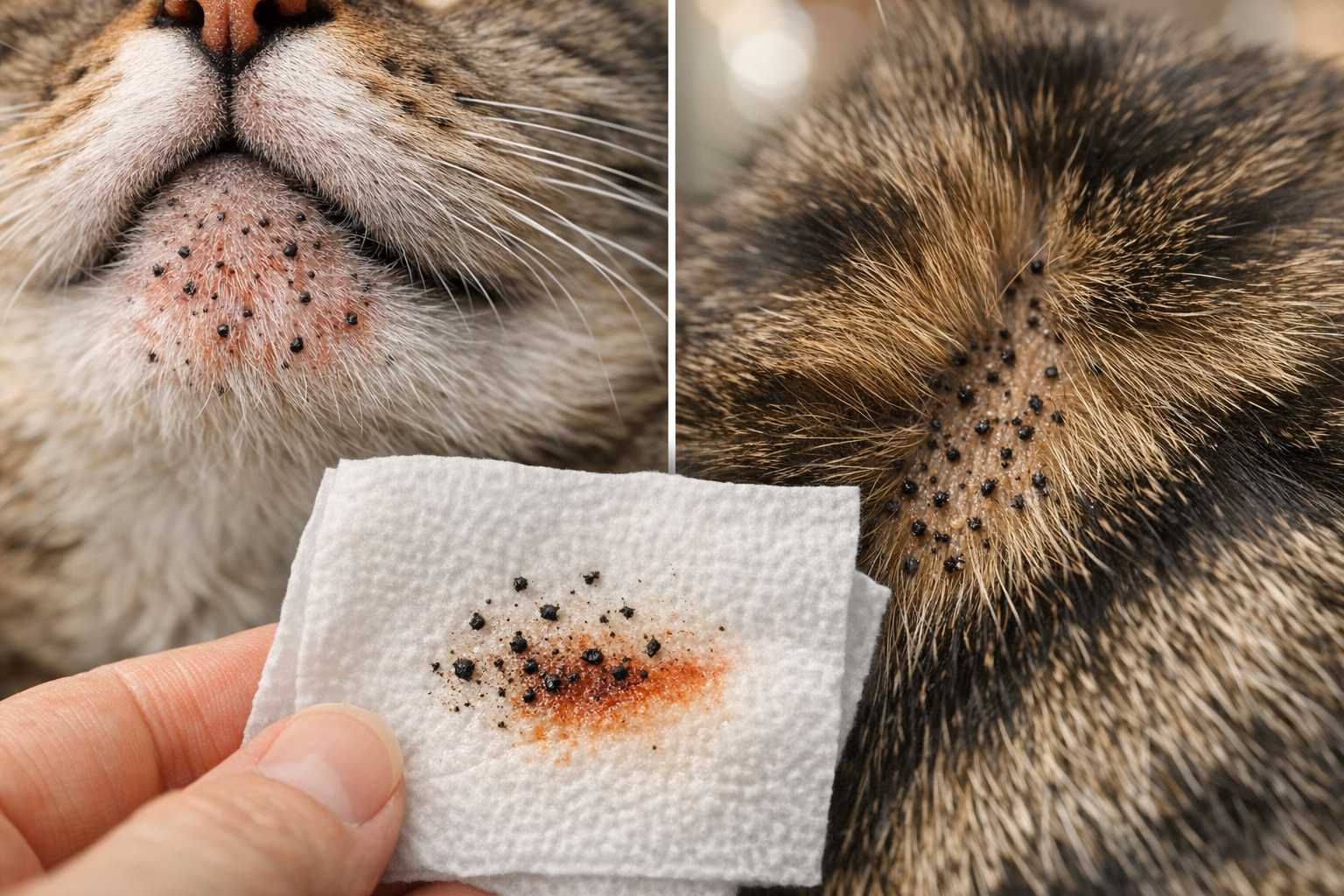
It happens when hair follicles become clogged with oil and dead skin cells. This can cause blackheads, small bumps, redness, or crusty patches. In mild cases, it may just look like tiny black specks on the chin. In more severe cases, the area can become inflamed or infected.
Some cats only develop acne once, while others may have occasional flare-ups throughout their lives.
Common signs of cat acne
- Black specks or blackheads on the chin
- Small red bumps
- Swelling or irritation around the chin
- Crusty or scabby skin
- Chin rubbing or scratching
- Hair thinning in the area in more serious cases
One important detail: cat acne is usually attached to the skin. The spots do not brush away easily.
What Is Flea Dirt?
Despite the harmless-sounding name, flea dirt is actually flea feces. It is made up largely of digested blood left behind after fleas feed.
Flea dirt appears as tiny black or dark reddish-brown specks in the fur. It is often found around the neck, back, base of the tail, and belly, though it can show up anywhere on the body.
Because it can sometimes appear near the chin, people may mistake it for cat acne.
Common signs of flea dirt
- Tiny black or brown specks in the coat
- Specks that move or fall away when the fur is parted
- Frequent scratching, biting, or overgrooming
- Restlessness or skin irritation
- Visible fleas in some cases
Unlike cat acne, flea dirt is usually loose in the fur, not embedded in the skin.
Cat Acne vs. Flea Dirt: Main Differences
Here’s a quick side-by-side comparison:
| Feature | Cat Acne | Flea Dirt | |---|---|---| | Usual location | Chin and lower lip | Anywhere on the body, especially back, neck, belly, and tail base | | Texture | Attached to skin | Loose in fur | | Appearance | Blackheads, bumps, crusts | Pepper-like specks | | Pattern | Localized to one area | More scattered | | Itching | Mild or localized | Often intense and widespread | | Fleas present | No | Often, though not always visible |
Try the Wet Paper Towel Test
One of the easiest ways to check for flea dirt is with a damp white paper towel or tissue.
How to do it
- Gently collect a few of the black specks from your cat’s coat.
- Place them on a damp white paper towel.
- Wait a few seconds.
What the result means
- If the specks smear red, rust-colored, or reddish-brown, they are likely flea dirt, because the digested blood dissolves in water.
- If they stay black and do not change color, they may be cat acne, regular dirt, or another type of debris.
This test is helpful, but it is not perfect. If you’re still unsure, your veterinarian can help confirm the cause.
Location Matters
Where you find the specks can tell you a lot.
Cat acne
Cat acne is most commonly found on the chin and sometimes the lower lip. If the black material is firmly attached in that area and not showing up elsewhere, acne is more likely.
Flea dirt
Flea dirt is usually found in the coat, especially around the back, neck, belly, and base of the tail. If the specks are scattered over different parts of the body, fleas should move higher on your list of possibilities.
Pay Attention to Your Cat’s Behavior
Your cat’s behavior can offer another clue.
With cat acne
A cat may rub its chin, scratch at the area, or show mild irritation. Otherwise, behavior is often fairly normal.
With fleas
Cats with fleas often seem uncomfortable overall. You may notice:
- Frequent scratching
- Biting at the skin
- Overgrooming
- Twitching or restlessness
- Focus on the back, tail base, or neck
Not every cat with fleas scratches dramatically, especially early on, but widespread itchiness strongly suggests a parasite issue rather than acne.
Can a Cat Have Both at the Same Time?
Yes. A cat can have chin acne and also have fleas or flea dirt.
That’s why it’s important not to stop at the first explanation. If your cat has blackheads on the chin and is scratching all over, both conditions may be present.
In that case:
- Check the chin for skin-attached blackheads or bumps
- Check the coat for loose black specks
- Use the wet paper towel test on debris from the fur
- Look closely for live fleas with a flea comb
How to Help Cat Acne at Home
Mild cat acne can sometimes improve with simple care at home, but it’s important to be gentle.
Switch food and water bowls
Plastic bowls are often blamed for worsening chin irritation because they can trap bacteria and become scratched over time. Switching to stainless steel, ceramic, or glass bowls is a sensible first step.
Keep the area clean
Gently wipe the chin with a soft, warm, damp cloth. Do not scrub.
Some veterinarians may recommend antiseptic products such as chlorhexidine wipes or other pet-safe cleansers, but it’s best to ask your vet before starting any treatment.
Do not squeeze the blackheads
Picking or squeezing can irritate the skin and increase the risk of infection.
See a vet if it worsens
If the area becomes swollen, painful, bloody, or starts to ooze, veterinary treatment is needed. More severe cases may require prescription wipes, topical medications, or antibiotics.
How to Deal With Flea Dirt and Fleas
If you find flea dirt, assume fleas are present now or were present very recently.
Use an effective flea treatment
Ask your veterinarian which flea control product is safest and most effective for your cat. Options may include:
- Topical treatments
- Oral medications
- Flea collars recommended by your vet
Avoid using dog flea products on cats. Permethrin is highly toxic to cats and should never be used unless specifically prescribed in a cat-safe formulation by a veterinarian.
Treat the home as well
Fleas do not live only on your cat. Eggs and larvae can be in bedding, carpets, furniture, and cracks in flooring.
Helpful steps include:
- Washing bedding in hot water
- Vacuuming frequently
- Treating all pets in the home as advised by your vet
- Using home flea control products if recommended
Stay consistent
Flea control usually takes more than one treatment. Because of the flea life cycle, you may need to continue treatment for several weeks or months.
When to See a Veterinarian
Contact your vet if:
- The skin is swollen, painful, bleeding, or oozing
- Your cat seems very itchy or uncomfortable
- You see open sores or significant hair loss
- The problem keeps returning
- Home care is not helping
- Your cat seems unwell in general
- You are not sure whether you’re dealing with acne, fleas, or something else
Other conditions, such as skin infections, ringworm, allergies, mite infestations, or eosinophilic skin disease, can sometimes resemble acne or flea-related irritation. A vet can rule these out and recommend the right treatment.
Quick Recap
To tell cat acne vs flea dirt apart, focus on three things:
1. Location
- Chin and lower lip: more likely cat acne
- Scattered through the coat: more likely flea dirt
2. Texture
- Stuck to the skin: more likely acne
- Loose in the fur: more likely flea dirt
3. Wet paper towel test
- Rust-red smear: flea dirt
- No color change: acne, dirt, or another type of debris
Also pay attention to your cat’s behavior. Local chin irritation leans toward acne, while widespread itching makes fleas more likely.
Final Thoughts
Finding black specks on your cat can be unsettling, but in many cases the explanation is manageable once you know what you’re looking at.
Cat acne usually stays on the chin and tends to be attached to the skin. Flea dirt is loose, scattered through the coat, and may leave a reddish smear when wet. Knowing the difference can help you take the right next step sooner.
And if you’re ever unsure, a veterinarian can give you a clear answer and help your cat feel better quickly.