Cat Yoga for Beginners: How to Practice Doga with Your Feline Friend
Cat Yoga for Beginners: How to Practice Doga with Your Feline Friend
SEO Slug: cat-yoga-for-beginners-how-to-practice-doga-with-your-feline-friend
Focus Keyphrase: cat yoga for beginners
Meta Description: Discover how to practice cat yoga with your feline friend. This beginner-friendly guide to doga includes simple poses, safety tips, and easy ways to relax and bond together.
Have you ever rolled out your yoga mat only to have your cat claim it first?
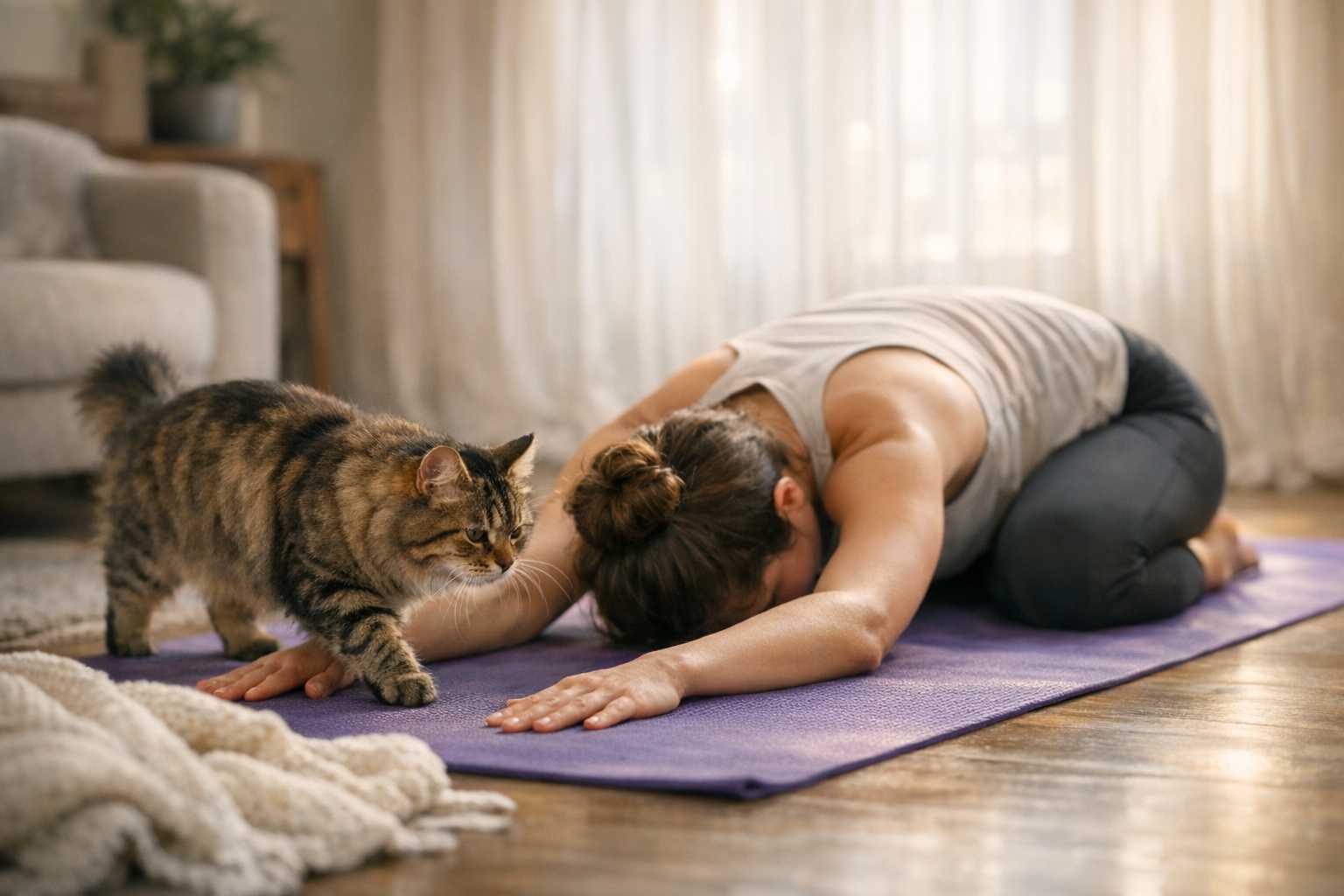
Maybe they’ve wandered under you in child’s pose, curled up on your stomach during savasana, or decided your water bottle was their next toy.
If that sounds familiar, you’re not alone.
Instead of trying to keep your cat away, why not let them be part of the experience?
Welcome to the playful, calming world of cat yoga, often called doga.
It’s gentle, beginner-friendly, and a lovely way to spend a few quiet minutes with your feline companion.
What Is Cat Yoga?
Doga originally referred to yoga practiced with dogs, which is where the name comes from. Today, many people also use the term for yoga with other pets, including cats.
And cats are surprisingly natural partners for a relaxed yoga session. They stretch often, enjoy warm and peaceful spaces, and seem to understand the art of slowing down better than most humans.
At its heart, cat yoga is simply doing gentle yoga in the presence of your cat while inviting calm, connection, and curiosity. It’s less about getting every pose right and more about sharing a peaceful moment together.
Benefits of Cat Yoga
Cat yoga may not be a formal fitness method in the traditional sense, but it can still offer real benefits.
For you
- Can help reduce stress: Gentle movement, deep breathing, and spending time with a pet may help you feel calmer.
- May support relaxation: Petting a calm cat and focusing on your breath can make it easier to slow down mentally.
- Encourages mindfulness: Cats have a way of pulling you into the present moment.
- Supports bonding: Quiet one-on-one time can strengthen your connection with your cat.
- Makes movement more enjoyable: Let’s be honest—everything is a little more fun with a cat nearby.
For your cat
- Provides enrichment: Your voice, presence, and the change in routine can be mentally stimulating in a gentle way.
- Encourages calm interaction: For many cats, quiet shared time feels safe and comforting.
- Offers extra attention: Some cats enjoy the petting, closeness, and relaxed atmosphere.
A quick note of caution: while calm interaction can be beneficial, you should never try to stretch, position, or manipulate your cat’s body. Cats should always be free to participate on their own terms.
What You Need to Get Started
You don’t need much for cat yoga.
Here’s a simple beginner setup:
- A yoga mat
- Comfortable clothes that can handle a little fur
- A quiet, familiar room
- A blanket or towel for your cat to sit on
- A few treats or a favorite toy for gentle encouragement
- A relaxed mindset
That’s all. No special equipment, and no need for advanced yoga experience.
How to Prepare Your Space
Cats tend to be sensitive to changes in their environment, so a calm setup can make a big difference.
Keep the room quiet
Turn off loud music, television, or anything else that might feel overstimulating. If you like background sound, choose something soft and unobtrusive.
Pick a calm time of day
A session is more likely to go well when your cat is naturally relaxed, such as after a meal or during one of their quieter periods.
Make the area comfortable
Choose a warm, familiar space. You can place a soft blanket nearby so your cat has their own cozy spot beside your mat.
Use soft lighting
Bright, harsh light can feel a bit intense. A softer, calmer atmosphere is usually better for both of you.
Skip strong scents
This is important: many essential oils and diffused fragrances can be irritating or even toxic to cats. It’s safest to avoid them during your session.
Beginner-Friendly Cat Yoga Poses
The best cat yoga poses are simple, slow, and flexible. Your cat may join you, ignore you, or wander in and out. All of that is normal.
1. Seated Breathing with Your Cat Nearby
Start in a comfortable seated position, either cross-legged or on a cushion.
Rest your hands on your knees and take slow, steady breaths. If your cat sits beside you or climbs into your lap, gently pet them if they seem receptive.
This is one of the easiest and best ways to begin, especially if you’re new to yoga.
Try it for: 3 to 5 minutes
2. Child’s Pose
Come onto your knees and fold forward, reaching your arms out in front of you or resting them by your sides.
Many cats are naturally curious about this pose and may come over to investigate. Let them approach at their own pace. If they want to sit nearby, that’s perfect.
Keep your shoulders soft and breathe deeply.
Hold for: 5 to 10 breaths
3. Cat-Cow Stretch
Come onto all fours with your hands under your shoulders and your knees under your hips.
As you inhale, gently lift your chest and tailbone for cow pose. As you exhale, round your spine for cat pose.
Move slowly and comfortably. This pose is beginner-friendly and pairs well with a calm, curious cat moving around the mat.
Repeat: 6 to 10 rounds
4. Reclined Rest with Your Cat Beside You
Lie on your back with your knees bent or your legs extended, whichever feels more comfortable.
Some articles suggest placing your cat on your stomach, but this should only happen if your cat chooses to settle there on their own. Never place or hold your cat in position.
If your cat curls up beside you, enjoy the moment and focus on slow breathing.
Hold for: 3 to 5 minutes
5. Savasana
Finish by lying flat on your back in a comfortable resting pose.
Let your cat settle wherever they like—next to your legs, near your shoulder, or somewhere else entirely. If they purr, treat that as a bonus, not a requirement.
This final resting pose is often the easiest time to share quiet space together.
Rest for: 5 to 10 minutes
Tips for a Successful Cat Yoga Session
Not every session will be graceful, and that’s part of the charm.
Here are a few realistic tips:
- Keep expectations low: Your cat may participate for two minutes and then leave. That still counts.
- Never force interaction: If your cat isn’t interested, let them be.
- Use treats sparingly: A small reward can help create a positive association, but don’t rely on treats too much.
- Stay relaxed: Cats are sensitive to mood and tension.
- Start small: Even 10 minutes is enough for a beginner session.
- Let your cat lead: If they want to sit nearby rather than on the mat, that’s completely fine.
Common Mistakes to Avoid
A few small adjustments can make cat yoga safer and more enjoyable.
- Choosing an overactive time of day: A very playful or zoomy cat may not be in the mood for calm movement.
- Using essential oils or scented products: Some are unsafe for cats.
- Trying to pose your cat: Cat yoga is about shared space, not physically handling your pet like a prop.
- Ignoring body language: Flattened ears, a twitching tail, dilated pupils, or sudden withdrawal can mean your cat wants space.
- Getting frustrated: The goal is connection, not perfection.
How Often Should You Practice?
There’s no ideal number that works for everyone.
For most beginners, two or three short sessions a week is a great place to start. Even a few quiet minutes here and there can become a meaningful part of your routine.
You may prefer morning sessions to start the day calmly, or evening sessions to wind down together. Follow your schedule and your cat’s natural rhythm.
Is Cat Yoga Right for Every Cat?
Not necessarily.
Some cats will be immediately interested. Others will watch from across the room and keep their distance. Kittens may be too energetic, while older cats may enjoy the calm atmosphere more.
The key is to pay attention to your individual cat’s personality, comfort level, and boundaries.
If your cat enjoys being near you during quiet activities, there’s a good chance they’ll enjoy some version of cat yoga too.
Final Thoughts
Cat yoga for beginners doesn’t need to be complicated.
It’s really just yoga made softer, slower, and a little more playful by the presence of your cat.
Some sessions will feel peaceful and grounding. Others may involve whiskers in your face, a tail across your mat, or an unexpected interruption in the middle of a stretch.
That’s all part of it.
Roll out your mat, keep things simple, and let your cat decide how they want to join in. You may be surprised by how calming and sweet the experience can be.
Have you tried cat yoga with your cat? Share your favorite moment in the comments—we’d love to hear about it.