What Is Cat Yoga? Complete Guide to Practicing Mindfulness with Your Cat
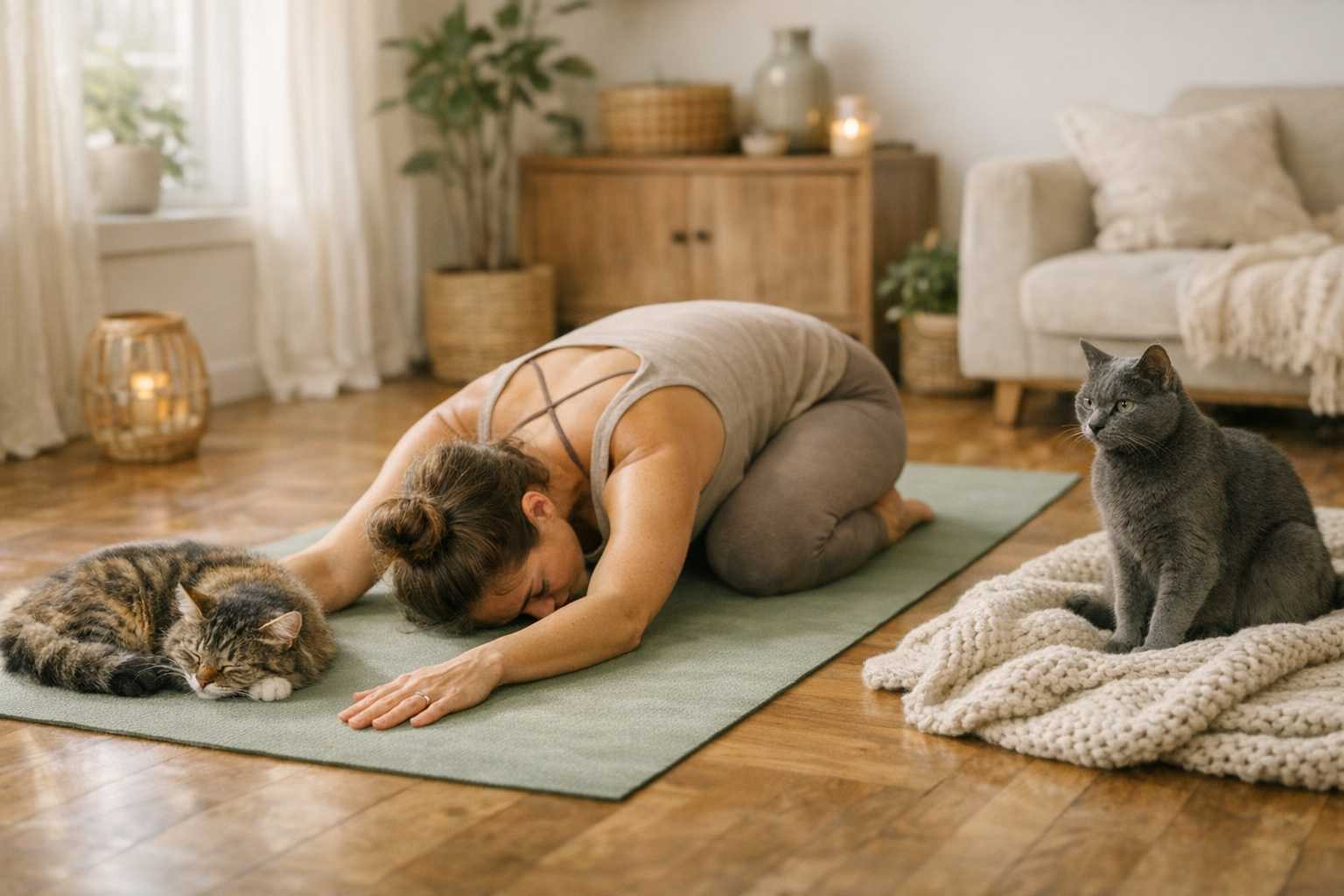
What Is Cat Yoga? A Complete Guide to Practicing Mindfulness with Your Cat
SEO Slug: what-is-cat-yoga
Focus Keyphrase: cat yoga
Meta Description: Discover what cat yoga is and how to practice mindfulness with your feline companion. Learn the benefits, beginner-friendly poses, and simple tips for a fun, calming practice.
Have you ever started a yoga session only to have your cat stroll across the mat, curl up under you, or claim your space the moment you settle in?
If so, you have already had a taste of cat yoga.
What may seem like a funny interruption can actually become a gentle, joyful way to practice mindfulness. Cat yoga has grown in popularity for good reason: it combines movement, breath, relaxation, and the calming presence of cats in a way that feels lighthearted and genuinely therapeutic.
Here’s everything you need to know.
What Is Cat Yoga?
Cat yoga is a yoga practice that includes cats as part of the experience.
Sometimes that means practicing at home with your own cat nearby. In other cases, it means attending a class at a studio, shelter, or cat café where cats move freely around the room.
At its core, cat yoga blends traditional yoga with the natural comfort, curiosity, and companionship of cats. The goal is not to achieve perfect form or a flawless routine. It is to slow down, breathe, stay present, and enjoy sharing the moment with an animal that naturally encourages calm and attention.
Where Did Cat Yoga Come From?
Cat yoga began gaining widespread attention around the mid-2010s, especially around 2016, as cat cafés and animal-focused wellness events became more popular.
The concept is simple and appealing: combine a yoga class with a room full of friendly cats. From there, the idea spread quickly across the United States, the United Kingdom, and many other places.
Today, cat yoga classes are offered by yoga studios, shelters, rescues, and cat cafés. Many of these events are organized in partnership with local adoption groups, which means the classes can also help adoptable cats meet potential families.
Types of Cat Yoga
Cat yoga can look a little different depending on where and how you practice. Here are the most common versions.
Shelter Cat Yoga
These classes are often held at animal shelters or in partnership with rescue organizations. Adoptable cats roam through the space while participants move through a gentle yoga flow. These events are especially popular because they combine wellness with animal adoption awareness.
Cat Café Yoga
Cat café yoga takes place in a café or lounge with resident cats. These sessions tend to feel cozy, casual, and playful, with cats weaving between mats or settling down beside participants.
Cat Yoga at Home
This is the most accessible form of cat yoga. If you have a cat, you may already be doing it without realizing it. Home practice simply means making space for your cat to be part of your yoga routine, whether they quietly observe or fully take over your mat.
Virtual Cat Yoga
Online cat yoga classes became especially popular during the pandemic and remain a convenient option. In these classes, people join from home and practice with their own cats in a familiar environment.
Benefits of Cat Yoga
Cat yoga can offer real benefits for both emotional wellbeing and relaxation. While experiences vary from person to person, many people find it especially helpful in the following ways.
It Can Help Reduce Stress
Yoga is already known for promoting relaxation through breathing, movement, and nervous system regulation. Spending time with a familiar pet can also be comforting and calming. Together, they can create a soothing environment that helps you unwind.
It May Improve Your Mood
Gentle exercise, mindful breathing, and positive interaction with animals can all support a better mood. For many people, being around cats adds a sense of comfort, playfulness, and connection.
It Encourages Mindfulness
Cats are excellent reminders to stay present. They respond to what is happening now, not what happened earlier or what might happen later. Practicing yoga with a cat often pulls your attention back to the moment, especially when your session does not go exactly as planned.
It Can Make Practice Feel More Enjoyable
For some people, cat yoga removes the pressure that can come with a traditional class. It feels less formal and more approachable, which can make it easier to return to your mat regularly.
It May Support Cat Welfare in Some Settings
In shelter or rescue-based classes, cat yoga can help socialize cats, raise awareness for adoption, and create positive experiences for both animals and people. That said, participation should always be voluntary for the cats, and the environment should be managed with their wellbeing in mind.
Is Cat Yoga Good for Cats?
It can be, depending on the cat and the setting.
Many cats enjoy calm environments, soft surfaces, and the chance to explore new objects like yoga mats or blankets. Some are naturally curious and may happily join in. Others may prefer to watch from a distance or leave altogether.
The key is choice. Cats should never be forced to participate. A cat-friendly yoga experience respects their body language, comfort level, and need for space.
Some cats benefit from the quiet atmosphere and gentle energy of a yoga practice. Others may find a class environment overstimulating, especially if they are shy, easily stressed, or unfamiliar with groups of people. This is why reputable cat yoga classes should prioritize animal welfare and ensure the cats have safe places to retreat.
How to Start Cat Yoga at Home
If you would like to try cat yoga at home, keep it simple and relaxed.
1. Set Up a Quiet Space
Choose a calm area with enough room to move comfortably. Lay out your mat and reduce unnecessary noise or distractions if possible.
2. Let Your Cat Participate Naturally
Do not place your cat on the mat or try to direct their behavior. Let them approach when they feel curious. You can place a blanket or bed nearby if they like having their own spot.
3. Begin With Gentle Poses
Start with slow, accessible movements, especially poses close to the floor. This helps you stay relaxed and makes it easier for your cat to be near you.
4. Expect Interruptions
A cat may walk underneath you, sit on your mat, rub against your arms, or decide that your session is actually cuddle time. That is part of the experience. The goal is not perfection. It is presence.
5. Finish With Rest
A quiet resting pose at the end, such as savasana, is often when cats become most interested in joining you. If your cat settles nearby, treat it as part of the practice rather than a distraction.
Best Yoga Poses for Cat Yoga
Some poses are especially well suited to practicing with a cat nearby.
Cat-Cow
This classic pose is a natural fit. The movement is gentle, rhythmic, and beginner-friendly, and it mirrors the way cats often stretch.
Child’s Pose
This grounded resting pose creates a calm, low-to-the-floor shape that many cats seem comfortable approaching.
Seated Forward Fold
Because this pose is still and quiet, it often gives cats a chance to settle on your legs or sit close by.
Downward Dog
This pose may be familiar to anyone whose cat likes to walk directly underneath them. It can be playful, but be mindful of balance and avoid sudden shifts if your cat is nearby.
Savasana
Savasana is often the highlight of cat yoga. Remaining still on the mat can invite your cat to curl up beside you or even rest gently on top of you.
Tips for a Better Cat Yoga Experience
A few practical tips can make cat yoga more comfortable and enjoyable.
- Keep sessions short at first. Start with 10 to 20 minutes if you or your cat are new to the routine.
- Use a calm tone and gentle pace. Fast transitions can startle some cats.
- Avoid strong scents. Many cats are sensitive to essential oils, incense, and scented candles.
- Watch your cat’s body language. If your cat seems tense, agitated, or eager to leave, give them space.
- Do not force contact. Let your cat choose how involved they want to be.
- Prioritize safety. Avoid balancing poses or movements that could cause you to step on or fall onto your cat.
What to Expect in a Cat Yoga Class
If you are attending a cat yoga class for the first time, the atmosphere is usually more playful and informal than a standard yoga session.
In most classes, participants set up their mats while cats move freely around the room. The instructor then guides the group through a gentle sequence, often suitable for beginners. Throughout the session, the cats may wander, nap, play, or interact with participants.
Many classes last about 45 to 60 minutes. In shelter-based sessions, there may also be time afterward to meet the cats more closely or learn about adoption.
Before booking, it is a good idea to check whether the organizer has clear animal welfare practices in place, including rest areas for the cats and limits on handling.
Cat Yoga and Mindfulness
Cat yoga and mindfulness naturally complement each other.
Mindfulness is the practice of paying attention to the present moment with openness and without judgment. Cats, in their own way, model this beautifully. They rest when they feel like resting, explore when something interests them, and respond directly to their surroundings.
Practicing yoga with a cat can make mindfulness feel more tangible. A purr, a gentle nudge, or the simple warmth of a cat nearby can pull you out of mental noise and back into the present.
That is part of what makes cat yoga so appealing. It turns an ordinary yoga session into a shared, grounded experience.
Who Is Cat Yoga For?
Cat yoga can be a good fit for many different people.
It is especially appealing for:
- beginners who want a less intimidating introduction to yoga
- cat lovers looking for a more playful wellness routine
- people seeking gentle stress relief
- experienced yoga practitioners who want to bring more lightness into their practice
- anyone interested in animal rescue or shelter-based community events
You do not need to be highly flexible, experienced, or particularly serious about yoga to enjoy it. The practice is meant to be welcoming, not perfect.
Common Questions About Cat Yoga
Is cat yoga safe?
Generally, yes, when it is done thoughtfully. For humans, the main concerns are balance and awareness of where the cat is. For cats, safety depends on having freedom, space, and a low-stress environment.
Do I need yoga experience?
No. Most cat yoga classes are beginner-friendly, and home practice can be as simple or as basic as you want it to be.
What should I wear?
Wear comfortable clothes you can move in easily. It is also smart to avoid delicate fabrics or loose strings that might attract playful paws.
Can I bring my own cat to a class?
Usually not. Most classes involve resident cats or cats from a shelter or rescue. If you want to practice with your own cat, home cat yoga is usually the best option.
Final Thoughts
Cat yoga is more than a novelty. At its best, it is a gentle, enjoyable practice that combines movement, mindfulness, and connection with animals.
It may not be the most orderly form of yoga, and that is part of its charm. A cat interrupting your pose, claiming your mat, or curling up beside you can become a reminder to relax, adapt, and stay present.
Whether you join a shelter class or simply roll out your mat at home and let your cat decide how involved they want to be, cat yoga offers a simple kind of joy that many people find surprisingly grounding.
So if your cat keeps showing up during your practice, you might not be getting interrupted at all.
You might just be doing cat yoga.
Have you ever tried cat yoga?