Multiple Cats Sleep Dynamics: Social Rest Pattern Guide
Observing and Understanding the Sleep Behavior of Multiple Cats: A Guide
Have you ever been curious as to why your cats choose certain spots to huddle together for a nap? Delving into the sleeping habits of multiple cats can offer fascinating insights into their relationships and the social bonds they form.
Let's take a detailed journey through the dynamics of feline sleep patterns, especially in homes with multiple cats.
Comprehending Basic Feline Sleep Behavior
Sleep is inherently ingrained in the lifestyle of cats. They spend between 12-16 hours each day sleeping or resting.
Domestic cats retain their wild instincts, which make them most active during dawn and dusk, replicating their natural hunting patterns.
It's quite usual for your cats to conform to similar sleep routines, which facilitates harmonious sleeping arrangements. Additionally, individual characteristics have a considerable influence—with some cats being inherently more companionable than others.
Choosing Sleep Partners: The Cat's Way
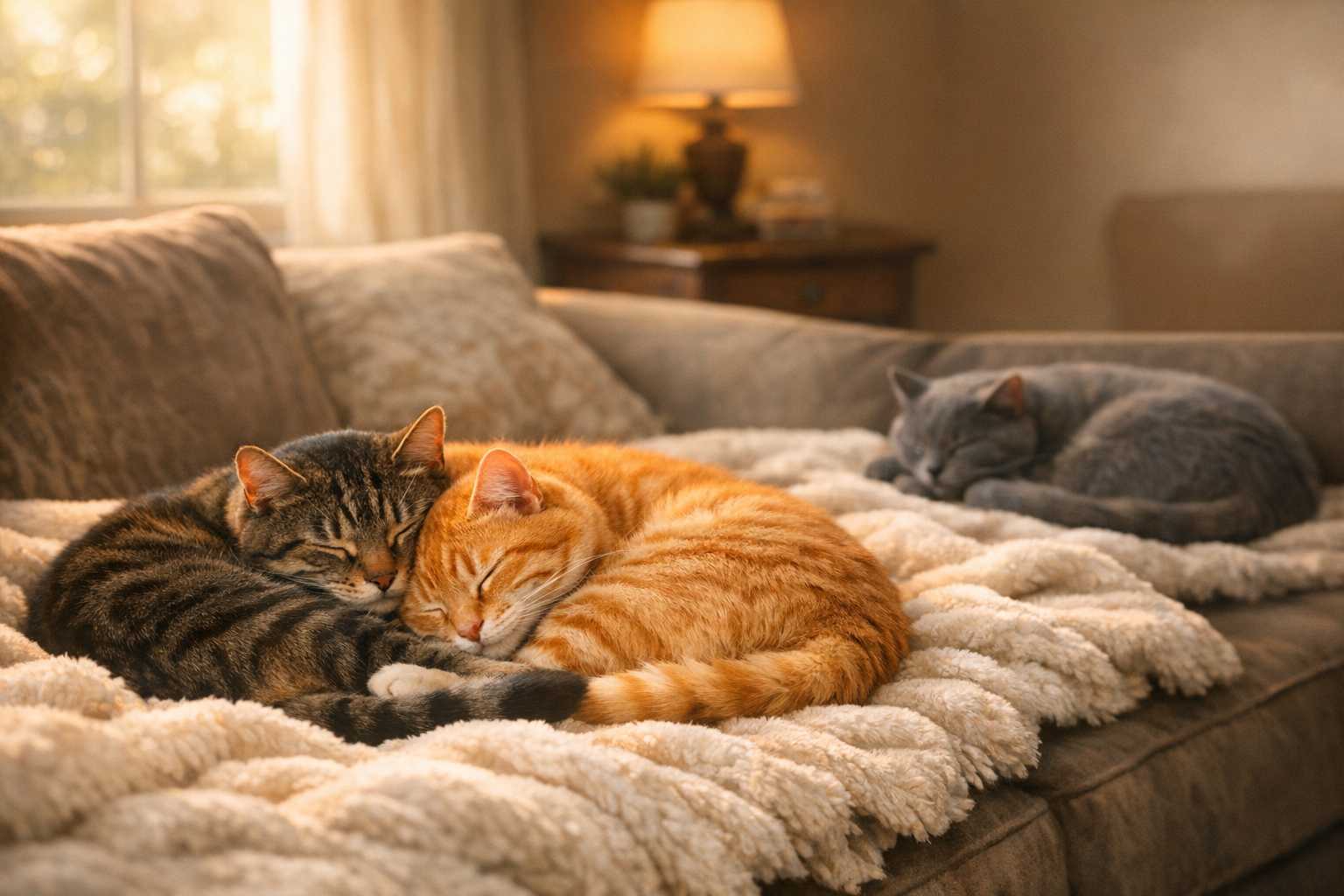
Cats sharing a bond frequently sleep together, providing each other with warmth and safety. This sleeping behavior is a testament to their affection and trust towards each other.
The choice of a sleep partner among cats may depend on: - The comfort level and familiarity among the group - Temperature choices - Hierarchical dynamics within the group - Availability of sleeping spots
Mother cats and their young are often observed maintaining these close sleeping ties. Adult cats may also be found nestled with their siblings. Cats who engage in mutual grooming usually sleep together too, reinforcing their communal ties.
Regular Sleep Arrangements in Multi-Cat Households
The Cuddle Pile
In this arrangement, multiple cats pile up or interweave their bodies. This maximizes the warmth and comfort generated—perfect for colder months. It's particularly common between littermates and closely bonded pairs.
Side-by-Side Sleeping
In this scenario, cats lie parallel to each other without physical contact. They preserve their personal space while maintaining proximity, ideal for cats that appreciate camaraderie but also cherish independence.
The Guardian Stance
Here, one cat rests while another remains partially alert nearby. This switching of guard roles supports the group's sense of security. Seniors or dominant cats typically step into the guardian role initially.
Separate but Nearby
In this arrangement, cats select individual spots within the same general vicinity. They don't touch but keep the other in sight, suggesting a sociable connection without the necessity for physical contact.
Indicators of Positive Sleep Dynamics
Tranquil co-existence during sleep signifies healthy relationships. Here are some positive tell-tale signs:
- Cats willingly choosing to sleep near each other
- Bodies displaying tension-free relaxation while asleep
- Lack of animosity over chosen sleeping places
- Mutual grooming before or after sleep
- Alternating turns in favored spots
These behaviors indicate a safe and congenial living atmosphere amongst your cats.
Sleep Behavior that Could Flag Trouble
At times, sleep patterns can expose potential tensions. Take heed of these warning signs:
- Consistent solitary sleeping by a cat or seeking isolation
- Hostility around sleeping positions
- Abrupt adjustments in established sleep patterns
- Marking of beds or preferred spots as personal territory
- Anxiety-induced behaviors like excessive grooming
Such symptoms might necessitate mediation or consultation with a vet.
Attributing Factors to Cat Sleep Patterns and Associated Changes
Your cat's sleep pattern can change due to several reasons. Let's delve into a few factors which may affect these patterns:
-
Seasonal Changes: Shared sleep increases in winter due to cats seeking warmth, while summer might lead to more solitary sleep sessions as cats spread out to keep cool.
-
Aging and Sleep: Kittens need more sleep and often huddle together for warmth and safety. As they grow, they might continue these sleeping habits or develop new ones. Senior cats may alter their sleep behaviors owing to health-related issues like arthritis.
-
New Additions: The introduction of a new cat to a multi-cat home may also lead to changes in sleep patterns.
To understand and cater for such dynamic sleep patterns, it's important that you provide varied options for both group and individual sleeping, maintain a comfortable temperature, establish peaceful zones, and respect individual preferences.
Collective Sleeping: The Health Benefits
Cats that sleep together parade reduced stress levels as social bonding provides emotional solace.
The shared body heat generated through group sleeping aids in natural temperature regulation, essential for aging cats. Bonded cats usually have lesser territorial disputes, promoting overall household harmony.
Regular sleep partners may even witness an increased lifespan, as social support positively impacts feline wellbeing.
The Takeaway
Appreciating the dynamics of multiple cats' sleep patterns can significantly enhance their quality of life and contribute to the overall peaceful ambiance of a multi-cat home.
Taking note of how your cats choose to rest and sleep can help you understand their comfort levels, trust, and social bonds. As each cat is unique in its own way, it's important to provide sleeping options that cater to both social and independent sleepers.
Above all, observe, be patient, and respect individual feline preferences. When given a choice, cats will guide you to what best suits their sleep needs.