Wet vs Dry Cat Food: Complete Nutritional Comparison
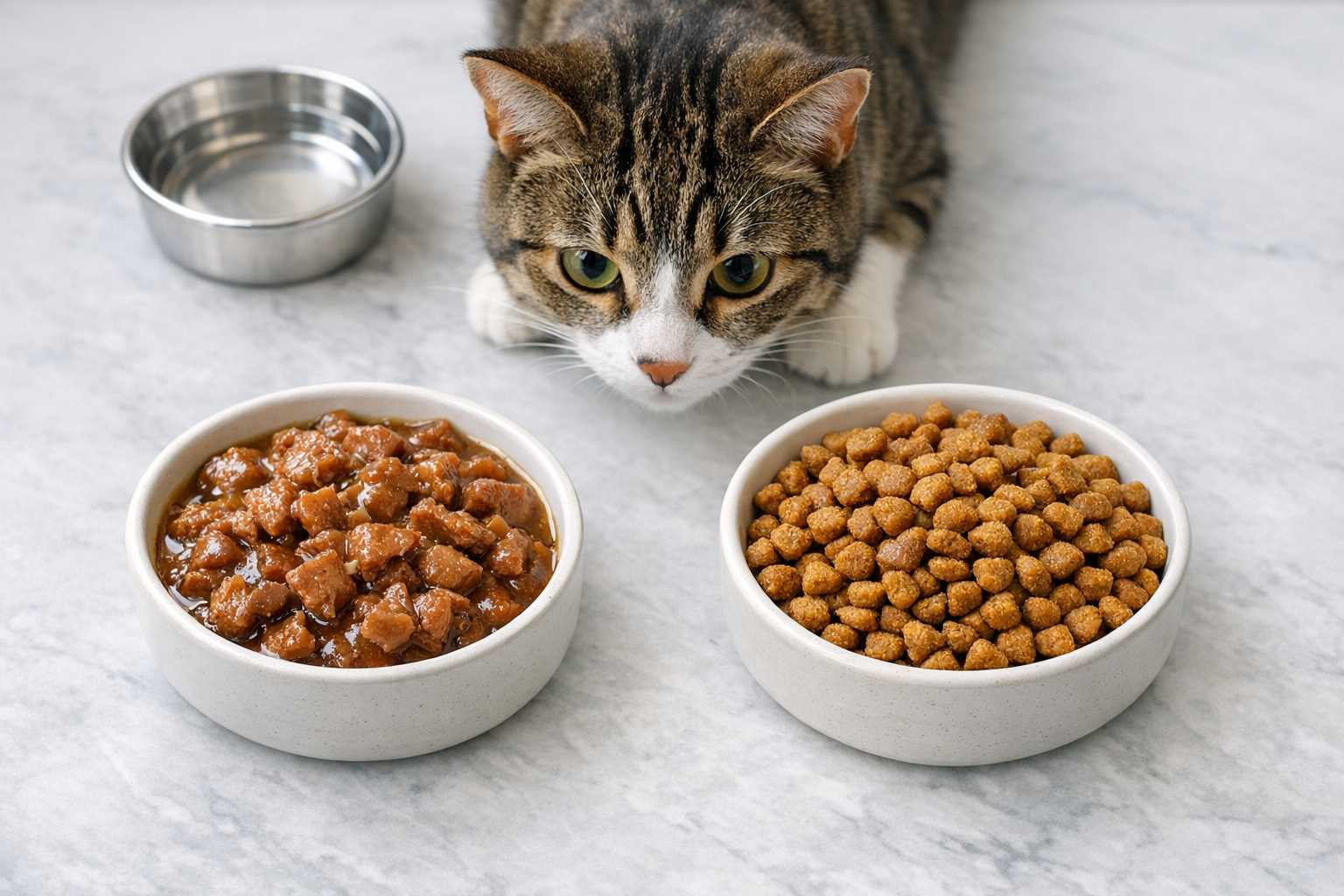
Wet vs Dry Cat Food: A Comprehensive Nutritional Analysis
Deciding on the appropriate food for your feline companion can often be a daunting task. You've likely found yourself in the pet store aisle, flanked by an abundance of options. You may ask yourself whether you should opt for those handy bags of kibble or the cans of wet food?
Rest assured, you're not alone in this confusion. Every feline owner faces this quandary. Let's delve into the intricacies of wet vs dry cat food.
Grasping the Fundamentals
Both wet and dry cat foods serve one fundamental purpose - to keep your cat happy and healthy. The methods they employ to achieve this, though, significantly differ.
Wet food comprises 70-80% moisture, while dry food typically contains only about 10% moisture. This discrepancy substantially influences everything from flavor to nutritional benefits.
Given that the ancestors of domestic cats sourced majority of their water intake from prey, this suggests wet food aligns more closely with their natural diet. Nonetheless, dry food also possesses its unique perks.
Nutritional Content Dissected
Protein Prospects
Regardless of whether it's wet or dry, both types of food can be great sources of protein. In this case, quality outranks format, so seek out products with real meat listed as the primary ingredient.
Wet food often exhibits higher protein percentages considering the moisture doesn't factor into nutritional content calculations. This leaves more space for protein-rich elements.
Dry food condenses nutrients into more compact portions. High-protein dry alternatives abound in the market. Be sure to scrutinize ingredient lists thoroughly.
Fat Content Fundamentals
Wet food typically has moderate levels of fat. The moisture naturally counterbalances the richness of the ingredients. This ensures your cat remains satiated without an overconsumption of fats.
The fat content in dry food can fluctuate vastly. While some brands incorporate healthy oils for a glossy coat, others reduce fat levels for weight management.
Either option can cater to your cat's essential fatty acid needs, offering omega-3 and omega-6 fatty acids which foster healthy skin and luxurious fur.
Carbohydrate Cognizance
Here's a noteworthy aspect: Cats are obligate carnivores, meaning they don't necessarily require carbohydrates to flourish.
Wet food usually carries fewer carbs. With moisture taking up a significant portion, there's less space for fillers. This appeals to numerous health-conscious cat owners.
On the other hand, dry food requires some carbohydrates for structure. Since kibble needs a binding agent, high-quality brands center on beneficial carbs like sweet potatoes.
Comparing Health Benefits
Hydration Champions
Wet food unmistakably triumphs in the hydration aspect. Many cats don't naturally consume sufficient water. Wet food assists in preventing dehydration and upholding kidney health.
Adequate hydration supports digestion and aids in better nutrient absorption within your cat's system. You'll typically observe glossier coats and heightened energy levels.
Dry food necessitates cats consuming more water independently. Some cats struggle with this; therefore a water-fountain may encourage more frequent drinking.
Weight Management Mavericks
Wet food could aid in portion control. The high moisture content induces satiety with fewer calories, thus making weight management simpler for overweight cats.
The protein in wet food also helps preserve lean muscle mass. Your cat remains satiated while maintaining a healthy body composition.
Conversely, dry food offers exact portion control through measurement. You can effortlessly track your cat's daily consumption.
Dental Health Protectors
Traditionally, dry food was thought to be superior in this regard. The belief was that crunching action naturally cleaned teeth. However, recent research provides mixed results.
Some dry foods do contribute to reducing tartar buildup. So, look for kibbles specifically formulated to enhance dental health. These perform better than standard dry food.
While wet food doesn't offer mechanical cleaning action, it doesn't cling to teeth like some dry foods do. Overall, consistent dental care is more critical than the type of food.
Assessing Convenience and Lifestyle Factors
Storage Solutions
When it comes to convenience, dry food undeniably takes the lead. The large bags conveniently fit into pantries. Plus, buying in bulk could save you money.
Once opened, dry food remains fresh for weeks. Just ensure it stays in an airtight container. It doesn’t need refrigeration.
Wet food demands some forethought. Unopened cans have a long shelf-life in your cupboard, while opened cans require immediate refrigeration and consumption.
Feeding Flexibility
Dry food is well-suited for free-feeding cats. It can safely stay out all day, catering to cats who prefer to graze throughout the day.
However, some cats fare better with scheduled meals. Dry food portion control requires more vigilance to avoid overfilling bowls.
Wet food naturally promotes meal-based feeding. Most cats finish their portion promptly providing you with greater control over eating habits.
Travel and Busy Timetables
Planning a weekend escapade? Dry food simplifies pet-sitting arrangements. Sitters can effortlessly refill bowls as needed.
Conversely, wet food calls for meticulous instructions. Sitters must comprehend portion sizes and storage terms.
For those with demanding work schedules, dry food offers reassurance. Your cat won't starve if you’re running late.
Considering Costs
Let’s address budgeting. Costs of pet food can accumulate quickly over your cat's lifespan.
Per serving, dry food typically proves less expensive. The larger bags yield numerous meals making it a preferred option for budget-focused households.
Wet food is pricier upfront but offers superior hydration. This could translate into savings on veterinary bills in the long run, as proper hydration helps prevent costly health complications.
Factor in your cat's age and health status. Older cats might obtain greater benefits from wet food's advantages. The additional cost could forestall larger expenditures down the line.
Age-Specific Recommendations
Kitten Considerations
Growing kittens require ample calories and nutrients. Both wet and dry foods can fulfill these needs. Seek out formulas specifically designed for kittens.
Wet food ensures young kittens remain hydrated. Their small bodies dehydrate rapidly, and the additional moisture provides crucial safeguards.
Some kittens favor wet food's robust flavors. Fussy eaters often find wet food more enticing which promotes positive eating habits from a young age.
Choices for Adult Cats
Healthy adult cats can thrive on either option. Take into account your cat's individual preferences and requirements; some cats express strong preferences about texture.
Active outdoor cats might benefit from the convenience of dry food, while indoor cats might prosper from the hydration boost offered by wet food.
Monitor your cat's physical condition, regardless of the type of food. Adjust portions based on activity levels and metabolism.
Strategies for Senior Cats
Older cats frequently encounter health issues. Kidney disease becomes increasingly probable with age; the moisture content in wet food supports kidney function.
Senior cats sometimes lose their appetite. The robust aroma of wet food can stimulate their appetite, which is vital for maintaining a healthy weight.
Dental problems also affect older cats. Soft wet food may be simpler for them to eat. Consult your veterinarian about your senior cat's specific needs.
The Right Choice
The hard truth is, there's no definitive "best" option. Your cat's individual needs should be prioritized. Consider their health, preferences, and your lifestyle.
A combination of both wet and dry food is often chosen by cat owners. This approach offers advantages from both options.
Begin by observing your cat's current habits. Do they drink sufficient water? Are they maintaining a healthy weight? These factors should inform your decision.
Final Words
Choosing between wet vs dry cat food needn't be a source of stress. Both types can ensure your feline companion remains healthy and content. Focus on high-quality ingredients, regardless of whether it's wet or dry.
Remember that every cat is unique. What works for one cat might not work for another. Be attentive to your cat's reactions, and adjust accordingly.
When uncertain, seek advice from your vet. They have the best understanding of your cat's health history and can deliver tailored advice based on specific needs.
Your affection and care outweigh perfect food choices. Cats can flourish on different diets. Trust your instincts to make sound decisions for your furry family member.