Cat Piloerection Explained: Why Cats Raise Their Fur and What It Signals
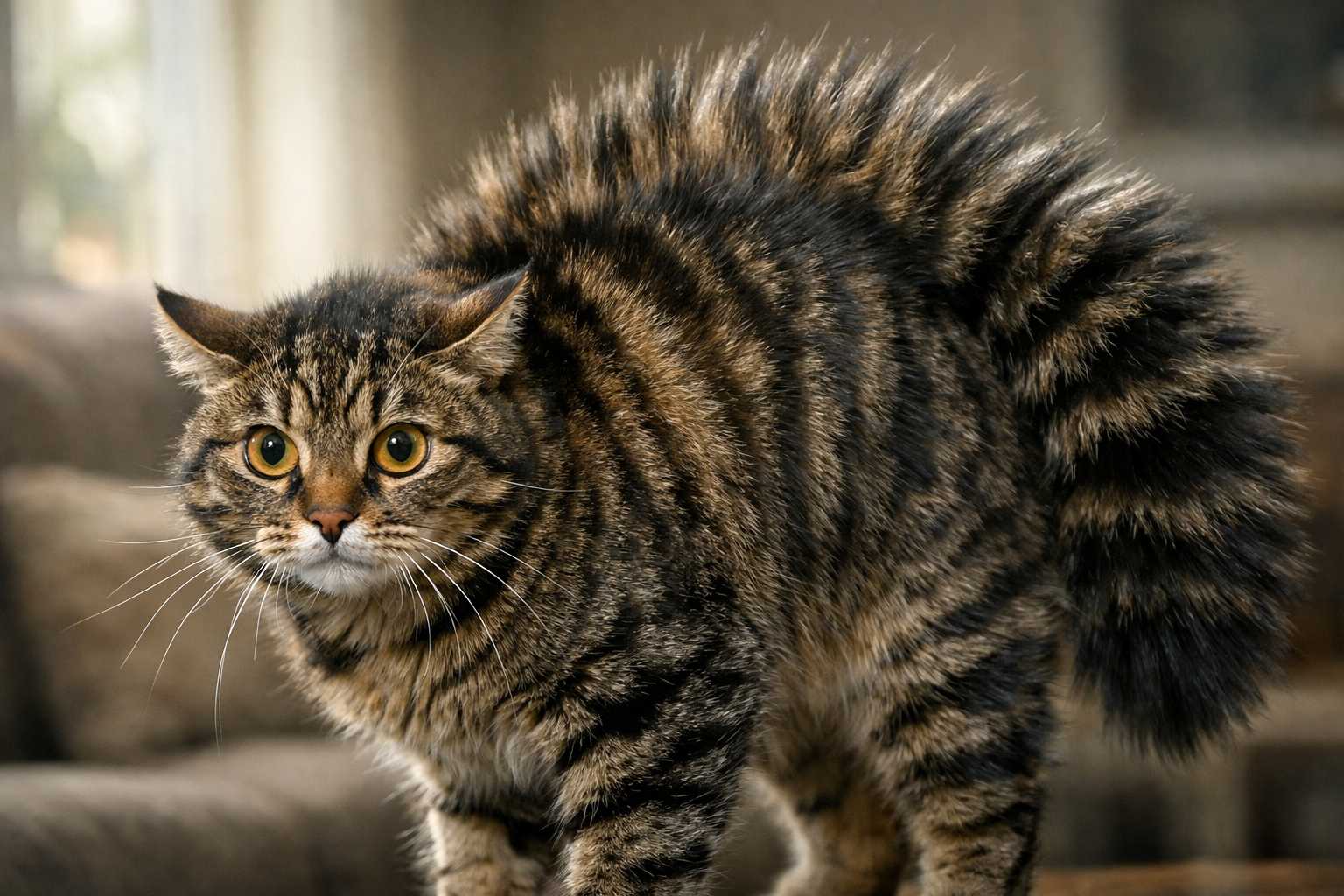
Cat Piloerection Explained: Why Cats Raise Their Fur and What It Means
SEO Slug: cat-piloerection-explained-why-cats-raise-their-fur
Focus Keyphrase: cat piloerection
Meta Description: Learn what cat piloerection means, why cats raise their fur, which emotions or situations trigger it, and how to respond when your cat’s hair suddenly stands on end.
Have you ever seen your cat suddenly puff up and look twice their normal size?
One moment they seem relaxed, and the next their fur is standing on end, their tail is fluffed out, and their whole body language has changed.
This reaction is called piloerection, and while it can look dramatic, it’s a normal physical response. In many cases, it gives you valuable clues about how your cat is feeling.
Here’s what cat piloerection is, why it happens, and how to tell what your cat may be trying to communicate.
What Is Cat Piloerection?
Piloerection is the involuntary raising of the hair or fur.
It happens when tiny muscles attached to the hair follicles contract. These are called the arrector pili muscles. When they tighten, the hairs stand more upright.
Cats do not consciously control this response. It happens automatically, much like goosebumps in humans.
In cats, piloerection is usually linked to the nervous system and is most often triggered by emotions such as fear, arousal, or stress. It can also happen in response to cold temperatures.
What Does a Cat Look Like During Piloerection?
When a cat experiences piloerection, the fur may rise along the spine, shoulders, and tail. In some cases, the entire coat may appear puffed up.
One of the clearest signs is a bottle-brush tail, where the tail becomes thick and dramatically fluffed out.
You may also notice other body language at the same time, such as:
- an arched back
- a sideways stance
- pinned-back ears
- wide pupils
- hissing, growling, or staring
This display can make the cat appear larger and more intimidating, which is often the point. It is a built-in survival response designed to help the cat defend itself or discourage a perceived threat.
Why Do Cats Raise Their Fur?
Cats raise their fur for several different reasons. The meaning depends on the situation and on the rest of the cat’s body language.
1. Fear or Feeling Threatened
Fear is one of the most common causes of cat piloerection.
When a cat feels unsafe, the body activates the fight-or-flight response. Stress hormones, including adrenaline, prepare the cat to react quickly. As part of that response, the fur may stand up to make the cat look larger and harder to challenge.
Common triggers include:
- an unfamiliar dog or cat
- sudden loud noises
- strangers in the home
- unexpected movement
- feeling cornered or trapped
In this context, raised fur usually means your cat is scared and trying to protect itself.
2. Aggression or Defensive Posturing
Piloerection can also appear during aggressive or defensive encounters, especially when two cats are confronting each other.
In these moments, the raised fur acts as a visual warning. The cat may be trying to say, in effect, “Stay back.”
This type of piloerection often appears alongside:
- hissing
- growling
- swatting
- a stiff posture
- direct staring
Aggression in cats is often rooted in fear or territorial stress, so the line between fear and aggression is not always sharp. Both can involve the same puffed-up appearance.
3. Startle Response
Sometimes a cat’s fur rises simply because they were startled.
A sudden sound, an unexpected object, or abrupt movement can trigger an instant physical reaction before the cat has time to assess what happened. In these cases, piloerection may last only a few seconds or minutes.
This is an automatic response, not a deliberate behavior.
4. Excitement or Intense Play
Not all piloerection means fear or hostility.
Some cats fluff up during highly stimulating play, especially kittens and young cats. During a burst of excitement, they may arch their backs, hop sideways, and puff their tails.
This can be normal playful behavior, as long as the cat otherwise appears relaxed and engaged rather than distressed.
5. Cold Temperatures
Piloerection can also help with temperature regulation.
When the fur stands up slightly, it can trap a layer of insulating air close to the body. This is similar in principle to how other mammals conserve warmth.
That said, in pet cats, visible piloerection is more commonly related to emotional arousal than to cold. If your cat simply looks fluffed up in a chilly room, warmth may be a factor, but dramatic tail puffing and tense posture usually suggest an emotional trigger instead.
Fear vs. Aggression: How to Tell the Difference
Raised fur on its own does not tell the whole story. To understand what your cat is feeling, look at the full body language.
A fearful cat may:
- crouch low or lean away
- flatten their ears
- tuck the tail or hold it close to the body
- have wide, dilated pupils
- look for a place to hide or escape
- freeze, then retreat if given the chance
An aggressive or defensive cat may:
- stand stiffly or angle the body sideways
- hold the tail rigid or lash it
- stare at the perceived threat
- hiss, growl, or spit
- swat or move forward rather than back away
Keep in mind that many cats showing aggression are also frightened. Often, what looks like “pure aggression” is actually a defensive reaction from a cat that feels threatened.
Should You Be Concerned if Your Cat Puffs Up?
Usually, cat piloerection is normal. It is a natural response to stress, excitement, surprise, or environmental conditions.
However, it may be worth paying closer attention if:
- it happens often without a clear trigger
- your cat seems chronically anxious or reactive
- it appears with hiding, reduced appetite, or other behavior changes
- your cat suddenly becomes unusually irritable or sensitive to touch
- the puffing is accompanied by signs of pain or illness
Frequent stress can affect a cat’s overall well-being. If your cat seems persistently on edge, a veterinary visit is a good idea. A veterinarian can help rule out pain, illness, or chronic anxiety, and may recommend behavior support if needed.
How to Help a Cat Showing Piloerection
If your cat’s fur is standing on end, the best first step is simple: give them space.
Trying to pick up, restrain, or comfort a frightened cat too quickly can make the situation worse and may put you at risk of being scratched or bitten.
Instead, try the following:
- Stay calm and quiet. Sudden movements or loud voices can increase fear.
- Do not stare directly at your cat. Direct eye contact can feel threatening.
- Give them an escape route. Cats calm down more easily when they do not feel trapped.
- Remove the trigger if possible. If another animal, person, or object caused the reaction, create distance.
- Offer a safe hiding place. A box, covered bed, or quiet room can help your cat decompress.
- Use a soft voice if you speak. Gentle, familiar sounds may be reassuring.
You can also slow blink if your cat is already beginning to relax, but avoid trying to interact too much while they are still highly aroused.
Most importantly, never punish a cat for puffing up. Piloerection is involuntary, and punishment can increase fear and damage trust.
Do Kittens Experience Piloerection?
Yes. Kittens can show piloerection just like adult cats.
You may see it when they are:
- engaged in rough or excited play
- startled by a new object or sound
- meeting unfamiliar people or animals
- exploring something that feels strange or intimidating
In kittens, puffing up is often part of learning and social development. They are still figuring out what is safe, what is exciting, and how to respond to the world around them.
Is Piloerection the Same in All Cats?
The basic mechanism is the same in all cats, but it can look more or less dramatic depending on coat type.
- Long-haired cats may appear enormous when their fur stands up.
- Short-haired cats show the same response, though it may be less visually striking.
- Hairless cats, such as the Sphynx, still have the same muscle response, but without a full coat it is much harder to see. Their body posture and other signals become even more important to read.
Humans Get Goosebumps Too
Piloerection is not unique to cats.
When humans get goosebumps, the same basic process is happening: tiny muscles attached to hair follicles contract in response to cold or emotion.
In our species, the effect is subtle because we have far less body hair. In furry animals, the result is much more visible and much more useful for insulation and visual signaling.
So in a way, your cat’s puffed-up fur and your goosebumps are close biological cousins.
Final Thoughts on Cat Piloerection
Cat piloerection is a normal, automatic response that can signal fear, surprise, excitement, defensiveness, or, less commonly, a need to conserve warmth.
The key is not just to notice the raised fur, but to look at the whole cat: posture, tail position, ears, eyes, movement, and the situation around them.
The better you understand these signals, the better you can respond with calm, patience, and respect for your cat’s space.
And when you respond well, you help your cat feel safer — which is one of the most important parts of building trust.
So the next time your cat suddenly turns into a fluffy little bottle brush, you’ll have a much better idea of what that dramatic display is trying to say.
If you found this article helpful, consider sharing it with another cat lover who wants to understand feline body language a little better.