Cat Sleeping Temperature Guide: Optimal Rest Conditions
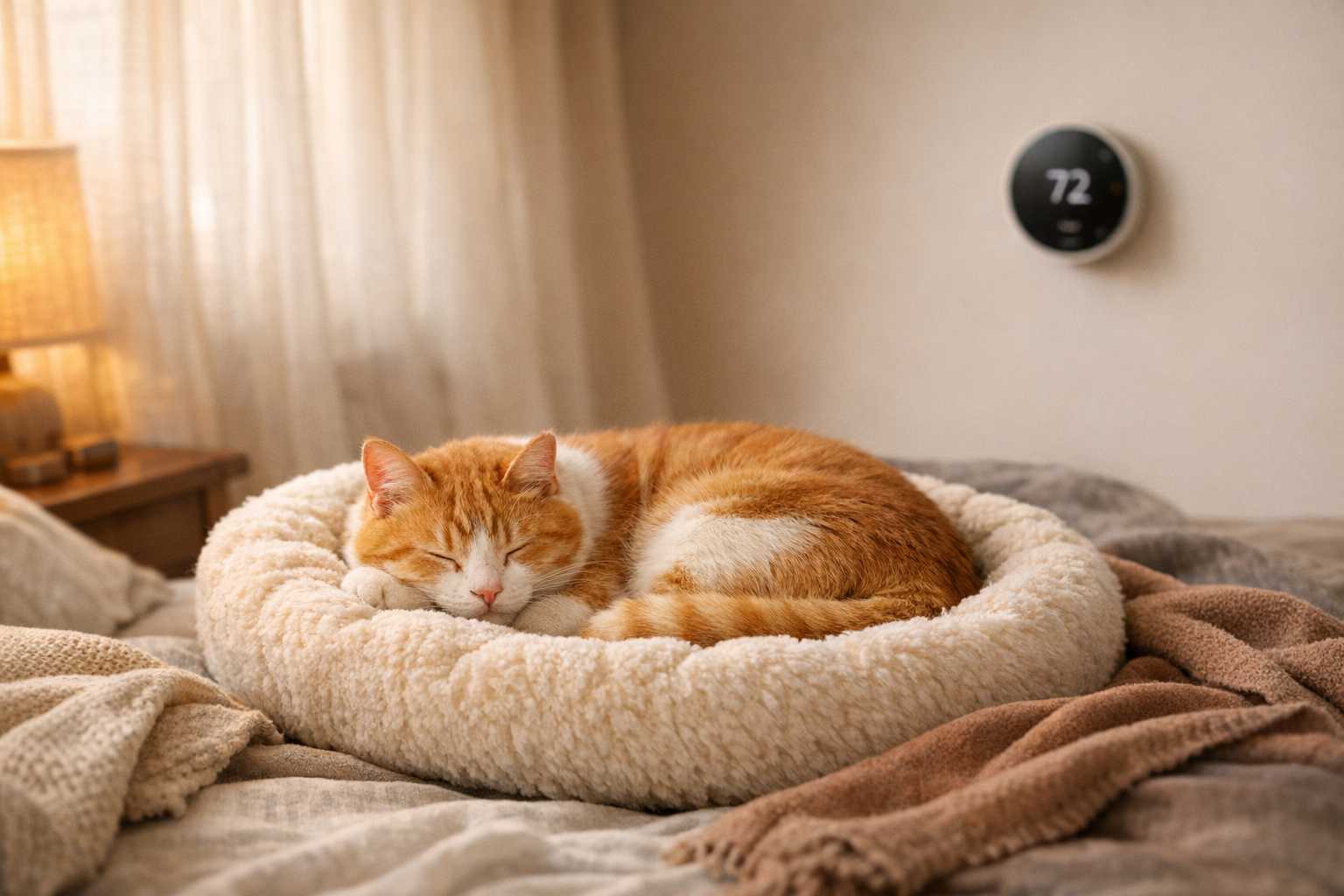
A Guide to Temperature and Cat Sleep: Achieving Optimal Resting Conditions
Have you ever pondered whether your feline friend is discontented due to high or low temperatures while they sleep? It's no different from how we as humans rest - cats also require an ideal temperature to ensure they receive quality sleep.
Recognising and understanding the temperature tendencies of your cat could significantly enhance their comfort levels and ultimately, their overall health. Let's delve into what you need to know in order to create the ultimate sleeping environment for your furry family member.
Temperature's Impact on Feline Sleep
Cats have a heightened sense of temperature change and adjust correspondingly throughout the day, influencing their sleep patterns.
They have a hard time sleeping when the ambient temperature isn't suitable, leading to restless nights. In adverse cases, your cat might have difficulty falling asleep altogether.
Poor sleep quality can instigate stress, trigger troublesome behaviour and cause health complications. Thus, maintaining an optimal temperature is often overlooked but integral to your cat's wellbeing.
A Cat’s Ideal Sleeping Climate
As a rule of thumb, cats tend to sleep most soundly when the surrounding environmental temperature falls between 65-75°F (18-24°C) - such a range closely resembles their typical comfort zone.
However, bear in mind that every cat is unique, with some having a preference for cooler conditions and others warmth.
As a cat ages, their circulatory efficiency decreases, making them susceptible to cold weather conditions. You might find that older cats need warmer environments.
Kittens and younger cats have less body mass and therefore struggle to maintain their body temperature as well as fully-grown cats.
Indications Your Cat is Too Cold
Watch out for these common signs indicating your cat might be too cold:
- Curling their body tightly to preserve heat
- Regularly seeking warm spots to sit or sleep
- Exhibiting signs of shivering or trembling
- Cold extremities, particularly the ears and paws
- Hiding beneath blankets
- Reduced physical activity
If your cat shows any of these behaviours, consider slightly raising the temperature.
Signs Your Cat is Overheating
For cats, overheating can be potentially harmful. Here are some warning signs to watch out for:
- Excessive and seemingly distressed panting
- Increased drooling
- Unusual lethargy or weakness
- Shading themselves on cool surfaces
- Laying flat to dissipate heat
- Incessant restlessness
Observing these symptoms would suggest an immediate decrease in surrounding temperature.
Constructing the Ideal Sleep Environment
Firstly, regularly observe your home's temperature. A reliable thermostat can assist in preserving consistent conditions.
Evaluate the locations where your cat usually sleeps. Is it close to heat sources or drafty passages? The location is as significant as the overall room temperature.
Allow your cat to decide for themselves. Set up warm beds in warmer locations and cooling mats in cooler areas. Your cat can then choose the most comfortable spot based on their current mood and circumstance.
Adjusting Temperature for Different Seasons
Summer embodies a unique challenge for maintaining your feline friend's comfort. Ensure you minimise sun exposure by using curtains, and promote air circulation with fans or air conditioning.
Never leave your cat in enclosed, potentially hot environments - like cars - as temperatures can rapidly reach dangerous levels.
Conversely, winter requires an alternative approach. Provide extra blankets and heated beds for those colder nights and ensure your cat is distanced from direct heat sources like heaters.
Sealing up draughts with insulation can help keep the indoor environment warm and steady. Be sure to check around for any gaps in windows and doors where the cold air might infiltrate.
Special Considerations According to Cat Breed-Type
Long-haired cats are known to be more tolerant of cold weather due to their thick fur, preferred temperature can therefore more likely be cooler throughout the year.
In contrast, short-haired and hairless breeds may require more warmth. Heating pads or extra blankets for these breeds would be recommended.
Indoor cats become accustomed to your home's temperature patterns, while outdoor cats are more tolerant of temperature fluctuations.
Age is also a significant factor, with senior cats and kittens requiring more support than healthy adults.
Technological Aids for Temperature Regulation
Smart thermostats can automatically maintain the optimal conditions by setting different temperatures for day and night cycles.
Pet heating pads supply localised warmth without overheating. Some are designed particularly for cats and include additional safety features.
For hot weather or cats that get overheated, cooling mats can be very effective. They activate with your cat's body weight and give instant relief.
Temperature monitoring gadgets can help track the ambiance of your cat's favourite sleeping areas.
Typical Missteps in Maintaining Feline Temperature
It's key to recognise that your cat's temperature preferences may not align with yours. More often than not, they prefer slightly warmer conditions.
Avoid sudden temperature alterations; cats acclimatise more comfortably with gradual adjustments.
Never leave heating appliances meant for humans unattended with your pet around. Devices like space heaters and electric blankets can be hazardous for pets.
Houses with very low or high levels of humidity can exacerbate the difficulty of temperature regulation for cats. Maintaining an indoor humidity level between 30 and 60% can help prevent dry skin and other health issues in cats.
The Health Benefit of an Optimal Sleep Temperature
Cats that experience beneficial sleep temperatures exhibit better overall health condition. They tend to be more energetic, active, and display fewer signs of stress.
Quality sleep can also support the feline immune system. Cats that are well-rested can battle illnesses more effectively.
Regulating temperature adequately reduces stress on the cat's metabolism that may otherwise have to battle overheating or freezing conditions, thereby preventing weight loss and helping to maintain a healthy weight.
Moreover, cat's mental state also improves. Cats that are comfortable are generally happier and interact more positively with other household members.
When to Seek Veterinary Advice
If despite all your efforts to regulate temperature your cat's quality of sleep does not improve, it might be advisable to consult your vet. There may be underlying health issues that need to be addressed.
Sudden changes in your cat's temperature preferences may also indicate potential medical conditions. Don't ignore dramatic changes in their behaviour.
Senior cats may require special temperature considerations depending on their health status. Consult your vet for a more personalised approach in such scenarios.
Seek emergency veterinary care should your cat display signs of severe conditions such as heat stroke or hypothermia.
Ensuring Year-Round Comfort
Uniformity is vital for maintaining a comfortable environment for your feline friend. Aim to keep a consistent temperature at home throughout all seasons.
Regular grooming can assist cats in naturally regulating their body temperature. Long-haired breeds especially should be groomed more frequently during the summer months to prevent overheating.
Remember to always have fresh water available. Proper hydration is essential for regulating body temperature.
Constantly observe your cat's behaviour and adjust the environment as required. Take cues based on what they indicate through their actions.
A cat's comfort can deeply influence their quality of life. By endeavouring to maintain optimal sleeping temperatures, you're providing a conducive environment for restful sleep, ultimately enriching their life quality.
Always remember, minor adjustments can yield significant results. Be attentive to your feline friend's preferences and create for them the perfect haven for tranquil slumber that they so well deserve.