Senior Cat Yoga: Gentle Stretching Exercises to Do with Older Cats
Senior Cat Yoga: Gentle Stretching Exercises to Do with Older Cats
SEO Slug: senior-cat-yoga-gentle-stretching-exercises-older-cats
Focus Keyphrase: senior cat yoga
Meta Description: Discover how gentle stretching and low-impact movement can support your senior cat’s comfort, mobility, and wellbeing—safely and with your veterinarian’s guidance.
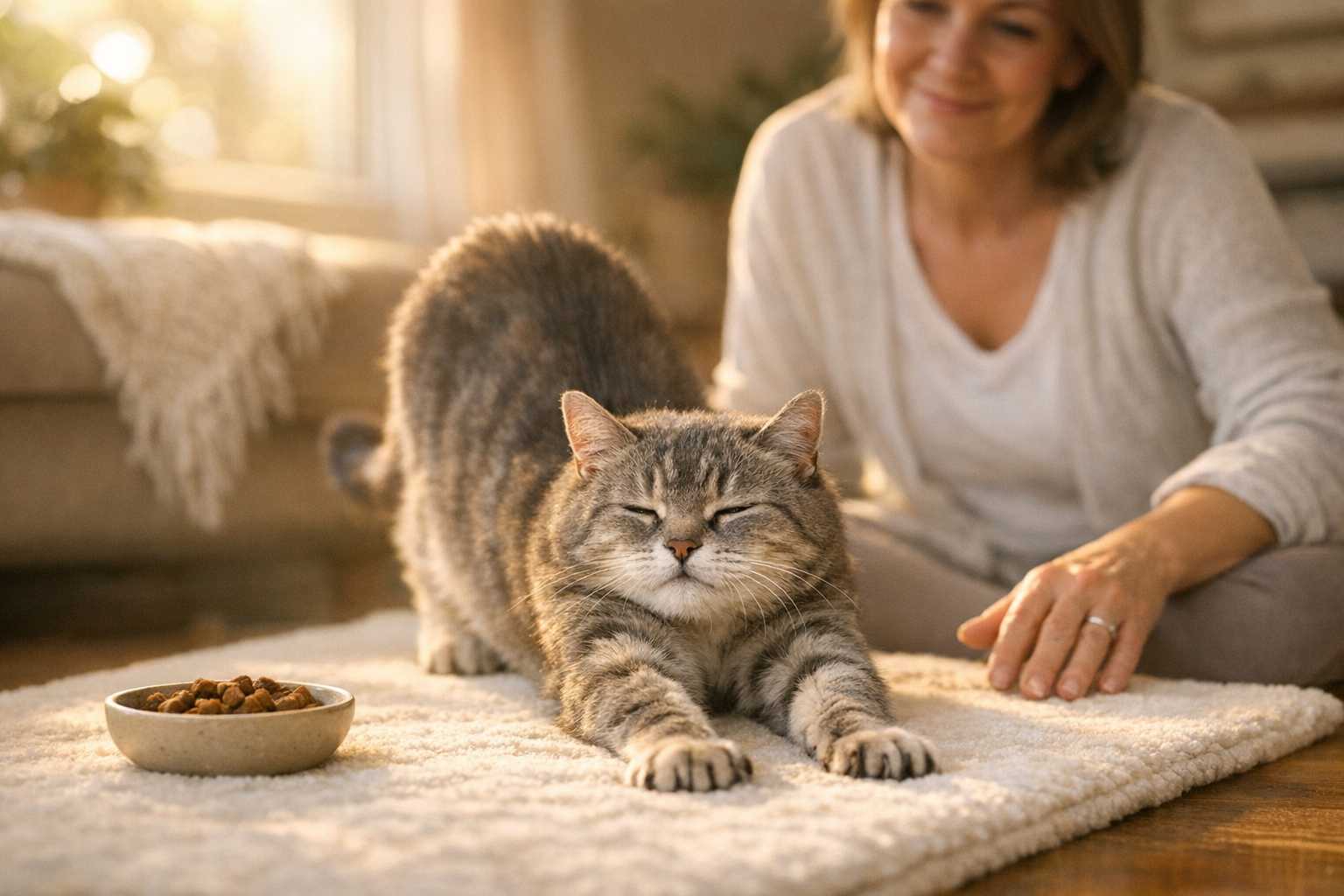
Have you ever watched your older cat wake up, arch their back, stretch their paws, and then settle back down like they’ve just finished the world’s most perfect yoga class? Cats are natural stretchers, and senior cats can especially benefit from gentle, low-impact movement.
That’s where senior cat yoga comes in.
Despite the playful name, this isn’t about putting your cat in poses or asking them to do anything unnatural. It’s about creating calm, safe moments of movement that may help support mobility, ease stiffness, and strengthen your bond. Done carefully—and always with your veterinarian’s approval—it can become a comforting part of your cat’s routine.
What Is Senior Cat Yoga?
Senior cat yoga is a gentle wellness routine that focuses on relaxed movement, light stretching, and calm interaction with your older cat. In most cases, it’s less about “doing yoga” and more about encouraging natural motion in a safe, respectful way.
For some cats, that may simply mean using treats to guide small head or body movements. For others, it may include light massage or allowing them to stretch on their own in a warm, quiet space.
The key is simple: never force movement. Senior cat yoga should always follow your cat’s comfort level.
Why Gentle Exercise Matters for Older Cats
As cats age, it’s normal for them to become less active. But reduced activity can contribute to:
- joint stiffness
- muscle loss
- reduced flexibility
- weight gain
- decreased confidence in movement
Many senior cats also live with arthritis or other chronic conditions that make everyday movement harder.
Gentle exercise and guided movement may help:
- support joint mobility
- improve circulation
- maintain muscle tone
- encourage healthy movement habits
- provide mental stimulation
- strengthen your bond with your cat
That said, stretching is not a substitute for veterinary care. If your cat seems painful, reluctant to jump, less active, or sensitive to touch, a veterinary exam should come first.
Before You Start: Safety Comes First
Before trying any stretching or movement routine, talk to your veterinarian. This is especially important if your cat has:
- arthritis
- heart disease
- spinal issues
- recent injury
- obesity
- chronic pain
- balance problems
Your vet can tell you whether gentle movement is appropriate and whether there are any areas of the body you should avoid.
A few important rules:
- Never force a stretch.
- Never pull on a limb.
- Stop immediately if your cat resists or seems uncomfortable.
- Work slowly and keep sessions short.
- If your cat is in pain, do not continue.
Your cat should always have the option to walk away.
Setting Up a Calm, Comfortable Space
A peaceful environment makes a big difference. Choose a quiet room where your cat already feels safe. Use a soft blanket, padded mat, or non-slip surface so they can rest comfortably and keep their footing.
A few simple tips:
- Keep the room warm, since older cats often prefer warmth.
- Choose a time when your cat is naturally relaxed.
- Avoid loud noises or other pets during the session.
- Keep treats nearby for gentle guidance and positive reinforcement.
You don’t need special equipment. Comfort and calm matter more than anything else.
Gentle Movements to Try With Your Senior Cat
These exercises should be approached as invitations, not instructions. If your cat seems uninterested, tense, or irritated, stop and try another day.
1. The Natural Wake-Up Stretch
If your cat stretches on their own after resting, let that moment happen naturally. You can support the routine by offering quiet encouragement and giving them space to fully extend.
Why it helps:
This natural stretch engages the back, shoulders, and front legs without any handling from you.
Tip:
This is one of the safest forms of “senior cat yoga” because your cat controls the movement completely.
2. Treat-Guided Nose Turns
Hold a small treat near your cat’s nose and slowly guide it a little to one side, then the other. The movement should be small and comfortable—just enough to encourage gentle neck motion.
Why it helps:
This may support light neck mobility and mental engagement.
Important:
Do not make your cat twist sharply or follow the treat in a full circle unless they do so comfortably on their own. Small movements are safer.
3. Gentle Forward Reach
While your cat is standing comfortably, place a treat slightly in front of them so they naturally reach forward with their head and body.
Why it helps:
This can encourage a mild stretch through the spine and shoulders.
Important:
Let your cat initiate the reach. Avoid placing hands on their body to push them into position.
4. Back and Shoulder Massage
This is often a better option than direct stretching for senior cats. Using light pressure, slowly stroke from the shoulders down along the back if your cat enjoys being touched there.
Why it helps:
Massage may help promote relaxation, body awareness, and comfort.
Important:
Avoid sore areas, the lower back if your cat is sensitive, and any spot that causes flinching or tension.
5. Side-to-Side Treat Lean
With your cat either sitting or standing comfortably, move a treat slightly toward one side so they shift their head gently in that direction. Repeat on the other side.
Why it helps:
This encourages mild side-to-side movement in the neck and upper body.
Important:
Keep the motion subtle. A small lean is enough.
6. Slow, Low-Impact Follow-the-Treat Walk
Encourage your cat to take a few slow steps by guiding them with a treat across a soft, stable surface.
Why it helps:
Walking is one of the most practical and functional forms of gentle exercise for older cats. It supports mobility more naturally than passive stretching.
Important:
Keep distances short and let your cat set the pace.
Movements to Avoid
Some stretching ideas may sound helpful but can actually be too much for a senior cat—especially without veterinary or rehabilitation guidance.
Avoid:
- pulling a front or back leg into extension
- spreading the front legs apart manually
- holding paws and moving joints through a range of motion
- twisting the spine
- forcing your cat to hold a position
These types of movements can cause discomfort or injury, especially in cats with arthritis, muscle loss, or hidden pain.
When in doubt, less is more.
How Often Should You Do It?
Start small. Even 3 to 5 minutes, a few times a week, is enough in the beginning.
Pay attention to your cat’s response. If they seem relaxed and comfortable, you can slowly build toward short daily sessions. For most senior cats, brief and consistent is better than long sessions.
A good general guideline:
- Start with 3 times per week
- Keep sessions under 10 minutes
- Stop while your cat is still comfortable
The goal is to leave your cat feeling calm—not overstimulated or sore.
Signs Your Cat Is Comfortable
Your cat’s body language will tell you a lot. Positive signs may include:
- purring
- slow blinking
- relaxed ears and whiskers
- leaning into your touch
- calmly staying in place
- willingly returning for more interaction
Not every happy cat will purr, so look at the whole picture.
Signs to Stop Right Away
End the session immediately if you notice:
- hissing or growling
- tail lashing
- flattened ears
- sudden tension
- pulling away
- hiding afterward
- vocalizing in discomfort
- limping or stiffness after the session
If your cat seems painful even with minimal movement, contact your veterinarian before trying again.
Make It a Bonding Ritual
One of the nicest things about senior cat yoga is that it creates intentional quiet time together. Older cats often appreciate predictable routines, gentle touch, and calm attention.
Speak softly, move slowly, and keep your expectations low. Some days your cat may participate. Other days they may just want to sit beside you on a blanket while you pet them. That still counts.
This isn’t about performance. It’s about comfort, trust, and connection.
Pair Gentle Movement With Gentle Play
If your cat enjoys play, you can follow a stretching session with a few minutes of low-impact activity. A wand toy moved slowly along the floor can encourage walking, reaching, and light engagement without requiring jumping.
For senior cats, keep play:
- low to the ground
- slow-paced
- short
- easy to stop
Even a few minutes can help support mobility and mental stimulation.
Helpful Tools
You only need a few basics:
- a soft blanket or padded mat
- a non-slip surface
- small, easy-to-eat treats
- a warm towel if your cat enjoys warmth
- a calm, quiet room
If your veterinarian recommends it, you might also ask about supportive options such as joint care plans, weight management, pain relief, or physical rehabilitation.
A Note on Arthritis and Chronic Pain
Arthritis is extremely common in older cats, but it often goes unnoticed because cats tend to hide pain. You may see signs such as:
- hesitation before jumping
- sleeping more
- difficulty using stairs
- reduced grooming
- stiffness after rest
- irritability when touched
Gentle movement may help some arthritic cats stay more comfortable, but it should always be part of a broader care plan—not the only plan.
That care plan may include:
- veterinary pain management
- weight control
- joint-support strategies
- home modifications
- physical rehabilitation
If your cat has chronic pain, ask your vet whether a feline rehabilitation specialist would be helpful.
Some Days Just Won’t Work
That’s completely normal.
Senior cats, like people, have better days and harder days. If your cat seems tired, stiff, moody, or uninterested, respect that. Skipping a session is not a failure. Pushing through discomfort is.
Patience matters more than consistency on any single day.
Final Thoughts
Senior cat yoga is best understood as gentle, mindful movement for aging cats. When done safely, it can be a simple way to encourage comfort, support mobility, and spend meaningful time together.
Keep it slow. Keep it light. Let your cat lead.
The most important part isn’t the stretch itself—it’s the sense of safety, care, and connection you create along the way.
Always consult your veterinarian before starting any new exercise or stretching routine with your senior cat. Every cat is different, and professional guidance is the best way to protect their safety and comfort.