Cat Acne and Plastic Bowls: The Surprising Link Every Owner Should Know
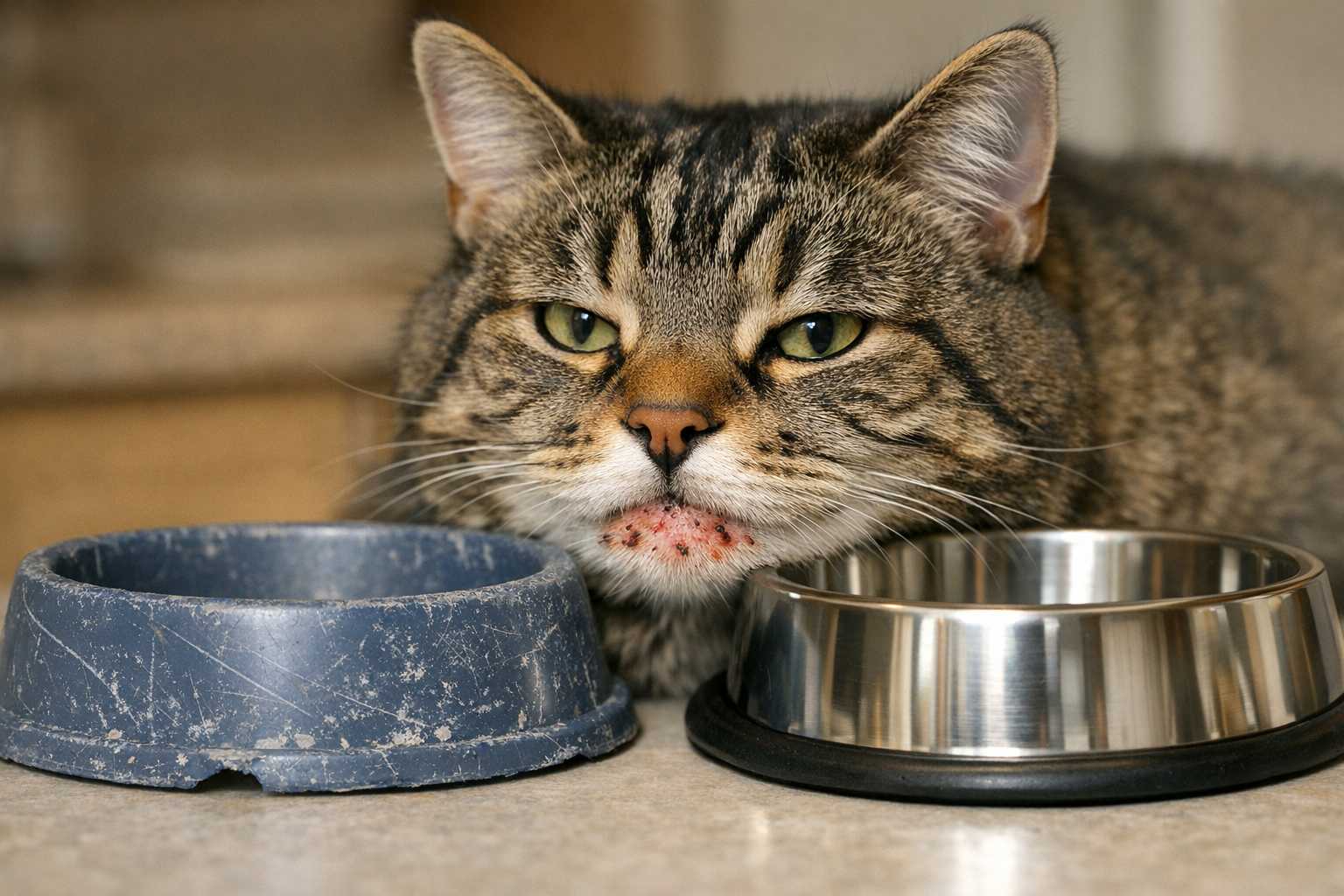
Cat Acne and Plastic Bowls: The Overlooked Cause Many Owners Miss
SEO Slug: cat-acne-plastic-bowls-link
Focus Keyphrase: cat acne plastic bowls
Meta Description: Your cat’s plastic bowl may be contributing to chin acne. Learn the connection between cat acne and plastic bowls, plus simple steps to treat and prevent it.
Yes, Cats Can Get Acne
It may sound surprising, but cats can develop acne, most often on the chin and around the lips.
If you’ve noticed tiny black specks, redness, or small bumps on your cat’s chin, there’s a good chance you’re looking at feline acne. It’s fairly common, and while it can look worrying, many cases are mild and manageable.
One possible cause that often gets overlooked is something many owners use every day: plastic food and water bowls.
What Is Cat Acne?
Cat acne is a skin condition that typically affects the chin and, less commonly, the lips.
It can appear as:
- Small black dots that resemble blackheads
- Red or inflamed bumps
- Crusty skin on the chin
- Thinning fur or patchy hair loss
- Scabs, swelling, or discharge in more severe cases
Mild acne can be easy to miss, especially if your cat has thick or dark fur. More advanced cases, however, can become uncomfortable or even painful. Some cats may rub their chin, scratch at it, or seem irritated while eating.
What Causes Cat Acne?
Feline acne does not have a single confirmed cause. Instead, it is usually linked to a combination of factors that may include:
- Excess oil production
- Poor grooming or difficulty keeping the chin clean
- Stress
- Skin irritation
- Secondary bacterial infection
- Contact irritation from food or water bowls
Among these, plastic bowls are often mentioned as a possible contributing factor, especially in cats with recurring chin acne.
The Link Between Cat Acne and Plastic Bowls
So why are plastic bowls a concern?
Over time, plastic can develop tiny scratches and grooves, even if the bowl looks fine at a glance. These small surface imperfections may trap food residue, oils, and bacteria. When your cat eats or drinks, the chin repeatedly touches that surface.
For some cats, this repeated exposure may irritate the skin or contribute to clogged follicles and inflammation on the chin.
There’s another possible issue as well: some cats may be sensitive to plastic itself, which can make skin problems worse.
To be clear, plastic bowls are not proven to cause acne in every cat, but they are widely considered a common trigger or aggravating factor. Because switching bowls is simple, inexpensive, and low-risk, many veterinarians recommend it as a practical first step.
Why Plastic Bowls Can Be Problematic
Compared with stainless steel, glass, or high-quality ceramic, plastic tends to be less ideal for cats prone to chin acne.
Here’s why:
- Plastic scratches easily, creating spaces where bacteria and debris can collect
- It can be harder to keep truly clean, especially once worn
- Some cats may react to the material, leading to irritation
- Older plastic bowls break down over time, which may further irritate sensitive skin
For this reason, many cat owners see improvement after replacing plastic bowls with non-porous alternatives.
Could Your Cat’s Bowl Be Contributing?
It’s worth considering the bowl as a factor if:
- Your cat’s acne keeps coming back
- The chin looks worse after meals
- You’ve been using the same plastic bowl for a long time
- The bowl is scratched, dull, or cloudy
- The problem improved after switching bowl materials
These signs don’t prove the bowl is the only cause, but they do make it a likely contributor.
How to Help Cat Chin Acne at Home
If your cat has mild chin acne, there are a few simple steps that may help.
1. Replace Plastic Bowls
Switch to stainless steel, glass, or high-quality ceramic bowls. This is often the easiest and most effective change to make.
2. Clean Bowls Daily
Wash food and water bowls every day with hot, soapy water, then rinse well. Fresh, clean bowls reduce the buildup of bacteria and residue.
3. Gently Clean the Chin
Use a soft, damp cloth to gently wipe your cat’s chin, especially after meals if food tends to collect there.
4. Keep the Feeding Area Clean
Wipe up spilled food and water and keep the eating area dry.
5. Ask Your Vet Before Using Medicated Products
Some veterinarians may recommend antiseptic wipes or pet-safe medicated cleansers. Avoid using human acne products unless your vet specifically tells you to, as many can be too harsh or unsafe for cats.
When to See a Vet
Mild feline acne can often improve with better hygiene and a bowl change, but veterinary care is important if the condition becomes more serious.
Contact your vet if:
- The bumps are getting larger or more inflamed
- The area is swollen, bleeding, or oozing
- Your cat is scratching, rubbing, or acting painful
- There is hair loss or open skin
- The acne is not improving after a couple of weeks
- You are unsure whether it is actually acne
A veterinarian can determine whether your cat has acne, a bacterial skin infection, ringworm, allergies, or another condition that may look similar. In more severe cases, treatment may include topical therapy, antiseptic cleansing, or medication.
The Best Bowl Materials for Cats Prone to Acne
If you’re replacing plastic bowls, these are the best alternatives:
Stainless Steel
Often the best all-around option.
- Non-porous
- Durable
- Easy to sanitize
- Resistant to scratches compared with plastic
Ceramic
A good choice if it is high quality and food-safe.
- Non-porous when properly glazed
- Heavier and less likely to slide
- Available in many styles
Avoid ceramic bowls that are chipped or cracked, since damaged glaze can trap bacteria.
Glass
Another excellent non-porous option.
- Easy to clean
- Does not scratch as easily as plastic
- Widely available
Its main drawback is that it can break if dropped.
How Often Should You Clean Your Cat’s Bowl?
Ideally, every day.
Food bowls should be washed daily, especially if your cat eats wet food. Water bowls also need regular cleaning, as saliva, dust, and debris build up quickly.
A simple daily wash with hot, soapy water can go a long way toward preventing skin irritation and keeping your cat healthier overall.
Fresh water should also be replaced at least once a day.
A Simple Routine to Help Prevent Cat Acne
A consistent routine can make a big difference:
- Wash food and water bowls daily
- Replace plastic with stainless steel, ceramic, or glass
- Wipe your cat’s chin gently if food sticks there
- Check the chin weekly for blackheads, redness, or bumps
- Replace any bowl that becomes chipped, cracked, or heavily scratched
- Keep the feeding area clean and dry
These small habits can help reduce flare-ups and catch problems early.
Frequently Asked Questions About Cat Acne and Plastic Bowls
Can plastic bowls cause cat acne?
Plastic bowls may contribute to cat acne in some cats by trapping bacteria and irritating the skin. They are not the sole cause in every case, but they are a well-recognized risk factor.
How long does cat acne take to go away?
Mild cases may start to improve within one to two weeks after changing bowls and improving hygiene. More severe cases can take longer and may require veterinary treatment.
Should I throw away my cat’s plastic bowls?
If your cat has chin acne or recurring irritation, replacing plastic bowls is a smart idea. Even when cleaned regularly, scratched plastic is harder to keep sanitary.
Can cat acne spread to other cats?
Cat acne itself is not contagious. However, if bowls are dirty or shared, multiple cats may develop irritation or skin problems from the same environment.
Is cat acne painful?
Mild cases may not seem to bother the cat much. More severe acne, especially if infected or swollen, can be painful and should be treated by a veterinarian.
The Bottom Line
The connection between cat acne and plastic bowls is easy to overlook, but it’s worth taking seriously.
Plastic bowls may trap bacteria, irritate sensitive skin, and contribute to recurring chin acne in some cats. The good news is that this is one of the easiest things to fix. In many cases, switching to stainless steel, glass, or ceramic bowls and cleaning them daily can make a noticeable difference.
If your cat has black specks, bumps, or irritation on the chin, take a close look at their bowls. That small change may be exactly what they need to feel more comfortable.
And if the acne looks severe, painful, or persistent, a vet visit is always the best next step.