Cat Acne vs Ringworm: How to Tell the Difference and What to Do
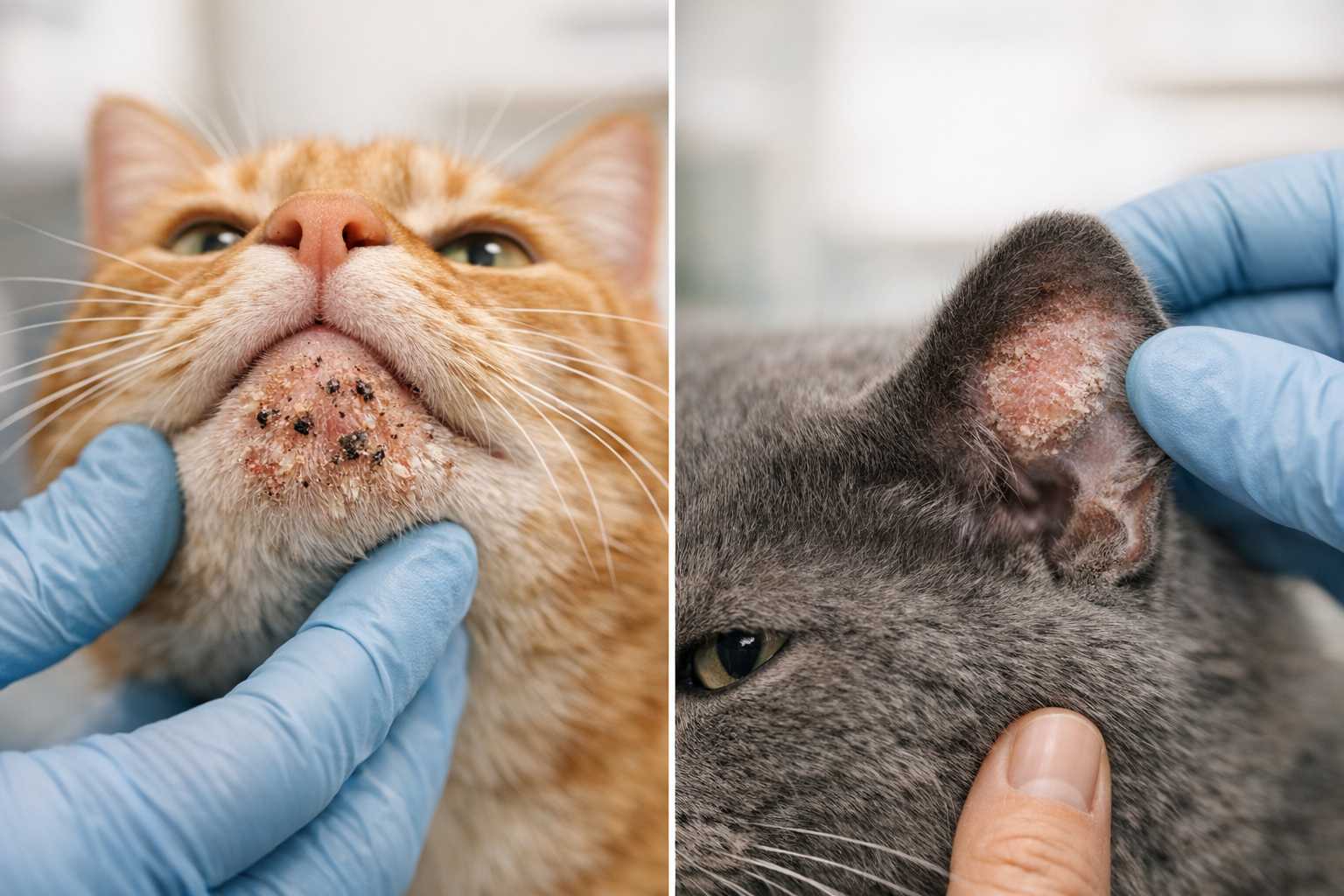
Cat Acne vs. Ringworm: How to Tell the Difference and What to Do
SEO Slug: cat-acne-vs-ringworm
Focus Keyphrase: cat acne vs ringworm
Meta Description: Is your cat dealing with skin problems? Learn how to tell the difference between cat acne and ringworm, recognize the symptoms, and know what to do next.
If you’ve noticed something unusual on your cat’s skin, it’s natural to feel concerned.
Maybe you’ve seen tiny black specks under your cat’s chin. Or maybe there’s a round patch of missing fur that wasn’t there before. At first glance, these problems can seem similar, but they may point to two very different conditions: cat acne or ringworm.
Although both affect the skin, they have different causes, different risks, and different treatments. Knowing how to tell them apart can help you get your cat the right care sooner.
Let’s go through it clearly and simply.
What Is Cat Acne?
Cat acne is a common skin condition that usually affects the chin and lower lip. It often appears as blackheads, small bumps, or crusting in that area.
Despite the name, it isn’t exactly the same as human acne, but it does involve plugged hair follicles and inflammation of the skin.
The reassuring part is that cat acne is not contagious. It cannot spread to other pets or to people.
What Causes Cat Acne?
There isn’t always one clear cause, but several factors may contribute, including:
- Poor grooming, especially if a cat doesn’t clean the chin area well
- Plastic food or water bowls, which may trap bacteria or irritate the skin
- Stress
- Allergies, including food or environmental allergies
- Overactive oil glands
- Secondary bacterial infection
- In some cases, an underlying skin condition or irritation
Cat acne can affect cats of any breed, age, or sex.
What Is Ringworm in Cats?
Ringworm is not a worm. It is a fungal infection of the skin, hair, and sometimes nails. In cats, it is most often caused by a fungus called Microsporum canis.
It gets its name from the circular lesions it can create, although not every case looks like a perfect ring.
Unlike cat acne, ringworm is contagious. It can spread to other cats, dogs, and humans. This makes early diagnosis and treatment especially important.
What Causes Ringworm?
Ringworm is caused by fungi that feed on keratin, a protein found in the skin, hair, and nails.
Cats can become infected through:
- Direct contact with an infected animal
- Contact with contaminated items such as bedding, brushes, blankets, or furniture
- Exposure in shelters, catteries, or multi-pet homes
- A weakened immune system, especially in kittens, senior cats, or sick cats
Ringworm spores can survive in the environment for a long time, sometimes many months, which is why cleaning the home is such an important part of treatment.
Cat Acne vs. Ringworm: Key Differences
Because both conditions can affect the skin, it helps to compare them directly.
1. Location on the Body
Cat acne is usually limited to the chin and lower lip.
Ringworm can appear almost anywhere, but common areas include the face, ears, paws, legs, and tail.
2. Appearance
Cat acne may look like:
- Blackheads or dark specks
- Small red bumps
- Crusting on the chin
- Mild swelling
- A greasy or dirty-looking chin
Ringworm may look like:
- Round or irregular patches of hair loss
- Scaly, flaky, or crusty skin
- Broken hairs
- Redness or inflammation
- Sometimes a circular lesion with a more defined outer edge
It’s worth noting that ringworm does not always create a classic ring-shaped lesion, which is one reason it can be confused with other skin problems.
3. Itching
Cat acne may cause mild irritation, but some cats don’t seem bothered by it at all.
Ringworm can be itchy, but not always. Some cats scratch a lot, while others show very little itching. So itching alone is not a reliable way to tell the difference.
4. Spread
Cat acne usually stays localized around the chin.
Ringworm may spread to other parts of the body and to other animals or people.
5. Contagiousness
Cat acne: Not contagious
Ringworm: Contagious to pets and humans
Quick Comparison Table
| Feature | Cat Acne | Ringworm | |---|---|---| | Cause | Plugged follicles, irritation, inflammation, bacteria | Fungal infection | | Typical location | Chin and lower lip | Anywhere on the body | | Common appearance | Blackheads, pimples, crusting | Hair loss, scaling, broken hairs | | Contagious to pets | No | Yes | | Contagious to humans | No | Yes | | Usually spreads on body | No | Can, yes | | Itching | Mild or none | Variable |
How Vets Diagnose Cat Acne
In many cases, a veterinarian can suspect cat acne based on the location and appearance of the lesions.
However, because other conditions can look similar, your vet may also recommend:
- A physical examination
- Skin cytology to look for bacteria or yeast
- A skin scraping to rule out mites or other skin diseases
- Tests for allergies or other underlying conditions if the problem keeps coming back
It’s important not to squeeze, scrub, or pick at the area yourself. That can worsen inflammation and increase the risk of infection.
How Vets Diagnose Ringworm
Ringworm usually requires testing because it can mimic several other skin conditions.
Your veterinarian may use one or more of the following:
Wood’s Lamp Examination
A Wood’s lamp is a special ultraviolet light. Some strains of ringworm, especially some Microsporum canis infections, may glow an apple-green color under this light.
However, not all ringworm glows, so this test alone cannot confirm or rule out infection.
Fungal Culture
A fungal culture is one of the most reliable tests. Your vet collects hairs or skin debris and places them on a culture medium to see whether ringworm fungus grows.
This often takes 1 to 3 weeks, depending on the lab and the sample.
PCR Testing or Microscopic Examination
Some clinics may use PCR testing, which can detect fungal DNA more quickly. Your vet may also examine hair samples under a microscope, although this is usually less definitive than culture.
How Cat Acne Is Treated
Treatment depends on how mild or severe the condition is.
Mild Cases
Mild cat acne often improves with simple care at home, such as:
- Switching to stainless steel or ceramic bowls
- Washing food and water bowls daily
- Gently cleaning the chin as directed by your vet
- Keeping the area dry after meals
Your vet may recommend medicated wipes or cleansers, often containing ingredients such as chlorhexidine or benzoyl peroxide products formulated specifically for pets.
Moderate or Severe Cases
If the skin is inflamed or infected, treatment may include:
- Topical antibiotics
- Oral antibiotics if there is a deeper bacterial infection
- Medicated shampoos or wipes
- Occasionally other anti-inflammatory treatment, depending on the case
Do not use human acne creams or medications on your cat unless your veterinarian specifically tells you to. Many human products can irritate the skin or be toxic if licked.
How Ringworm Is Treated
Ringworm usually requires a combination of treating the cat and cleaning the environment.
Antifungal Treatment
Your vet may prescribe:
- Oral antifungal medication, such as itraconazole or terbinafine
- Topical antifungal treatment, such as creams, rinses, or shampoos
- In some cases, whole-body treatment if lesions are widespread or if there are multiple pets in the home
Treatment often lasts several weeks, and it is important to continue exactly as prescribed. Stopping too early can lead to recurrence.
Cleaning the Home
Environmental control matters because fungal spores can remain on surfaces and fabrics.
You may need to:
- Vacuum frequently
- Wash bedding, blankets, and soft items regularly
- Disinfect hard surfaces as recommended by your veterinarian
- Clean grooming tools, carriers, and litter area surfaces
- Reduce clutter and isolate contaminated items when possible
Your veterinarian can advise you on the safest and most effective cleaning products. Not every disinfectant kills ringworm spores well, and bleach must be used carefully and correctly.
Limiting Spread
If possible, keep the infected cat separated from other pets until your vet says the risk of transmission is reduced, especially in multi-pet homes.
Wash your hands after handling your cat, and be extra cautious if anyone in the household is very young, elderly, or immunocompromised.
When You Should See a Vet
You should schedule a veterinary visit if:
- The skin problem is not improving
- The area looks red, swollen, painful, or infected
- Your cat is scratching, overgrooming, or rubbing the area
- You notice hair loss, scaling, or spreading lesions
- Other pets are developing similar signs
- Anyone in the home develops suspicious skin lesions
- Your cat seems unwell overall
Because many skin conditions can look alike, a proper diagnosis is the best way to avoid using the wrong treatment.
Can a Cat Have Both at the Same Time?
Yes, although it’s not common.
A cat can have cat acne and ringworm at the same time, or one condition can be mistaken for the other until testing is done. That’s another reason a veterinary exam is important, especially if the appearance is unusual or treatment is not helping.
How to Help Prevent Cat Acne
You may not be able to prevent every case, but these steps can help:
- Use stainless steel or ceramic bowls
- Wash bowls daily
- Keep your cat’s chin clean, especially after meals if recommended by your vet
- Monitor for recurring irritation
- Keep up with routine veterinary care
How to Help Prevent Ringworm
Prevention is especially important in homes with multiple pets.
Helpful steps include:
- Quarantining new pets until they’ve been checked and appear healthy
- Having suspicious skin lesions examined promptly
- Cleaning shared items regularly
- Washing your hands after handling animals with skin problems
- Supporting your cat’s overall health with good nutrition and regular veterinary care
A Final Note for Cat Owners
Seeing a skin problem on your cat can be stressful, but try not to panic.
Cat acne is usually manageable and not contagious.
Ringworm is more serious from a household standpoint because it can spread, but it is treatable with prompt veterinary care and proper cleaning.
If you’re unsure what you’re looking at, the safest next step is to contact your veterinarian. A quick diagnosis can save your cat discomfort and help prevent a bigger problem later.
Final Thoughts
When comparing cat acne vs. ringworm, the biggest differences are usually:
- Cat acne tends to affect the chin
- Ringworm often causes hair loss and scaling in other areas
- Cat acne is not contagious
- Ringworm is contagious to both pets and people
If you notice blackheads, crusting, bald patches, or irritated skin, don’t guess. A veterinary exam is the best way to confirm what’s going on and start the right treatment.
This article is for informational purposes only and is not a substitute for professional veterinary advice. Always consult a licensed veterinarian for diagnosis and treatment.