Seasonal Sleep Changes in Cats: Year-Round Pattern Guide
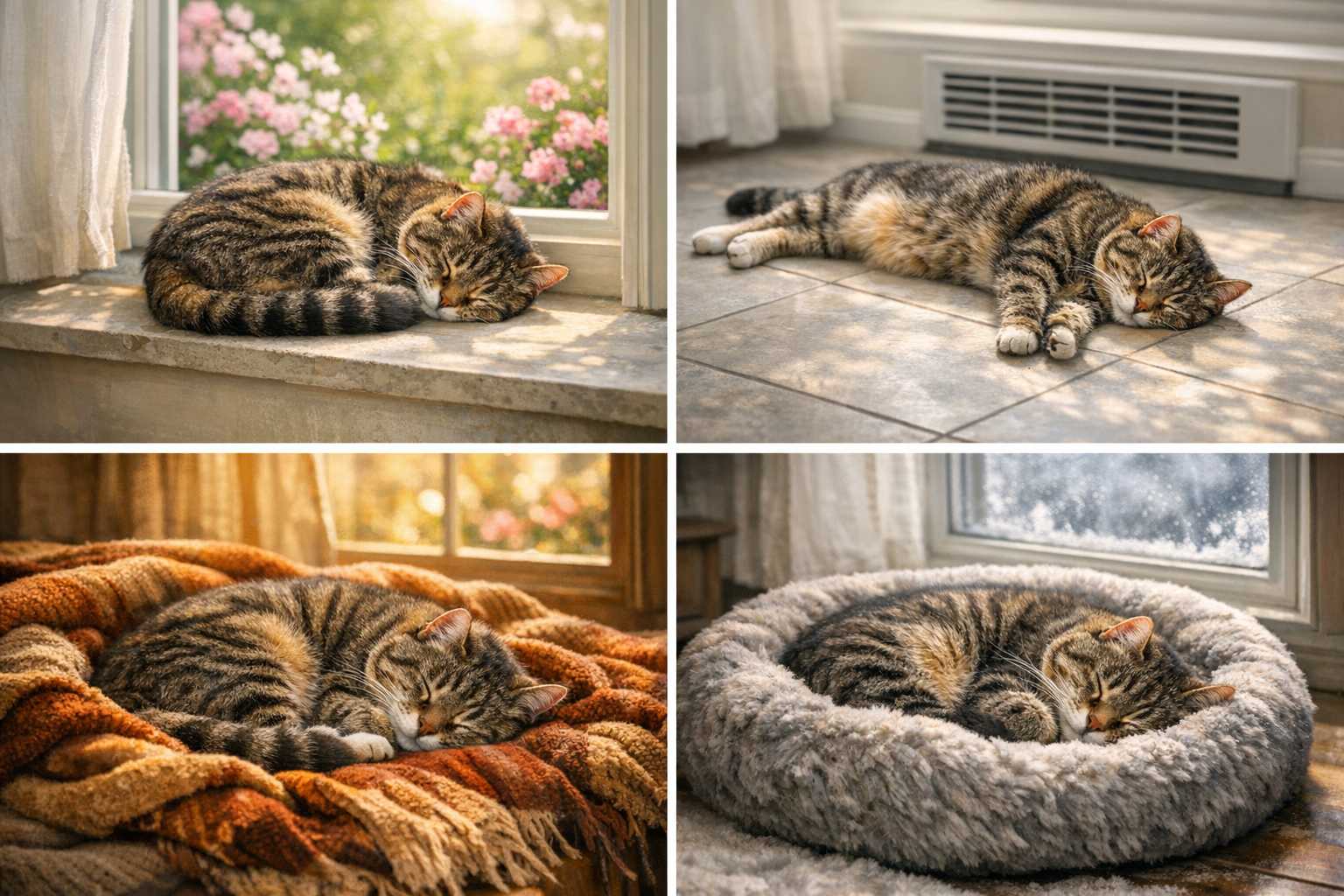
Cats' Seasonal Sleep Adjustments: Understanding their Annual Sleep Cycles
Do you find your cat snoozing more during the chilly winter months? Or perhaps you have noticed them being extra lively during warm spring evenings? Rest assured, this isn't a figment of your imagination!
Changes in sleep patterns throughout different seasons are quite typical in cats. Being aware of these cycles can be instrumental in providing improved care for your beloved pet.
Observing Seasonal Sleep Variations in Cats
One of the influencing factors of seasonal sleep variations in cats is daylight duration. Their internal biological clocks, much like ours, respond to seasonal variations in light.
An intriguing factor here is their wild lineage. Despite being domesticated and living indoors, the innate hunting instincts of cats remain deeply ingrained in them.
Variations in temperature also influence their energy expenditure. Cats tend to preserve energy during chilly weather, while moderate temperatures stimulate higher activity levels.
Spring Awakening: Sleep Routine in Spring
As days get longer and weather warmer during spring, it's not uncommon for your pet to sleep less.
You will likely observe an increase in activity during dawn and dusk, prime hunting times for wild cats, an instinct that remains even in our indoor-bound pets.
The advent of spring often triggers a boost in playfulness and curiosity, tapping into their natural exploratory instincts.
Most cats, during this season, show a minor reduction in sleep duration, averaging 12-14 hours of sleep instead of the usual 15-16 hours.
Summer Siesta: Sleep Patterns in Summer
The summer heat causes cats to doze more during daytime, seeking the comfort of cooler, shaded areas for their afternoon siestas.
Hot weather may induce more nocturnal behavior as your cat conserves energy for the relatively cooler evening hours.
Prepare for extended midday napping sessions as cats instinctively avoid activity during the peak of the summer heat.
Air conditioning is their perfect ally. Cats are often found catching their Zs near cool vents or on cold tiled floors.
Fall Transition: Sleep Preferences in Fall
In autumn, cats are preparing for winter and tend to rest more to conserve energy.
You may observe your kitty selecting warmer sleeping environments. Sunny windowsills and snug blankets suddenly become the hot property.
Generally, activity levels may slightly dip. This adjustment to shrinking daylight hours is normal.
In fall, some cats may exhibit increased appetite—an instinctual nature’s way to build up energy reserves for the colder months ahead.
Winter Hibernation: Sleep Behavior in Winter
Winter sees cats entering their maximum rest mode. Expect 16-18 hours of daily sleep during the colder months.
In the quest for warmth, your furry friend may adopt atypical sleeping spots such as heating vents, sunny patches, and your bed as their favorite nap destinations.
Cats tend to be noticeably less active during the winter, preferring short, occasional bouts of play.
In the search for body heat, many cats are found to be more snuggly during winter, being more open to affectionate cuddling with their human companions.
Indoor vs. Outdoor Cats: Differences in their Sleep Cycles
While indoor cats still undergo these seasonal cycles, they tend to be less severe, considering the consistency of artificial lighting and heating environments.
Outdoor cats, unfortunately, face more drastic seasonal changes, being directly exposed to natural light cycles and fluctuating temperatures.
The semi-outdoor cats represent a middle-ground, with their changes in sleep cycles being proportionate to their outdoor exposure time.
Supporting Your Cat’s Seasonal Sleep Requirements
Adapting to your cat's sleep needs involves creating appropriate resting areas for each season—warm beds for winter and cool spots for summer work well.
Maintain consistent feeding schedules as this contributes to the regulation of their internal clock.
During shorter winter days, try and ensure that your cat gets enough natural light exposure which is vital even for indoor cats.
Alter play sessions according to their natural energy cycles. Remember, go along with their seasonal patterns, not against them.
Spotting Abnormal Sleep changes
Any abrupt and dramatic changes in sleep patterns should raise an alarm. While gradual shifts over a season are normal, sudden deviations are not.
Signs of illness alongside sleep fluctuations, such as loss of appetite, lethargy, or behavioral changes, should be addressed with a vet.
Senior cats tend to show more marked seasonal effects, necessitating closer monitoring.
The individual temperament of your cat should also be factored in, as some cats may be naturally more affected by seasonal changes than others.
Crafting the Perfect Sleep Environment Year-Round
Invest in high-quality cat beds for different seasons, with heated versions for winter and cooling ones for summer to maximize their comfort.
Try locating sleeping areas near windows—exposure to natural light helps maintain their healthy circadian rhythms.
Ensure the sleeping areas are kept clean and comfortable. Fresh bedding is vital, especially during extreme weather seasons.
Offer multiple sleeping options throughout your home, giving them the freedom to select their preferred spot based on current needs.
Suggestions for Managing Seasonal Sleep Shifts
Be patient during the transition as cats take time to adapt to new seasonal patterns.
Being consistent with routines, despite transient sleep schedules, offers stability.
Regularly monitor your cat's health during these seasonal changes, with regular vet checkups helping in early identification of any potential issues.
Embrace and enjoy the unique changes each season brings to your cat's behavior—it adds a fascinating variety to your relationship with them!
Recognizing Your Cat's Unique Sleep Patterns
Every cat exhibits their uniquenes in response to seasonal variations. While some cats have extremely noticeable changes, others remain relatively consistent.
A cat's age significantly impacts its sensitivity to seasons. Both kittens and senior cats often demonstrate more pronounced sleep patterns.
Also, certain breeds show a higher sensitivity to changes in light and temperature, thereby influencing their seasonal sleep habits.
If curious about these patterns, maintaining a sleep diary can be useful in deciphering your cat's individual rhythms.
Conclusion
Seasonal sleep shifts in cats are completely natural and should be expected. Recognizing these patterns can aid you in providing better care for your feline friend.
Remember that while gradual transitions are normal, an abrupt change might signal potential health problems. In case of uncertainty, it's best to consult with your veterinarian.
By accommodating your cat's natural seasonal rhythms, you aid in fostering a happier and healthier companion throughout the year. These shifts are part of the fascinating natural behavior of your cat—embrace them!