Training Cats to Use Scratching Posts: Behavior Guide
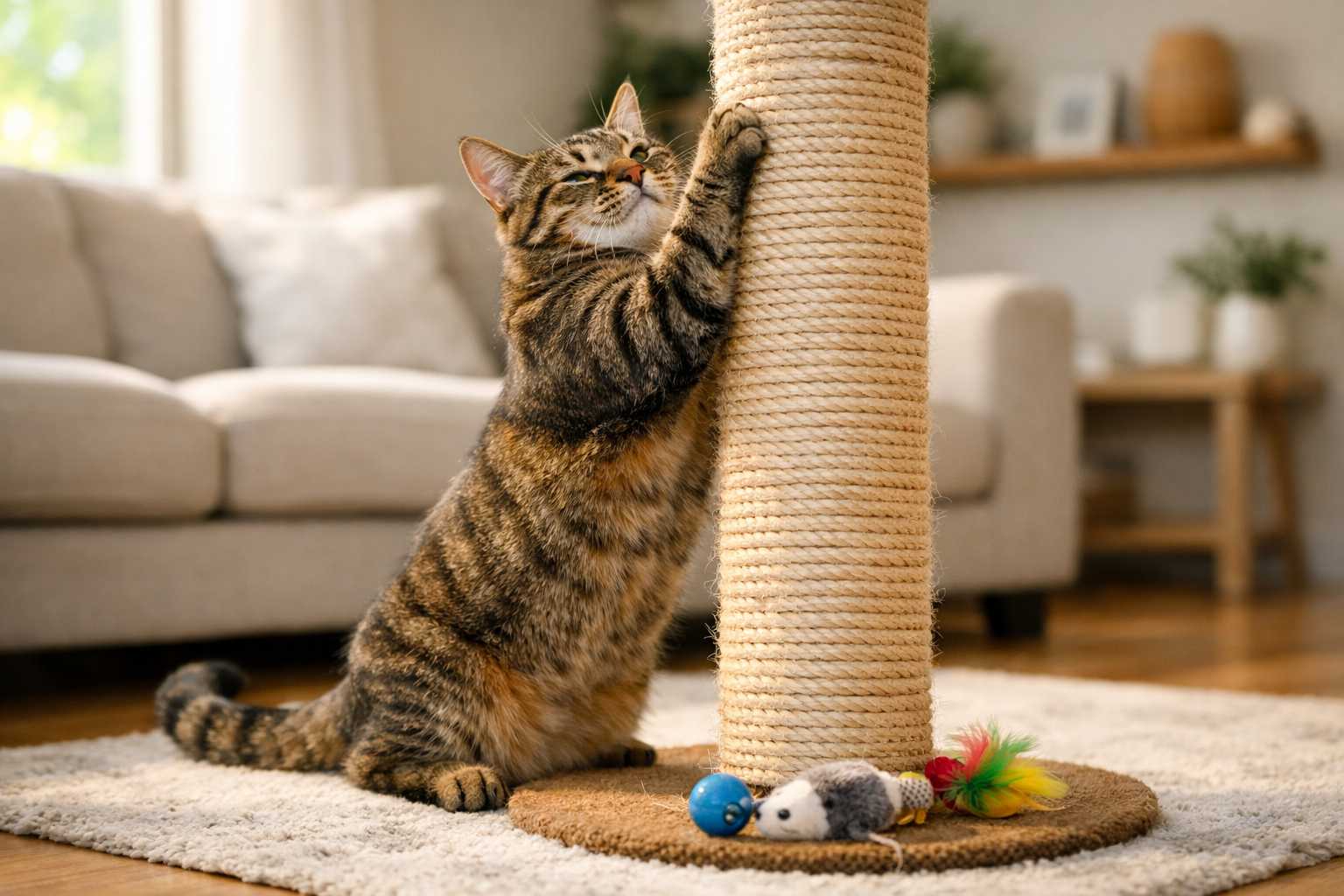
A Guide to Training Cats to Use Scratching Posts
Do you find your cat using your sofa as their personal scratching pad? You are not the only one! Encouraging cats to use scratching posts is a common issue faced by many pet parents. The silver lining? With persistence and the correct strategies, you can effectively guide this natural behavior.
Understanding Cat Scratching Behavior
For cats, scratching is not just a leisurely activity—it's critical for their overall health. Cats scratch to mark territory, exercise their muscles, maintain claw health, express emotions, and relieve stress.
Think of scratching as your cat's equivalent of a gym workout. It helps them stay both physically fit and mentally active. Recognizing this fact can assist us in guiding their habits rather than attempting to suppress them.
Selecting the Right Scratching Post
All scratching posts are not alike. Your cat's specific likes and dislikes play a pretty significant role in choosing the right one.
The Importance of Tall and Sturdy Posts
Opt for a scratching post that is at least 30 inches in height. Cats enjoy stretching their full bodies while scratching. It should also be firm and not tip or wobble easily. Instability in a scratching post can discourage your cat quickly.
Consideration of Material Preferences
Most cats are partial to sisal rope or corrugated cardboard. Some might find carpet or bare wood attractive. Notice what surfaces your cat currently enjoys scratching to get an idea of their texture preferences.
Vertical vs. Horizontal Scratching Posts
While some cats enjoy stretching vertically, others prefer horizontal surfaces. Many are fond of both! Providing variety can keep your feline friend interested.
Positioning Scratching Posts Strategically
When training cats to use scratching posts, location truly matters. Locate the posts in areas where your cat naturally feels the urge to scratch.
Position in High-Traffic Areas
Locate scratching posts near areas where your cat often sleeps. Cats have a tendency to scratch soon after they wake up. Posts located near windows or popular communal spaces can also be useful.
Safeguard Your Furniture
Strategically place the posts adjacent to your cat's favorite furniture to scratch. This can make the transition smoother and more instinctive for them.
Training Procedure Step-By-Step
While training demands time, following these steps will hasten your success.
Make the Post More Attractive
Spread catnip or silvervine on the scratching post, as these scents can be irresistible to many cats. Another idea is to dangle a beloved toy from the top of the post.
Role Modeling the Behavior
Gently hold your cat’s paws and guide them to make the scratching motion on the post. Practice this when they are calm and content. Remember, no need to force—simple, gentle guidance works effectively.
Rewards are Encouraging
Cheer your cat enthusiastically when they use the post. Provide treats, strokes or play sessions straight after they scratch the post in the appropriate manner. Positive reinforcement works wonders with cats.
Be Patient and Persistent
Training progress can differ from cat to cat. Some acquire the behavior in a matter of days while others might take weeks. Be patient and persistent in your approach. Any progress is worth a mini celebration.
Guiding and Redirecting Inappropriate Scratching
If you notice your cat scratching the furniture, avoid shouting or punishing them. Instead, gently steer them towards the appropriate scratching post.
Gently Redirect
Gently pick up your cat and place them close to the scratching post. Make the post enticing with toys or treats. This aids in forming positive associations with the correct scratching location.
Make Furniture Unattractive
Temporarily cover furniture with aluminum foil or double-sided tape. Cats generally dislike these textures. Once your cat regularly uses the post, remove these deterrents.
Regular Claw Trimming
Trim your cat's claws frequently to minimize furniture damage throughout the training period. It will also aid in preserving their claw health in the long run.
Avoid These Common Training Mistakes
Many well-intentioned cat parents unintentionally slow down training progress by making these mistakes.
Do Not Discourage Scratching Behavior
Scolding or spraying water instills fear and anxiety. It could inadvertently encourage unwanted scratching habits. Positive reinforcement should always be prioritized.
Avoid Frequent Relocation of Posts
Consistency in their surroundings is preferred by cats. Once an effective location is established for the scratching post, keep it there. Continual movement of the post could perplex the cat and disrupt their training progress.
Persistence is the Key
Remember, training requires time and patience. It's common for people to give up after just a few days, but often cats need weeks to form new habits. Stick with your training regimen for at least a month.
Providing Multiple Scratching Options
Providing several scratching options around the house is beneficial for most cats.
Minimum One Per Floor
If you have a multi-story home, ensure to place at least one scratching post on each level. This ensures your cat always has an appropriate scratching outlet nearby.
Different Materials for Variety
Offer posts made with different materials—such as sisal, carpet, cardboard, and wood. This variety will keep your cat excited and satisfied regarding their scratching options.
Mix Up Positioning Options
Some cats may have a distinct preference for either a vertical or horizontal orientation. To cater to all preferences, providing both options can be beneficial.
Ensuring Long-Term Success
Once your cat gets into the habit of using scratching posts regularly, the following tips will help maintain this behavior.
Prompt Replacement of Worn Posts
Cats may scratch their posts so much they completely shred it. Make sure to replace worn-out posts before they become unattractive. Cats prefer posts that offer a satisfying feel to their claws.
Maintain Cleanliness and Interest
Routine clean-up around the post to remove loose fibers and debris is essential. Refreshing the catnip or silvervine occasionally can help sustain your cat's interest.
Monitoring for Behavioral Changes
If your cat unexpectedly ceases using the post, look out for any changes in their environment or health. Factors such as stress, sickness, or alterations in the household can influence their scratching habits.
Problem-Solving Certain Persisting Issues
On occasions, cats might require additional support to learn the appropriate scratching behavior.
Multicat Households
In a home with many cats, each cat might need its own scratching post to prevent territorial arguments. Locate posts in various areas to prevent feelings of resource competition among the cats.
Special Considerations for Older Cats
Senior cats might struggle with the height of posts due to issues like arthritis or limited mobility. Provide lower posts or horizontal scratching pads for their easier access.
Stress-Related Scratching
Excessive scratching is often a sign of stress or anxiety. Address associated stressors while still keeping up with positive training strategies. If scratching appears compulsive, consulting your veterinarian might be a good idea.
Fostering Positive Associations
The secret to successful training is to amplify the appeal of scratching posts over furniture.
Cultivate Happy Experiences
Engage your cat in playnear the scratching post using interactive toys. Give them treats around the area. These fun activities can help build strong associations with the location of the scratching post.
Respect Your Cat's Characteristics
All cats don't have the same trainability. Accommodate your cat's personality in your training methods. More timid cats might require a longer timeline and softer training approaches.
Celebrate the Little Wins
Quietly celebrate every instance where your cat chooses the post over the furniture. Your positive vibes will reinforce their good behavior and add strength to it.
Remember, patience and consistency in your approach can successfully redirect your cat's scratching habits towards scratching posts. It will be a treat for your furniture, and your cat will also appreciate it!
While it could be a long journey, the reward of harmoniously cohabitating with a well-disciplined feline friend makes every effort worthwhile. Stay patient, keep a positive attitude, and take delight in watching your cat develop healthy scratching behaviors.